
A legacy of the land
Formed in October 2005 through the merger of Pyne Gould Guinness Ltd and Wrightson Ltd, PGG Wrightson proudly carries a legacy of more than 170 years of service to rural communities.
Like the confluence of two mighty rivers, our company was born from the union of two agricultural leaders. Over time, they were strengthened by many significant tributaries—individuals and businesses that built lasting relationships with farmers and growers, sharing in both their successes and challenges. The values, character, and integrity of our founders helped shape the rural services landscape and laid the foundations of the company we are today.
Join us as we reflect on the many stories that built PGG Wrightson. These are our heritage stories.
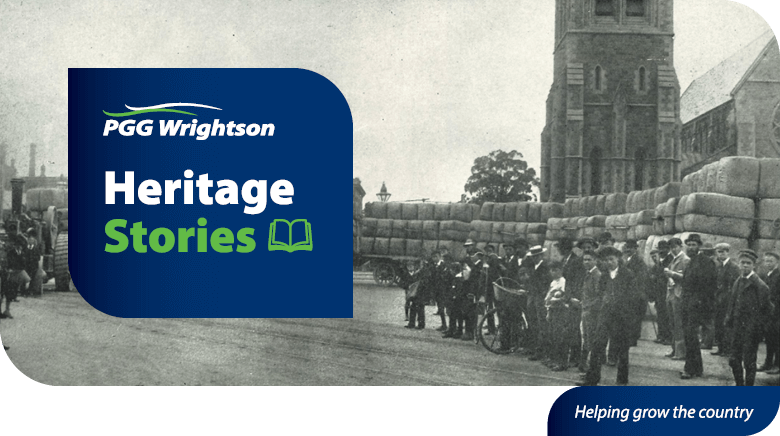
The Pyne Gould Guinness origins: building on strong roots
Pyne & Co
In 1878, 22-year-old Frederick Henry Pyne emigrated to New Zealand from England with £100 in his pocket. After working for nine years with leading transport firm, J. M Heywood and Co, he joined forces in 1887 with Alexander Boyle to establish Pyne & Co. The duo shared a passion for horses, and with Frederick’s exceptional knowledge of thoroughbred pedigrees, they enjoyed success as a major bloodstock auctioneer in Canterbury.
The 1880s depression across the country, strongly felt by the farming communities, saw prices for all sheep products hit an all-time low, despite sheep numbers increasing to four million. However, Pyne & Co’s horse business saw an increasing demand due to the country’s reliance on draught, riding and harness horses. Horse racing also remained a popular business in good times and bad. While the stock and station arm was the firm’s mainstay, the bloodstock auctions added a level of refinement to the duo’s business reputation. By the 1890s, the firm was well established in Canterbury as an agency for stock, wool, seeds and general merchandise11.
Remarkably, the high esteem that Frederick held in the early Canterbury community was evident upon his death in 1915 when the funeral procession covered over one mile12.
Four years later, the firm would enter into a partnership with Gould, Beaumont & Co and Guinness & Le Cren.
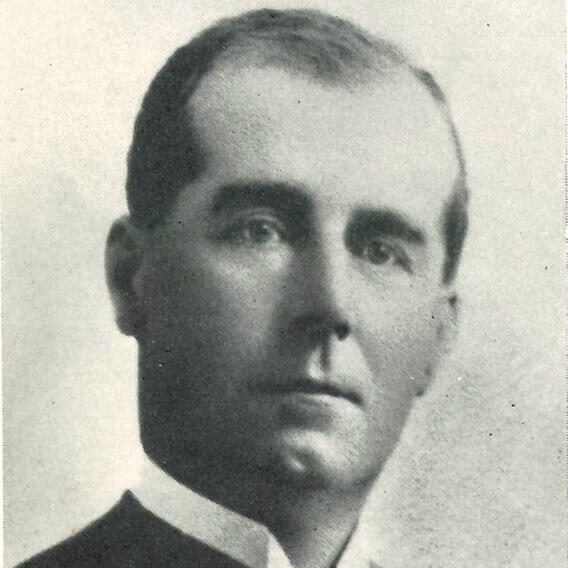
Frederick Henry Pyne. Pyne & Co, 1887-1915.
Image credit: P. G Stevens. Pyne, Gould, Guinness Ltd. The Jubilee History 1919-1969. Pg 2.
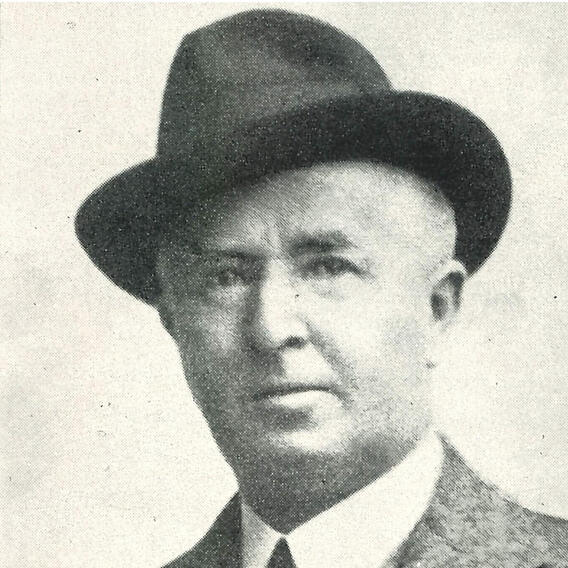
Alexander Boyle. Pyne & Co, 1887-1919.
Image Credit: P. G Stevens. Pyne, Gould, Guinness Ltd. The Jubilee History 1919-1969.
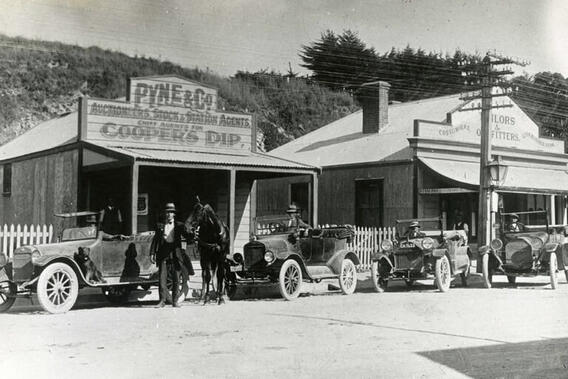
Pyne & Co, West End, Kaikoura, Circa 1930.
Image credit: Kaikoura Museum.
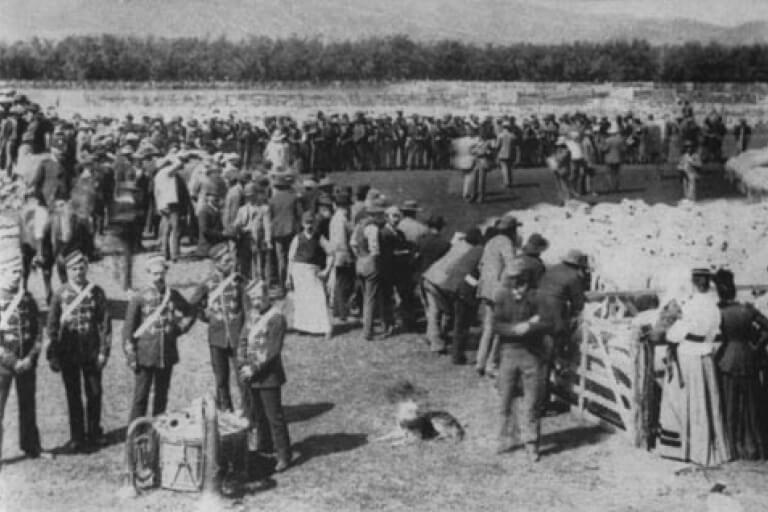
Cheviot Hills Dispersal Sale, Pyne & Co auctioneers, March 1889.
Image credit: P. G Stevens. Pyne, Gould, Guinness Ltd. The Jubilee History 1919-1969. Pg 113.
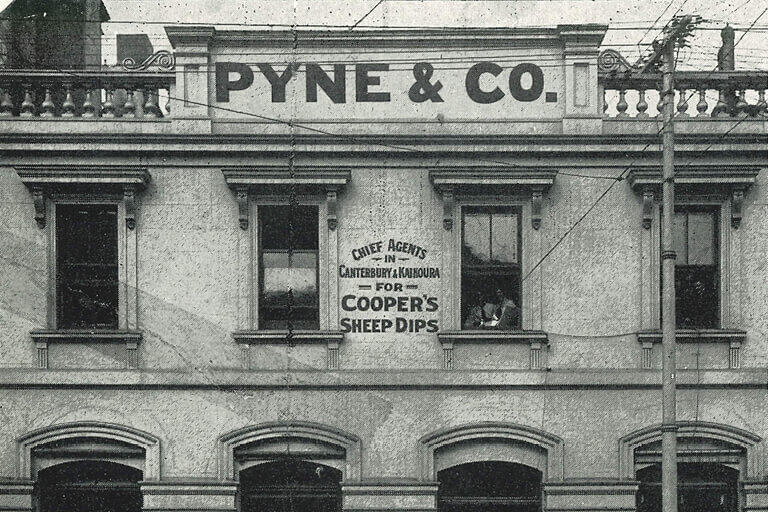
Pyne & Co, 172 Cashel St, Christchurch, Circa 1914.
Image credit: P. G Stevens. Pyne, Gould, Guinness Ltd. The Jubilee History 1919-1969. Pg 50.
Gould Beaumont & Co
In 1850, 25-year-old George Gould immigrated to Wellington with his wife Hannah. By February the following year, they sailed to Lyttelton accompanied by their pre-built house frame which they transported up the Avon River to the eastern corner of Colombo and Armagh Street. The home became Christchurch's first General Store in 1851 and business boomed as more settlers arrived in Christchurch. Canterbury’s early sheep numbers were growing at this time from 17,000 in 1851 to over 100,000 by 1853.
In 1854 George Gould welcomed Grosvenor Miles into partnership and for six years they traded as Gould & Miles. Over this time the firm added insurance, stock and station agents, and wool shipping to their services.
By 1869, George owned a half share of Springfield, the other half owned by his appointed farm manager, Duncan Cameron. With 16,000 acres of water-less land, Duncan constructed forty miles of water races—an undertaking that later led to the development of the water-race system that now covers the Canterbury Plains.
Following his death in 1889, flags were flown at half mast, the bell of the Cathedral tolled, and businesses closed for the day—a sign of the respect held for him throughout the region. George Gould’s legacy in Canterbury includes being president and patron of the A&P Association and extensive funding of Canterbury Museum collections.
George's son, Joseph, took over a significant part of the business in 1878, as George’s health deteriorated. At this time, Joseph traded with George’s brother-in-law, John Lewis, then following John’s retirement, he traded with John Beaumont under the name Gould, Beaumont and Co13.
Joseph’s younger brother, George, joined Gould, Beaumont & Co. in 1893. Among his many achievements was the importation of Suffolk sheep to New Zealand in 1913, which he later crossbred with Southdowns to develop the South Suffolk breed. In 1937, George gifted the Citizen’s War Memorial to the city of Christchurch, providing an enduring landmark to honour those who gave their lives in service.
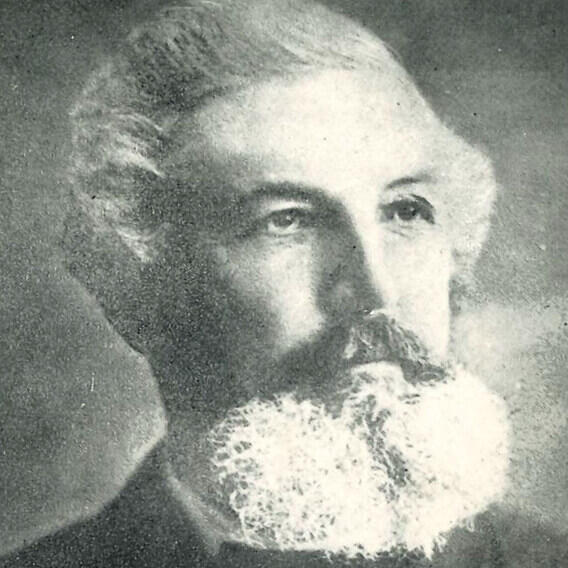
George Gould, General Merchant, 1851.
Image credit: P. G Stevens. Pyne, Gould, Guinness Ltd. The Jubilee History 1919-1969. Pg 2.
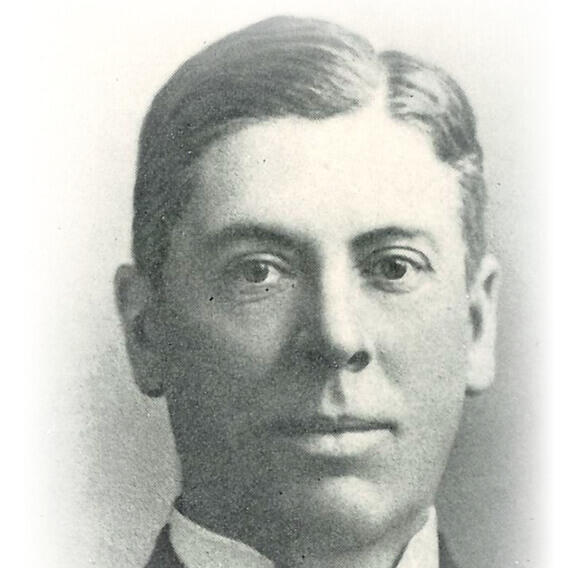
Joseph Gould, Gould Beaumont & Co, 1886-1904.
Image credit: P. G Stevens. Pyne, Gould, Guinness Ltd. The Jubilee History 1919-1969. Pg 2.
Guinness & Le Cren
The Guinness lineage within Pyne Gould Guinness began with Edwin Rowland Guinness, a great-grandson of Sir Arthur Guinness, founder of the Guinness brewery. Born in Calcutta in 1842, Edwin emigrated to Lyttelton with his parents at the age of 10. After attending Christ’s College he pursued a farming career in South Canterbury, where he would remain for the rest of his life. He began as a cadet at Otaio, then became an overseer at Orari, and later managed Peel Forest Station.
From 1883, Edwin worked as an auctioneer for the New Zealand Loan and Mercantile Agency in Timaru under the management of Frederic Le Cren. He remained in this role until forming a partnership with Frederic's nephew, Henry Arthur Le Cren. A respected figure in South Canterbury, Edwin was President of the A&P Association and served as Mayor of Timaru from 1914 to 1917.
Henry Arthur Le Cren was born in Lyttelton in 1857. He spent his early years in Timaru while his father, Henry John Le Cren (brother of Frederic Le Cren), established the town's landing service. The family returned to London during his schooling years, but Henry later returned to New Zealand, joining the National Mortgage & Agency Company in Dunedin. He remained there until forming a partnership with Edwin Guinness.
In 1891, Edwin and Henry Arthur established Guinness & Le Cren on Stafford Street, Timaru, offering services as stock agents and general merchants. A second office opened in Waimate in 1893, and in 1901 the firm was joined by Norton Francis, who was appointed manager of the Waimate office. Norton was a strong contributor to the South Canterbury community, acting as President of both the Waimate A&P Association and Horticultural Society, and treasurer of the Racing Club.
Over the following years, the business prospered, moving its Timaru headquarters to Strathallan Street and erecting a new building in Waimate in 1903. With a vision for full South Canterbury coverage, Norton was instrumental in the firm's growth. He helped steer the 1904 merger with Geraldine stock agents Maling & Shallcrass, and later played a key role in the historic merger with Gould, Beaumont & Co, and Pyne & Co in 1919. A keen sportsman, Norton is also credited with introducing the game of golf to South Canterbury14.
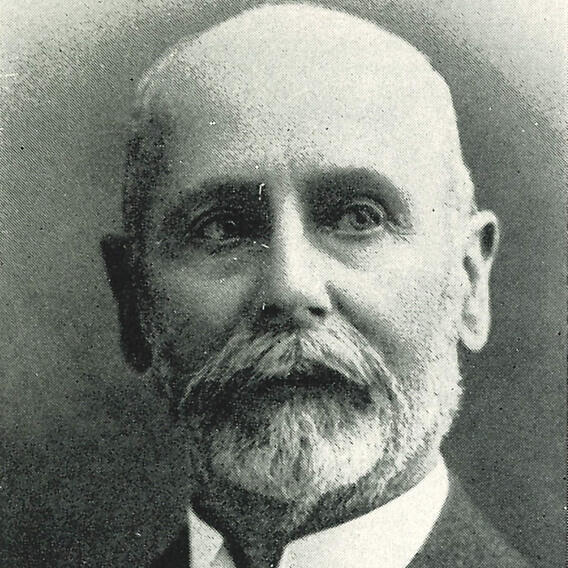
Edwin Roland Guinness, Guinness & Le Cren, 1891-1919.
Image credit: P. G Stevens. Pyne, Gould, Guinness Ltd. The Jubilee History 1919-1969. Pg 16.
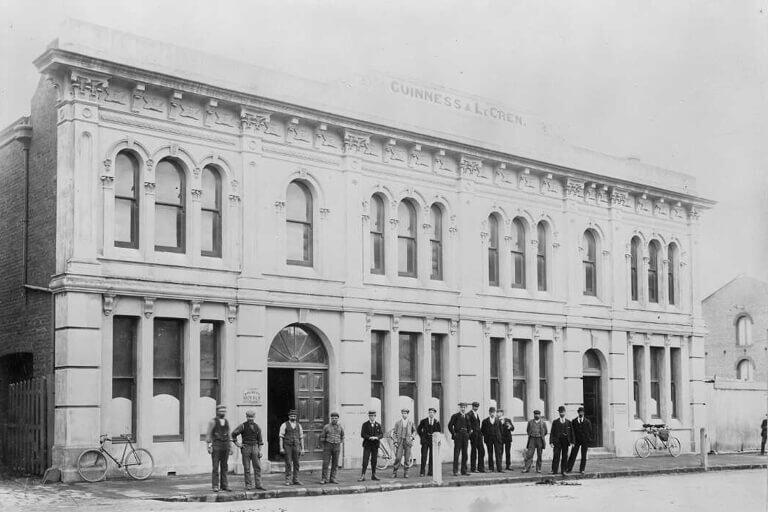
Guinness & Le Cren building, Strathallan Street, Timaru, Circa 1881-1905.
Image credit: Alexander Turnbull Library 1/2-002089-F.
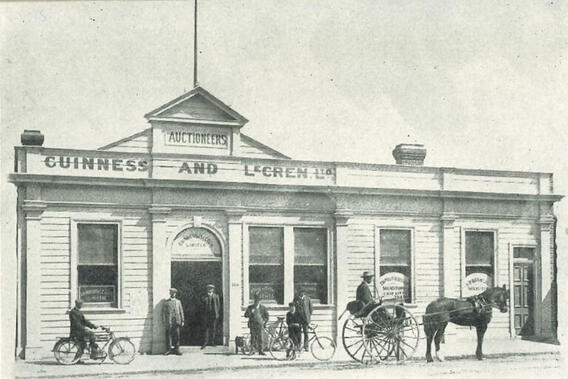
Guinness & Le Cren Ltd, Geraldine branch. In the doorway are (left) P. O’Mallet (manager) and S.R O’Callaghan (accountant).
Image credit: Image credit: P. G Stevens. Pyne, Gould, Guinness Ltd. The Jubilee History 1919-1969. Pg 64.
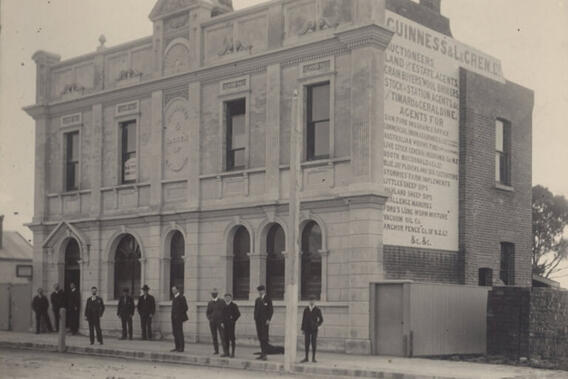
Guinness & Le Cren, High Street, Waimate.
Image credit: RRG Rattray, Waimate Museum & Archives.
The 1919 merger of Pyne Gould Guinness
In 1919, the three firms of Gould Beaumont & Co, Guinness & Le Cren, and Pyne & Co merged to form Pyne Gould Guinness Ltd. Over the following eighty-five years the business evolved into a major player in the stock and station agency sector, extending its reach across the South Island through acquisitions and trusted partnerships with South Island farmers.
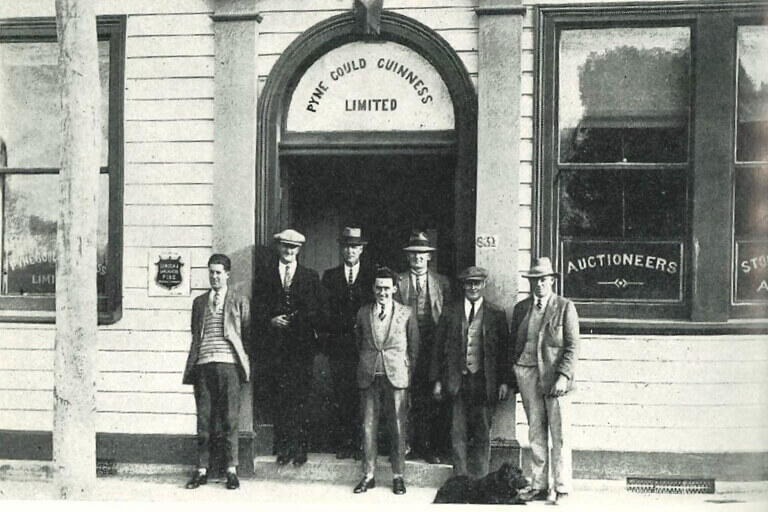
Pyne, Gould, Guinness Ltd, Geraldine after the merger, 1926.
Image credit: P. G Stevens. Pyne, Gould, Guinness Ltd. The Jubilee History 1919-1969. Pg 64.
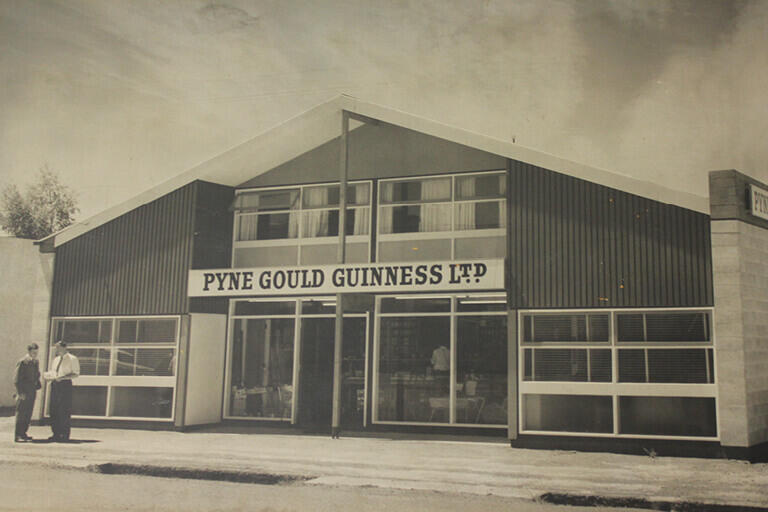
Pyne, Gould, Guinness Ltd branch, Circa 1950.
Image credit: PGG Wrightson Heritage Collection.
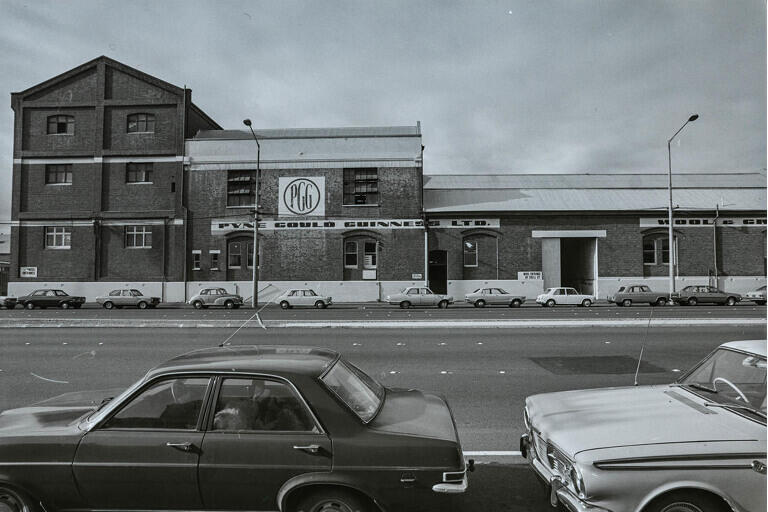
Pyne, Gould, Guinness Ltd Building, Circa 1980s.
Image credit: Heritage New Zealand 2017.79.3708.
Donald Reid & Co
The quintessential Scots pioneer, 16-year-old Donald Reid emigrated to Otago in 1849. Working as a labourer, he gradually saved money to buy land of his own, aged 18 years. He added to his holdings over the years, and in 1856 bought land in Taieri, where he built a wattle-and-daub cottage—later to be replaced by an impressive homestead as his prosperity rose.
He was a hard-working farmer, and while the prospect of gold attracted many aspiring hopefuls, Donald astutely managed his land and his workers by enabling them to go to the goldfields together, split their proceeds, and then return to the farm during the spring harvest.15
Donald's integrity and work ethic saw him become a provincial, then national, politician. He was supportive of the deferred payment settlement system which enabled settlers to take up land with a small deposit, and repay when better established. He was a firm believer in land being accessible to small holders on freehold farms, as opposed to ownership by estate owners and pastoralists16.
On leaving politics, he established his stock and station agency, Donald Reid & Co in 1878, with the desire to create a secure future for his large family. This was realised with his four sons, two step-sons and two sons-in-law employed by the company. His dedication to the Otago rural sector saw the business flourish for more than a hundred years17.
In 1974, four years before the firm's centennary, Donald Reid & Co merged with the Otago Farmer's Cooperative and became Donald Reid Otago Farmers. Reid Farmers Ltd, as it was later known, was acquired by Pyne Gould Guinness in 2001.
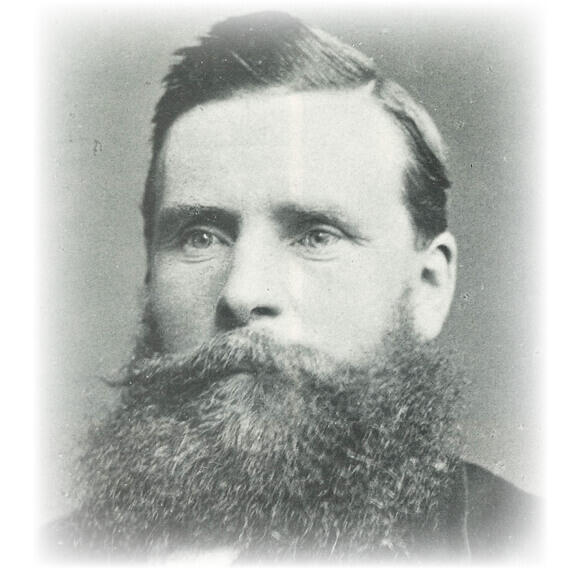
Donald Reid. Donald Reid & Co, 1878.
Image credit: John H. Angus, Donald Reid Otago Farmers Centennial History 1878-1978.
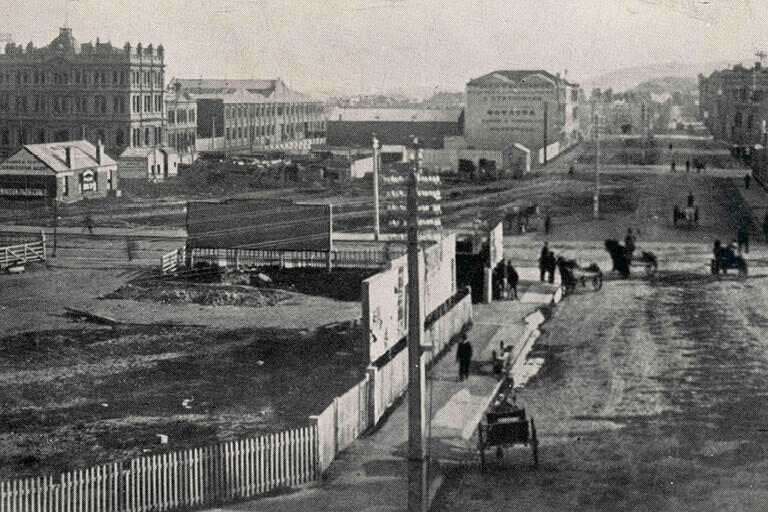
Dunedin area between Vogel and Crawford Streets, Dunedin, 1882.
Donald Reid & Co building middle left. 1882
Image credit: Image credit: Collection of Toitū Otago Settlers Museum, Dunedin; CS.14229_1
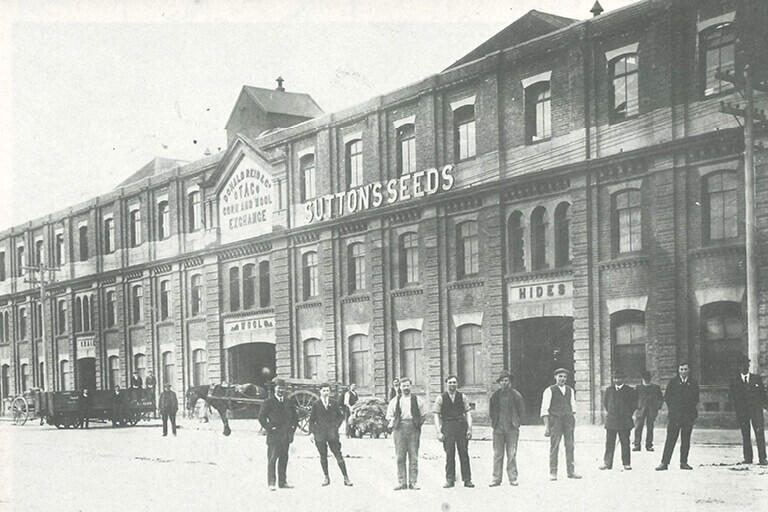
Donald Reid & Co building, Vogel St, Circa 1882.
Image credit: Image credit: John H. Angus. Donald Reid Otago Farmers Centennial History 1878-1978.
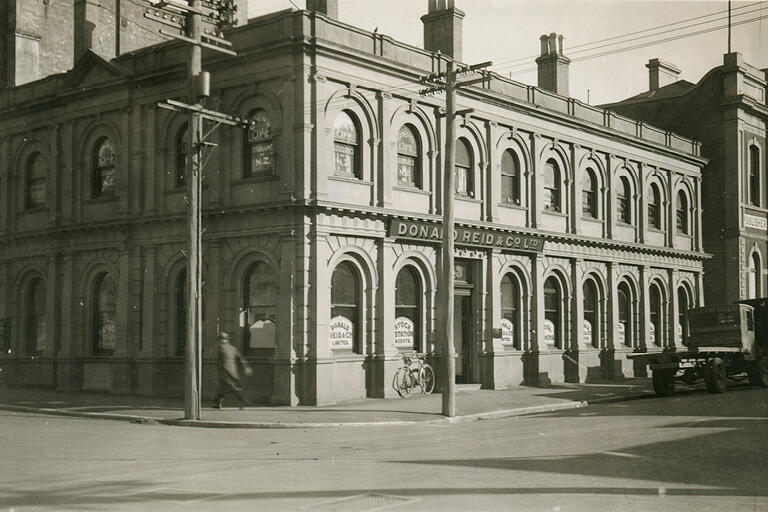
Donald Reid & Co, Cumberland Street, Dunedin.
Image credit: Image credit: Collection of Toitū Otago Settlers Museum, Dunedin; CS.12954
The Wrightson origins: early beginnings and expansion
Wright Stephenson & Co
In 1861, the lure of gold saw over 10,000 arrivals from Melbourne to the fledgling province of Otago. Among them, a young John T. Wright and his friend Robert. M. Robertson saw the prospect of profitable business in the rapidly growing settlement. Within weeks of their arrival, Wright Robertson & Co, general merchant and auctioneer, set up for business in Dunedin.
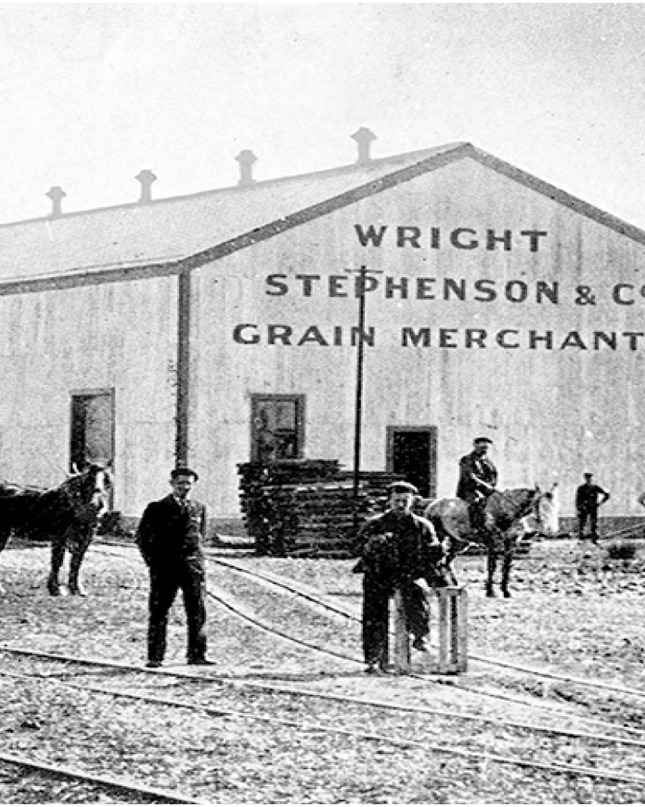
The duo’s vision paralleled livestock agent John Stephenson’s Otago business, and on the retirement of Robertson, Stephenson was offered the opportunity to buy into the business. The subsequent 1868 partnership created Wright Stephenson & Co, marrying two names that in later times would be shortened to form the ubiquitous Wrightson.
As an auctioneer, Stephenson was the top of his game. With colourful language, a compelling voice and wit, he was became a recognised authority. Wright was considered to have impeccable integrity and fairness in his management of the firm’s finances. The partnership flourished with each bringing strengths that saw the business prosper.
While the early days of the wool industry rang with periods of low wool prices, Wright Stephenson & Co met this challenge with a diversification to auction sales of grain and flax. By 1889 the firm opened the Dunedin horse saleyards, showing their growing connection with the equine industry1.
In years following Wright Stephenson’s incorporation in 1906, the company grew its leadership in rural services by acquiring many pioneer-founded firms, most notably NMA & Co in 1972, and Dalgety Crown Ltd in 1986. The company became Wrightson Ltd in 1993.
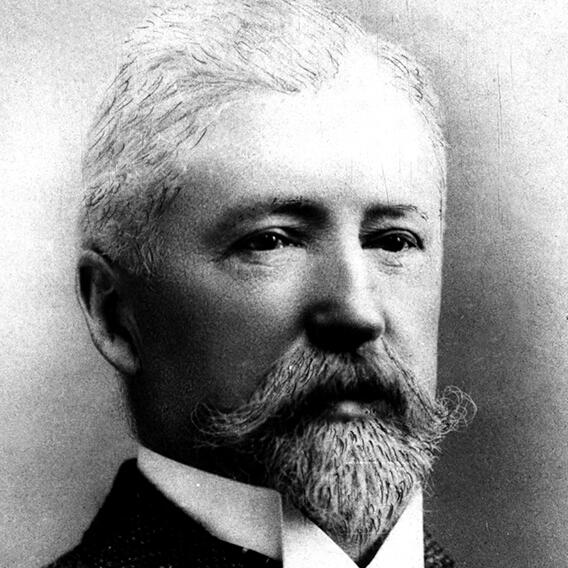
John T. Wright. Wright, Stephenson & Co Ltd Founder, Circa 1861.
Image credit: Fletcher Trust Archives P4088/1.
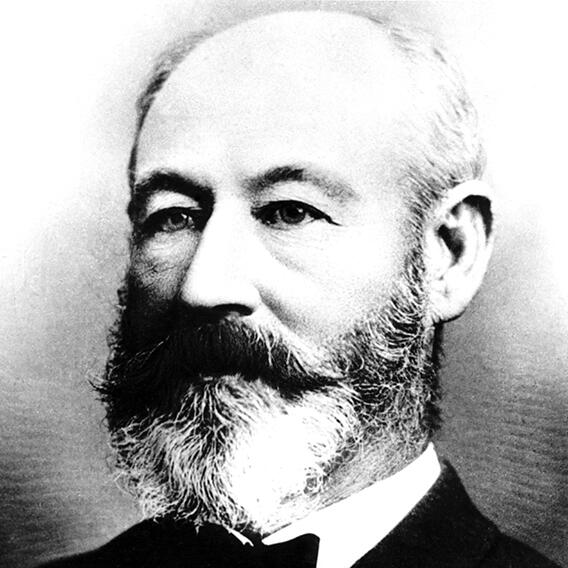
John Stephenson. Wright, Stephenson & Co Ltd Founder, Circa 1880.
Image credit: Fletcher Trust Archives P4087/1
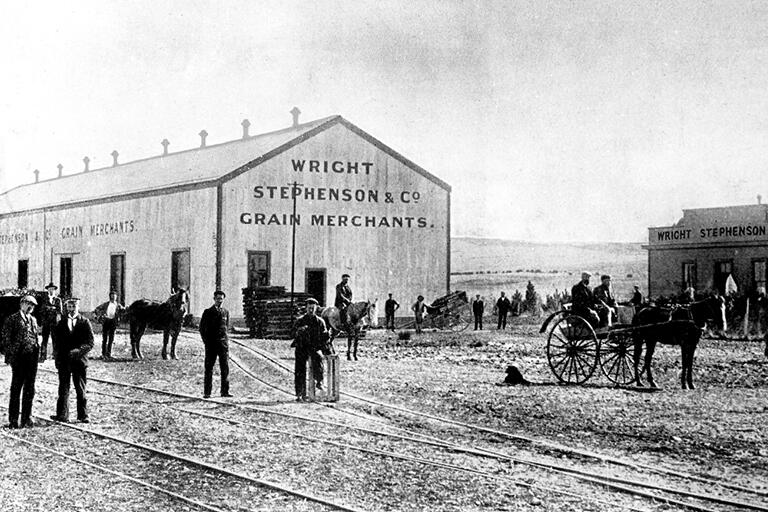
Wright Stephenson & Co Ltd Dunedin branch, Otago. Balfour Agency grain store and office, in the centre of Waimea plains, Circa 1900.
Image credit: Fletcher Trust Archives P4007/4.
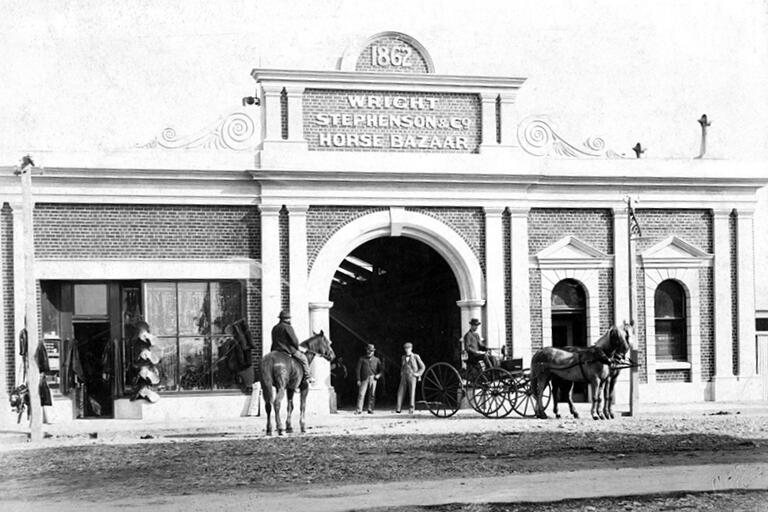
Wright Stephenson & Co Ltd Gore branch, Southland. The horse bazaar and saddler's shop at the company's first branch in Gore, 1891.
Image credit: Fletcher Trust Archives P4009/1.
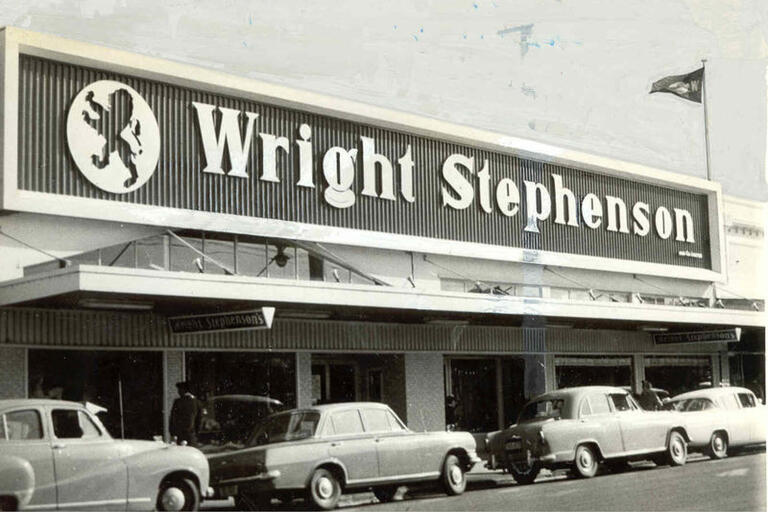
Wright Stephenson & Co Ltd Dunedin branch, Otago. Remodelled store premises in Clyde St, Balclutha, 1964.
Image credit: Fletcher Trust Archives P4007/47.
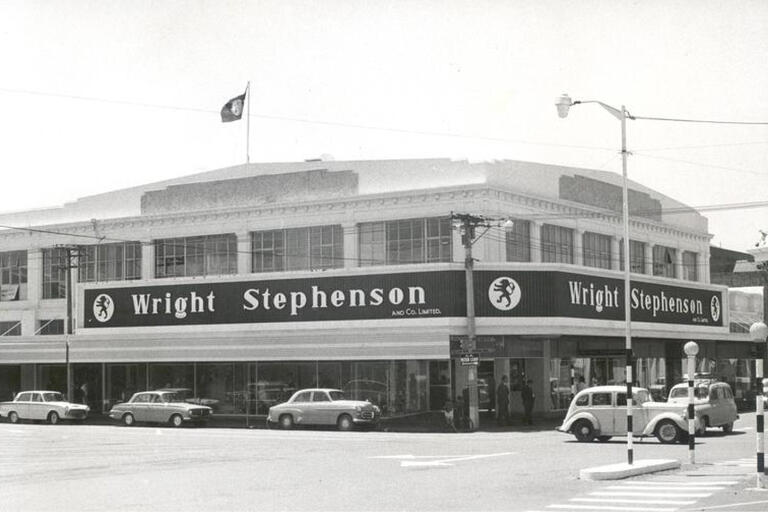
Wright, Stephenson & Co Ltd Blenheim branch. Department Store, 1966.
Image credit: Fletcher Trust Archives P4004/13.
Dalgety & Co
The Dalgety legacy began in 1858 when Frederick Dalgety established his rapidly expanding settlers’ trade empire in Lyttelton. The new firm, Dalgety Buckley & Co, was managed by his brother Richard Dalgety and Melbourne-based George Buckley, while Frederick remained in Australia until relocating to England in 1859.
In 1860, the business moved to Christchurch, with additional branches opening across the country in the following years.
Frederick’s strength lay in his ability to finance and organise large-scale rural production. He understood the needs of squatters and pioneers and had the connections to secure financial backing from Britain. This enabled him to grow markets for colonial branches—gold , then in wool. By the 1880s, his firms were consigning nearly 7% of the total Australasian wool clip.
In 1884, his private Australian and New Zealand businesses were incorporated into Dalgety and Co Ltd, and over the next three years, the company’s assets and properties grew by 50%.
In later years, the firm merged with the New Zealand Loan & Mercantile Agency to form Dalgety & New Zealand Loan Ltd. By the 1960s, it had become the largest agricultural and pastoral company in Australasia2.
In 1983 Dalgety New Zealand merged with Crown Farmers Ltd (originally founded by Newton King in Taranaki) to form Dalgety Crown. Shortly after in 1986, Dalgety Crown Ltd was acquired by Wrightson NMA Ltd.
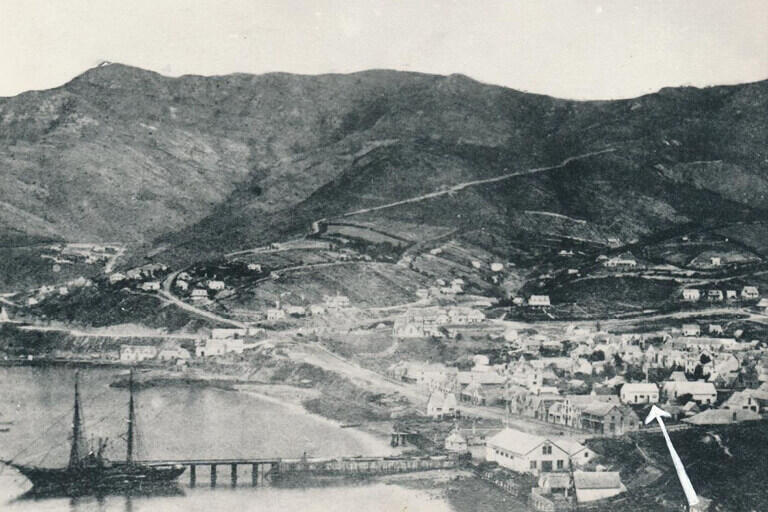
Dalgety & Co Ltd, Lyttelton Harbour, Christchurch. Dalgety & Co office arrowed in white, Circa 1870.
Image credit: Fletcher Trust Archives P5000/69/1.
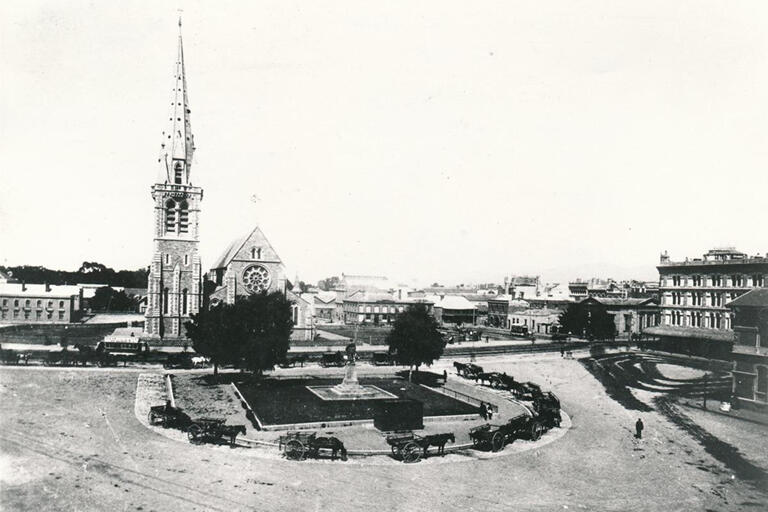
The Dalgety building located to the right of the Cathedral, Christchurch, Circa 1880.
Image credit: Fletcher Trust Archives P5000/67/1.
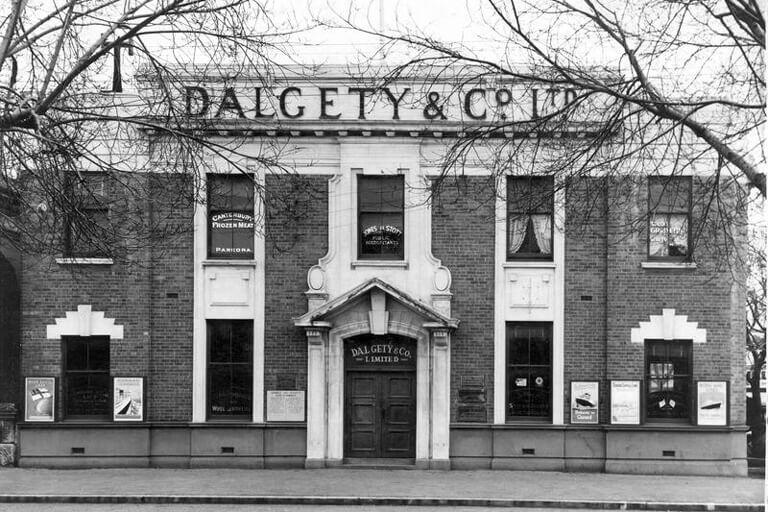
Dalgety & Co Ltd corner Thames and Severn Streets, Oamaru, North Otago, Circa 1955.
Image credit: Fletcher Trust Archives P5000/16/1.
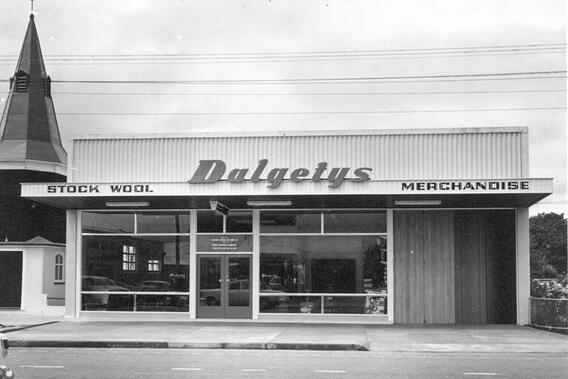
Dalgety & Co Ltd, Commercial Street, Takaka, Tasman District, Circa 1955.
Image credit: Fletcher Trust Archives P5000/1/1.
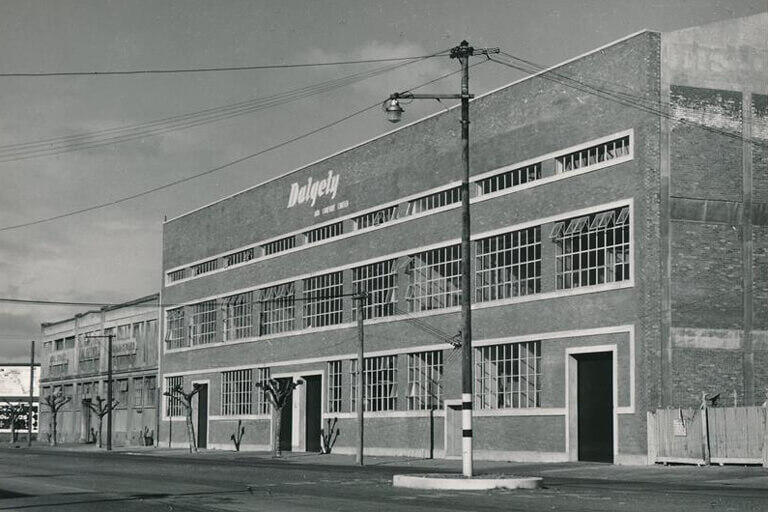
Dalgety & Co Ltd, Moorhouse Avenue, Christchurch. Wool & Grain store, 1957.
Image credit: Fletcher Trust Archives P5000/71/1.
Newton King
In 1879, 24year-old Newton King established his stock and station business in the heart of Taranaki. Newton was seen as hardworking, reliable and trustworthy, predominately due to his lending of credit to farmers without the need for security—a measure of one’s character was enough.
Starting out as auctioneer, stock agent and general merchant, over the years Newton acquired saleyards, a large produce mart in New Plymouth, acted as land agent, and became involved in importing and exporting. As the rapid development of Taranaki progressed, retail branches were established in surrounding towns.
In 1888 Newton co-founded the Crown Dairy Company, and by 1897 Crown was the second largest manufacturer of dairy products in New Zealand. In later years he ventured into car sales and become the New Zealand agent for the White and Dodge motor companies.
Newton held a close relationship with his brother Frederic Truby King, who studied medicine and went on to found the Plunkett Society, which he also assisted financially.
For nearly 100 years, the Newton King name served the rural community before being reorganised into Crown Consolidated Ltd in 1977, and six years later became Crown Farmers Ltd. In 1983 Crown Farmers Ltd merged with Dalgety New Zealand to form Dalgety Crown, just prior to its acquisition by Wrightson NMA Ltd3.
While the names may have changed, the King and his Crown remain a significant part of the Taranaki region today.
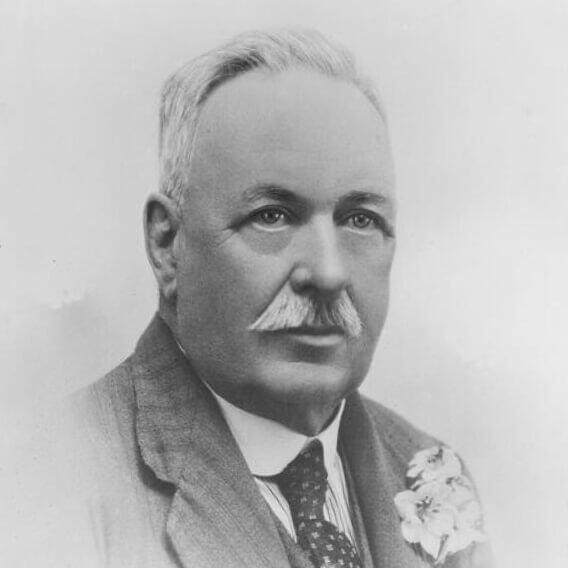
Newton King, Circa 1932-1933.
Image credit: Swainson's Studios, collection of Puke Ariki, New Plymouth. SW1931-1940.01134.
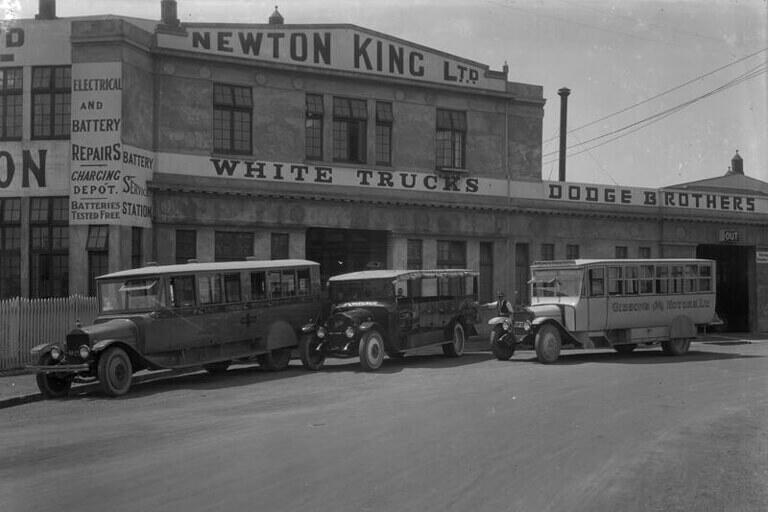
Newton King Ltd, New Plymouth branch, Circa 1923 - 1926.
Image credit: Swainson's Studios, collection of Puke Ariki, New Plymouth. SW1923-1930.01375
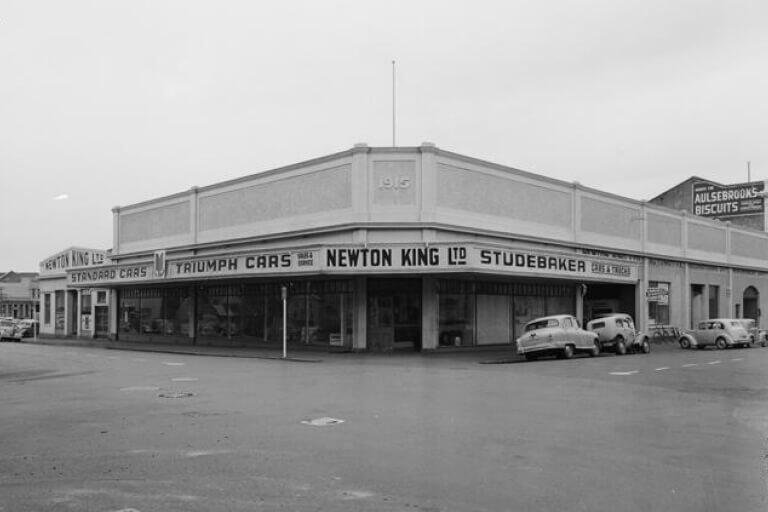
Newton King Ltd motor showroom, Circa 1926 - 1965.
Image credit: Swainson's Studios, collection of Puke Ariki, New Plymouth. SW1923-1965.00095.
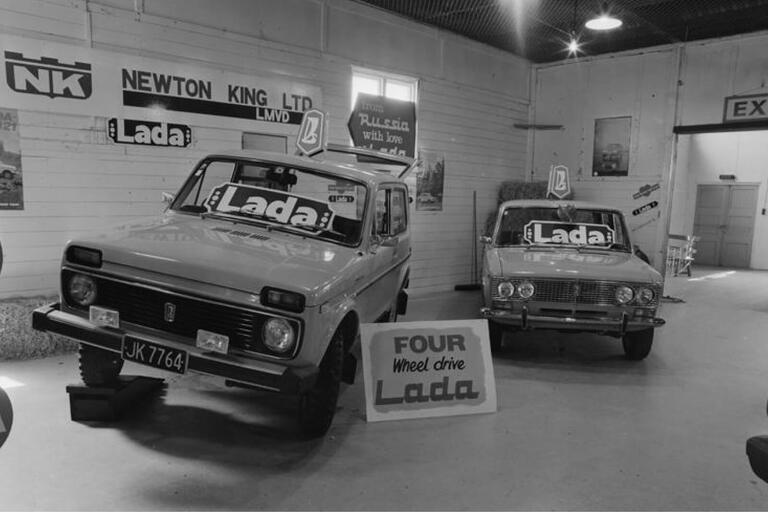
Newton King Ltd cars on display in the showroom, 1979.
Image credit: Swainson's Studios, collection of Puke Ariki, New Plymouth. WD.024644.
Williams & Kettle
By the 1880s, an economic depression was impacting rural communities across New Zealand. Reduced access to credit, severe weather events, low wool prices, and the spread of rabbits and mange caused devastating losses to farmers. Amidst these challenging times, Frederick Wanklyn Williams saw opportunity.
In 1880, at 26 years old, he stepped out from his apprenticeship at Kinross & Co and established his own stock and station agency in Napier. Born at the Manutuke Mission Station in 1854, Frederick was the son of a bishop, and a man of quiet strength and sharp intellect. His decision to leave Kinross & Co proved timely, as the business later collapsed following the failure of the Bank of Glasgow.
Nathaniel Kettle, also born in 1854, brought with him a legacy of community building—his father having surveyed the site of Dunedin. Nathaniel’s journey from wool merchant to business partner was driven by integrity and the value of relationship. In later years he was known for his thoughtful gestures—like bringing sweets for children on farm visits. Joining Frederick in 1884 by invitation, the firm became stock and station agency Williams & Kettle.
While Frederick handled the financial aspects of the business, Nathaniel engaged farmers and their business propositions. The two worked in tandem, sharing an office with a huge desk at each end. Never questioning each other's judgement, they successfully built what would become one of the region’s most influential companies.
The firm’s Ahuriri Wharf store handled frozen mutton, wool bales, skins, produce, seed, and other essential goods for rural life. Beyond business, the founders were also active contributors to their local community.
Williams & Kettle Ltd was acquired by Wrightson Ltd in 2005, prior to the merger with Pyne Gould Guinness Ltd4.
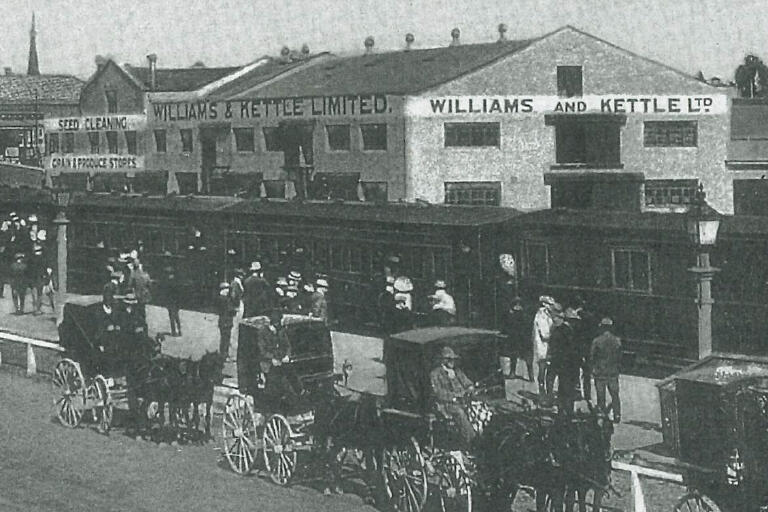
Williams & Kettle, Hastings premises corner of Russell and Queen Streets, 1914.
Image credit: Ewan McGregor,. Williams & Kettle: The Price of Success.
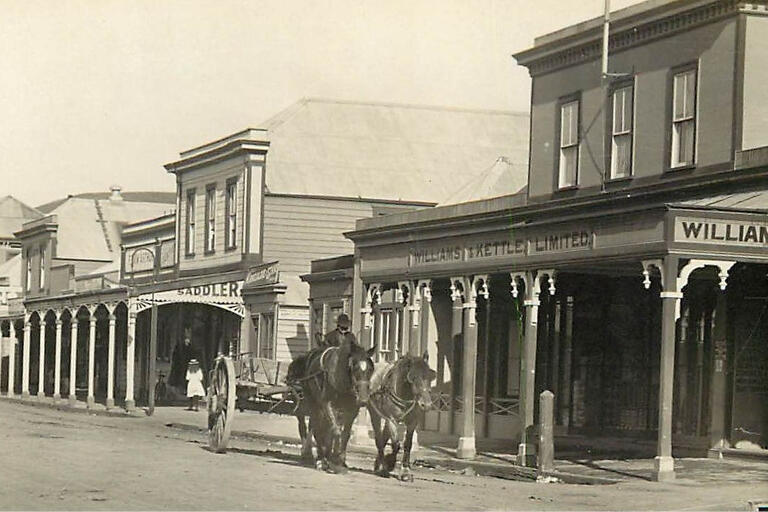
Williams & Kettle, Waipawa, Circa 1915.
Image credit: Aussie-mobs from Brisbane, CC BY-SA 2.0.
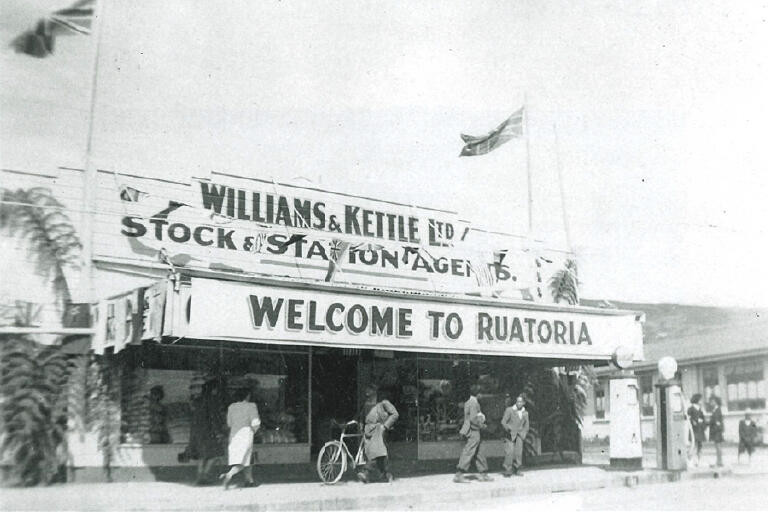
Williams & Kettle, Ruatoria, Circa 1950.
Image credit: Ewan McGregor Williams & Kettle: The Price of Success.
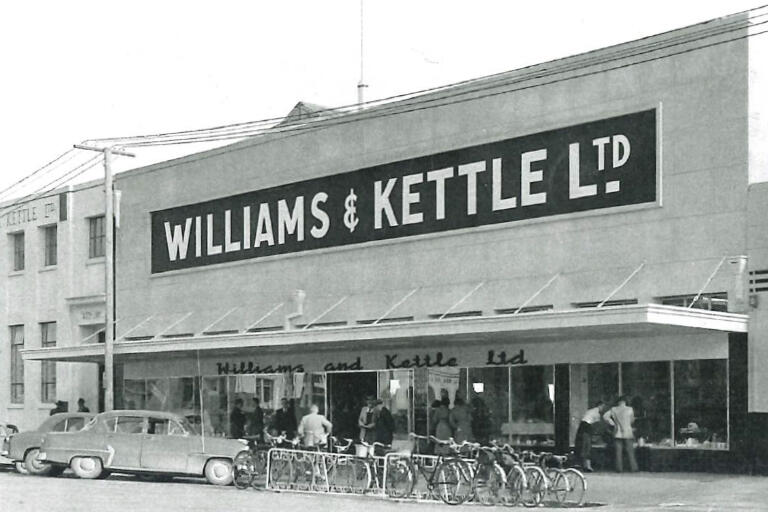
Williams & Kettle, Gisborne, Circa 1950.
Image credit: Ewan McGregor, Williams & Kettle: The Price of Success.
Fruitfed Supplies
The early 1900s saw a burgeoning horticulture industry in New Zealand. The first national conference of fruitgrowers and horticulturists, held in Dunedin in 1901 was a significant milestone. This event brought together delegates from Fruitgrower Associations and Horticultural Societies across the country for the first time5.
Fruitfed Supplies traces its roots back to 1916 and was largely driven by the efforts of Alexander Morris Morrison, better known as A.M. "Apple Muncher" Robertson. In 1900, Alexander purchased a block of land, which he and his wife Ellen planted with eight acres of apples and pears, all while towing their young child in a box cart from tree to tree. His passion for the industry led to a lifelong commitment to representing fruitgrowers' interests.
As President of the Hawke’s Bay Fruitgrowers’ Association (HBFA), he was instrumental in establishing a small trading operation in a shed on the Association Secretary’s property in 1916, effectively the country’s first Fruitfed Supplies store. Two years later, the Association purchased a property on St Aubyn Street in Hastings, converting the existing cottage into a store.
Alexander played a key role in forming the New Zealand Fruitgrowers’ Federation and strongly advocated for a cooperative trading operation to help growers access essential supplies like sprays and machinery at fair prices. By 1920, the Fruitgrowers’ Federation followed in the footsteps of the HBFA, opening its own store in Hastings. Over the years, the Fruitgrowers’ Federation became the voice of the horticultural industry while also supplying crop protection products and harvesting equipment.
In the 1990s, Fruitfed Ltd, the commercial arm of the Fruitgrowers’ Federation, was listed on the New Zealand Stock Exchange. This was followed by its acquisition by Williams & Kettle in 1999, which was later purchased by Wrightson Ltd in 20056.
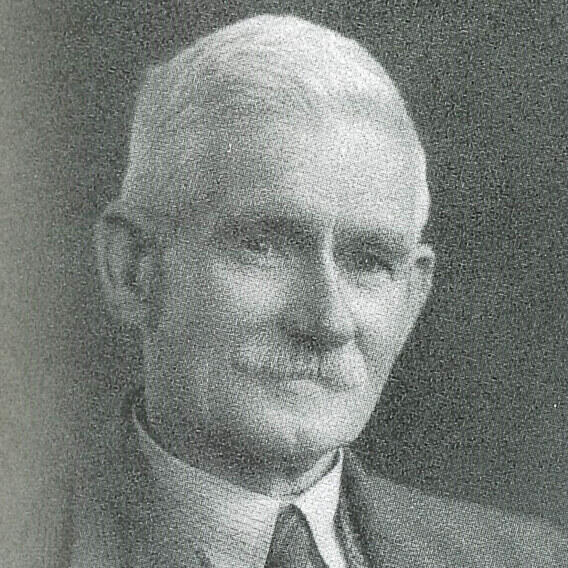
A.M Robertson, Hawkes’ Bay Fruitgrowers’ Association President, 1914-1924.
Image credit: HBFA Collection. Rose Mannering, 100 Harvests – a History of Fruitgrowing in Hawke’s Bay.
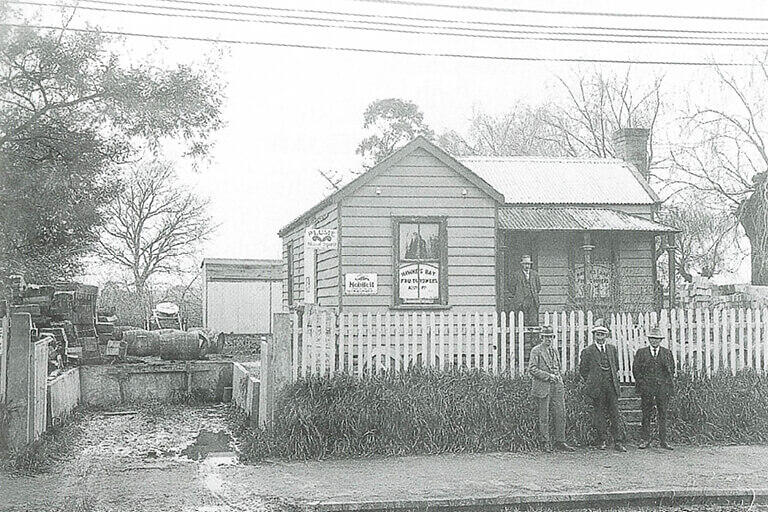
St Aubyn Street cottage used as the first HBFA trading premises, 1918.
Image credit: PGG Wrightson Heritage Collection.
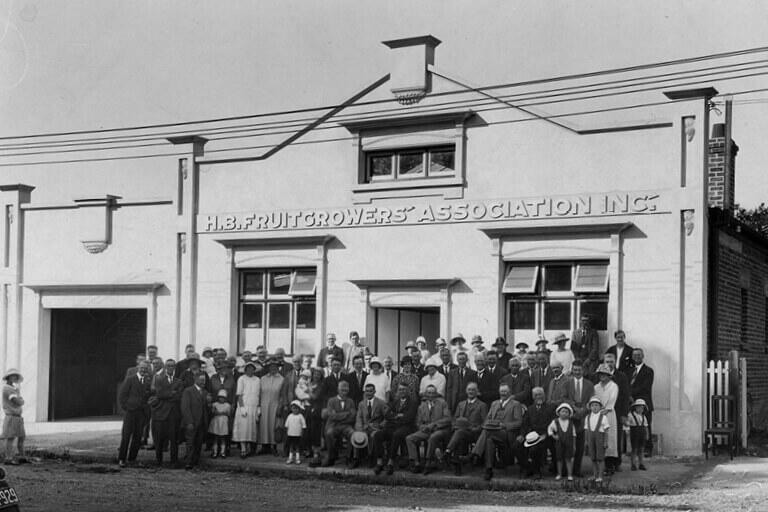
Hawke's Bay Fruitgrowers' Association opening, 1926.
Image credit: HBFA Collection. Rose Mannering, 100 Harvests – a History of Fruitgrowing in Hawke’s Bay, page 61
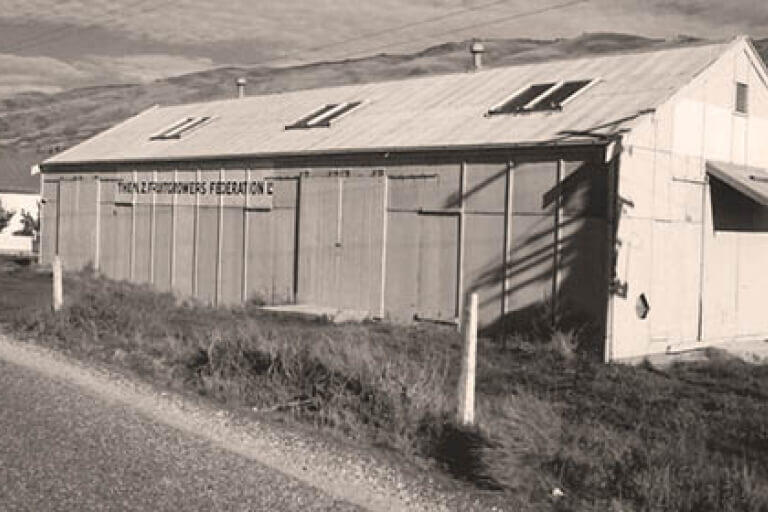
New Zealand Fruitgrowers' Federation building, Bennetts Road, Roxburgh, Circa 1968.
Image credit: PGG Wrightson Heritage Collection.
Levin & Co
The earliest step in the Wrightson story was taken on 30 May 1841, by 21-year-old Nathaniel Levin, when he landed in Port Nicholson—later known as Wellington Harbour. Two months later, Nathaniel opened Levin & Co on Lambton Quay, supplying goods to settlers in the newly established Wellington colony. By 1846, the company sold its first cattle.
Levin’s son, William Hort Levin, took over the partnership in 1868, aged 22 years. In later years, following the retirement of business partner Charles Johnson Pharazyn, and the partnership withdrawal of Walter Woods Johnston, William continued the business on his own.
He was a leading contributor to charities and sports and cultural life in Wellington. His donation of £1,000 established the Wellington Public Library and he was instrumental in the establishment of the Wellington Working Men's Club. In his later years he was president or sponsor of many societies.
His involvement with the formation of the Wellington and Manawatu Railway company is recognised in the naming of the town of Levin, which was established on the railway line.
Upon his death, schools were closed and flags were flown at half-mast, a sign of the respect held for him by Parliament and the Wellington City Council7. Three years later the firm was acquired by the National Mortgage & Agency Co, which later merged with Wright Stephenson in 1972.
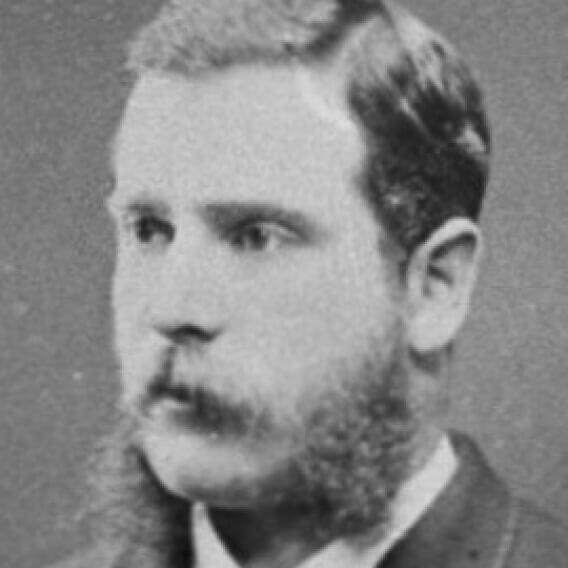
William Hort Levin, 1882.
Image credit: William Henshaw Clarke, Public domain, via Wikimedia Commons.
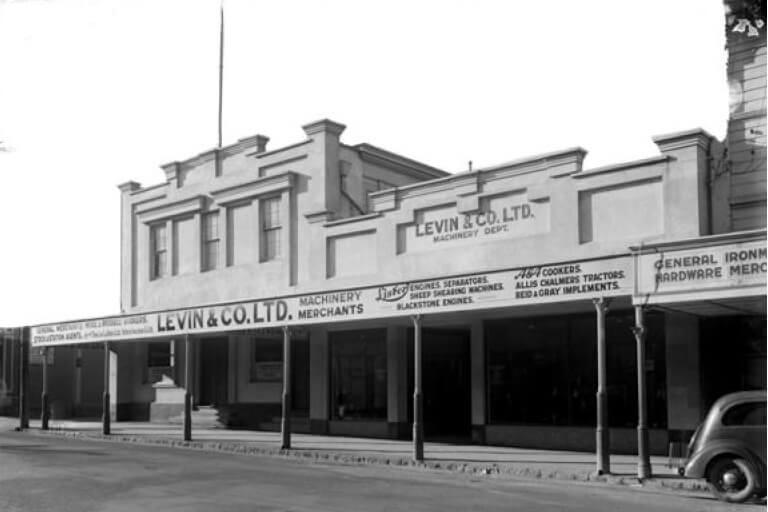
Levin & Co Ltd.
Image credit: Nelson Provincial Museum, Kingsford Collection: 153676.
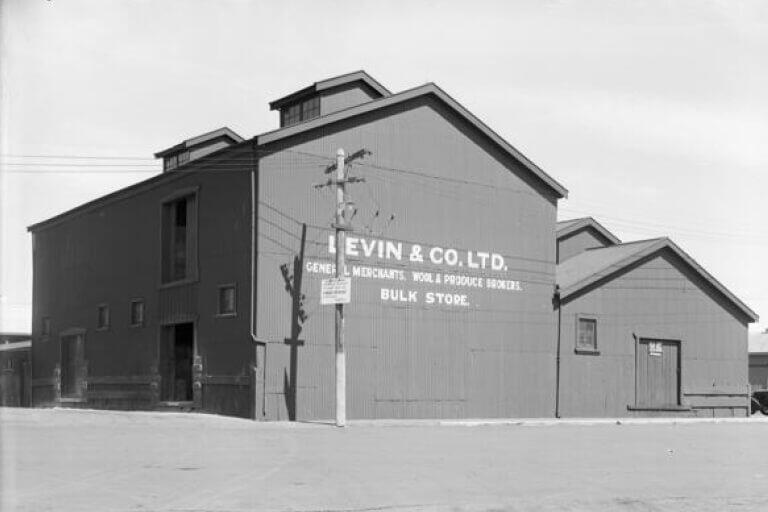
Levin & Co Ltd, General Merhcants, New Street, Nelson.
Image credit: Nelson Provincial Museum, Kingsford Collection: 153874.
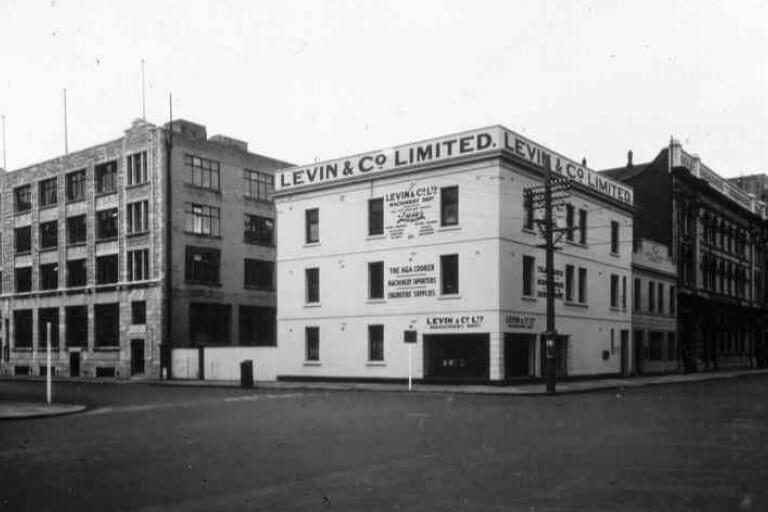
Levin & Co Ltd. Wellington building, Circa 1960.
Image credit: Fletcher Trust Archives P0252/43 .
National Mortgage & Agency Co
Founded in 1878, the National Mortgage and Agency Company of New Zealand grew to become a dominant force in New Zealand’s rural economy, offering vital financial, shipping, and agricultural services that helped connect the country’s producers to finance and markets.
NMA was originally established to meet the needs of farmers who required capital to purchase land, stock, and equipment. At a time when traditional banking institutions were hesitant to invest in remote agricultural ventures, NMA provide access to much needed credit.
The firm was formed through the acquisitions of Russell, Le Cren & Co and Russell, Ritchie & Co, both of whom had strong roots in New Zealand's early stock and station industry.
In 1850 Henry John Le Cren arrived in Lyttelton and established a store and accommodation agency with his friend Joseph Longden. At the time, transporting goods overland to South Canterbury was arduous and Henry Le Cren was instrumental in developing a cargo landing service at Timaru, overcoming the harbour’s rocky shoreline and enabling goods to move efficiently by sea. This innovation spurred Timaru’s growth and, by 1864, wool was being shipped directly from Timaru to London8.
Further south in Dunedin in 1850, George Gray Russell and John McFarlane Ritchie built a thriving merchandising business, later expanding into wool, grain, and produce exports under the partnership Russell, Ritchie & Co.
By the early 1870s, both Henry Le Cren and George Russel were based in London, managing consignments to Britain, through their firm Russel Le Cren & Co, while John oversaw operations in New Zealand. The subsequent acqusition of the firms by the National Mortgage and Agency Co of New Zealand provided an essential link for New Zealand farmers to finance and markets.9.
In 1972, NMA merged with Wright Stephenson & Co to form NMA Wright Stephenson. The merged entity would later become part of Challenge Corporation and evolve into Wrightson Ltd.
The Le Cren family's strong lineage within NZ agriculture continued with Henry's son, Henry Arthur Le Cren, who went on to join Edwin Rowland Guinness in the partnership of Guinness & Le Cren, which later merged with Pyne & Co and Gould, Beaumont & Co to form Pyne Gould Guinness10.
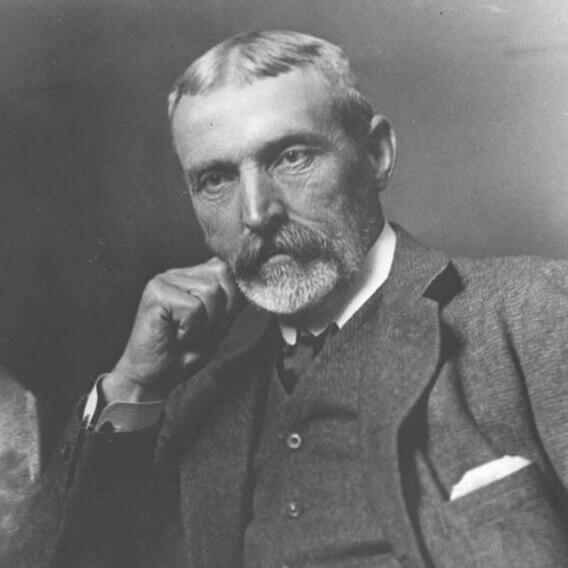
John McFarlane Ritchie, co-founder of the National Mortgage & Agency Company, Circa 1880.
Image credit: Fletcher Trust Archives P4227/4.
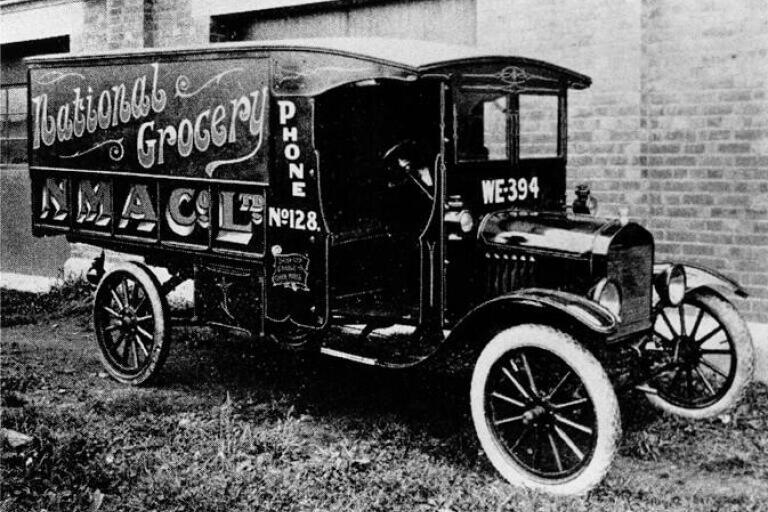
National Mortgage & Agency Co Ltd grocery delivery van, Circa 1918.
Image credit: Fletcher Trust Archives P4227/6.
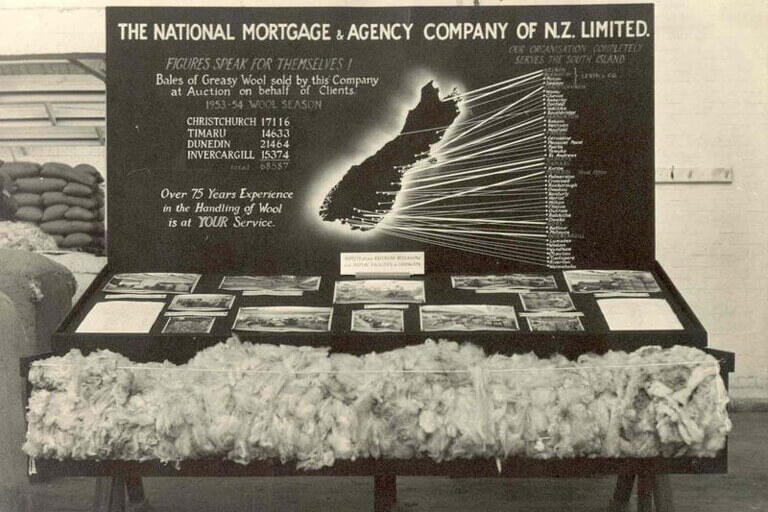
National Mortgage & Agency Co Ltd South Island wool sales display, 1954.
Image credit: Fletcher Trust Archives P4227/2.
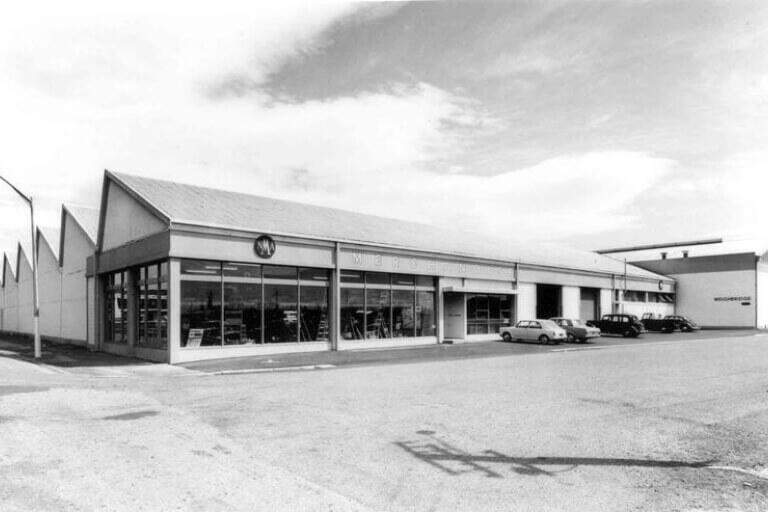
National Mortgage & Agency Co Ltd branch merchandise store, Circa 1970.
Image credit: Fletcher Trust Archives P4227/5.
PGG Wrightson: The 2005 merger
A Leader in Rural Services
Years of dedication to rural New Zealand saw the stalwarts of agriculture come together in the 2005 merger of Pyne Gould Guinness Ltd and Wrightson Ltd.
From stock and station agencies, to wool handling, real estate and horticultural expertise, the combined entity offered farmers, and growers a unified rural services provider with extensive networks, technical expertise, and the dedication of its forerunners.
The PGG Wrightson of today carries the legacy of our founding companies, while continuing to innovate in farm and horticulture supplies, agricultural technology, livestock trading, and real estate.
We’re a company shaped by our legacy, however, our history isn’t just about businesses merging; it’s a story of the strength and resilience of New Zealand’s agricultural and horticultural industries and the people at its heart.

Our History Timeline
The Pioneer Years
1841 - Nathaniel Levin established Levin & Co in Wellington.
1851 - Christchurch's first General Store founded in Christchurch by George Gould.
1856 - Bloch & Behrens established in Copenhagen, Denmark.
1858 - Dalgety Buckley & Co established in Lyttelton.
1861 - NZ Farmers' Cooperative Association of Canterbury established.
1868 - Wairarapa Farmers' Cooperative Association established.
1868 - Wright Stephenson & Co established in Dunedin.
1877 - National Mortgage and Agency Co of New Zealand Ltd incorporated in England.
1878 - Donald Reid & Co Ltd established in Dunedin. National Mortgage and Agency Co of New Zealand Ltd acquires Russell Le Cren & Co (est 1866) and Russell Ritchie & Co (est. 1873).
1879 - Newton King Ltd established in New Plymouth.
1880 - Williams & Kettle established in Napier.
1887 - Pyne & Co established in Christchurch.
1891 - Guinness & Le Cren Ltd established in Timaru.
- Hawkes Bay Farmers' Cooperative Association established.
1901 - North Otago Farmers' Cooperative Association established.
1903 - Canterbury Farmers' Cooperative Association established.
1916 - Hawke’s Bay Fruitgrowers Association established first horticultural supplies store in Hastings. Wright Stephenson & Co acquires W & G Turnbull & Co Ltd (est. 1857) and W Gunson & Co Ltd (est. 1881).
1919 - Gould Beaumont & Co, Pyne & Co and Guinness & Le Cren Ltd merge to form Pyne, Gould, Guinness Ltd.
1920 - Wright Stephenson & Co acquires Abraham & Williams Ltd (est. 1884).
The Rationalisation Years
1947 - W E Clouston & Co, Blenheim, acquired by Pyne Gould Guinness Ltd
1955 - National Mortgage and Agency Co of New Zealand Ltd acquires J R Mills & Son Ltd (est. 1879).
1957 - National Mortgage and Agency Co of New Zealand Ltd acquires Alfred Buckland & Sons Ltd (est. 1853). Newton King Ltd acquires Freeman R Jackson & Co Ltd (est. 1868)
1958 - National Mortgage and Agency Co of New Zealand Ltd acquires G W Vercoe & Co Ltd (est. 1928) and Robertson Bros Ltd (est. 1949).
1959 - Wright Stephenson & Co acquires Wairarapa Farmers' Cooperative Association.
1960 - National Mortgage and Agency Co of New Zealand Ltd acquires J G Ward & Co Ltd (est. 1877). Newton King Ltd acquires Gisborne Sheep Farmers Frozen Meat & Mercantile Co Ltd (est. 1902).
1961 - Wright Stephenson & Co acquires Buxtons Ltd (est. 1852). National Mortgage and Agency Co of New Zealand Ltd acquires Murray Roberts & Co Ltd (est. 1868) and Stronach Morris & Co Ltd (est. 1888).
1962 - Dalgety & Co merges with New Zealand Loan & Mercantile Agency of New Zealand to form Dalgety & New Zealand Loan Ltd.
1964 - National Mortgage and Agency Co of New Zealand Ltd acquires remaining shares on Levin & Co Ltd (est. 1841).
1970 - NMA Co of New Zealand adots new name.
1972 - Wright Stephenson & Co merges with NMA Co of New Zealand to form NMA Wright Stephenson Holdings Ltd.
1973 - Newton King Ltd acquires de Pelichet McLeod & Co Ltd (est. 1908).
1974 - Donald Reid & Co Ltd merges with Otago Farmers Cooperative Association of New Zealand merge to form Reid Farmers Ltd.
1977 - Newton King Ltd acquires New Zealand Farmers' Cooperative Distributing Co Ltd (est. 1903) and Rod Weir & Co Ltd (est. 1963) and reorganises to become Crown Consolidated Ltd.
1978 - Newton King Ltd acquires North Otago Farmers' Cooperative Association.
1979 - Canterbury Farmers' Cooperative Association Ltd merges with North Otago Farmers' Cooperative Association Ltd.
1981 - Newton King Ltd acquires Canterbury Farmers' Cooperative Association Ltd.
- Wrightson NMA Ltd a subsidiary of Fletcher Challenge.
1982 - Dalgety & New Zealand Loan Ltd acquires Hawke's Bay Farmers' Cooperative Association Ltd to form HBF Dalgety Ltd.
1983 - Wrightson NMA merges with NZ Farmers' Cooperative Association of Canterbury.
- Dalgety & New Zealand Loan Ltd merges with Crown Consolidated Ltd to form Dalgety Crown Corporation Ltd.
1986 - Wrightson NMA Ltd acquires Dalgety Crown Corporation Ltd to form Dalgety Crown.
1991 - Pyne, Gould, Guinness Ltd acquires assets of Elders Pastoral in Greater Canterbury and Westland. Reid Farmers merges with Elders Pastoral in Otago and acquires a team of Elders Pastoral livestock reps from Eastern Southland.
1993 - Wrightson NMA Ltd is established as Wrightson Ltd.
1997 - Reid Farmers Ltd acquires rural assets of the Southland Farmers Cooperative Ltd, Invercargill.
1999 - Williams & Kettle acquires Fruitfed Supplies Ltd.
2001 - Pyne, Gould, Guinness Ltd acquires Reid Farmers Ltd.
2005 - Wrightson Ltd acquires Williams & Kettle, including Fruitfed Supplies.
PGG Wrightson Years
2005 - Wrightson Ltd merges with Pyne Gould Guinness Ltd to form PGG Wrightson.
2008 - Bloch & Behrens acquired by PGG Wrightson Wool.
2012 - Agritrade becomes a division of PGG Wrightson.
2015 - Wool Integrity programme established.
2019 - PGG Wrightson Seed & Grain sold to DLF Seeds.
1 Wrightson, 150 Years Service to the Rural Community 1841 – 1991
2 https://adb.anu.edu.au/biography/dalgety-frederick-gonnerman-283
3 https://teara.govt.nz/en/biographies/3k13/king-newton
4 McGregor, E. The Price of Success. Williams and Kettle (2019).
5 Thomson, A. D. (1978). Leonard Cockayne: Horticulturist. New Zealand Journal of Botany, 16(3), 397–404. https://doi.org/10.1080/0028825X.1978.10425148
6 Mannering, R. 100 Harvests, A History of Fruitgrowing in Hawke's Bay (1999)
7 https://teara.govt.nz/en/biographies/2l9/levin-william-hort
8 https://teara.govt.nz/en/biographies/1l5/le-cren-frederic
9 Stevens, P. G. Pyne Gould Guinness. The Jubilee History 1919-1969 (1970)
10 Stevens, P. G. Pyne Gould Guinness. The Jubilee History 1919-1969 (1970)
11 Stevens, P. G. Pyne Gould Guinness. The Jubilee History 1919-1969 (1970)
12 https://paperspast.natlib.govt.nz/newspapers/SUNCH19151201.2.22
13 Stevens, P. G. Pyne Gould Guinness. The Jubilee History 1919-1969 (1970)
14 Stevens, P. G. Pyne Gould Guinness. The Jubilee History 1919-1969 (1970)
15 https://www.toituosm.com/collections/smith-gallery/wall-1/donald-reid
16 https://teara.govt.nz/en/biographies/2r13/reid-donald
17 Stringleman, H. and Hunt, G. Rural Challenge. A history of Wrightson Ltd (2006)
18 Angus, J. H. Donald Reid Otago Farmers Centennial History 1878-1978 (1978)
All care has been taken to reference sources correctly and obtain permission for image use. Any omissions are unintentional. Please contact us to remedy any inaccuracies.