
Video or image
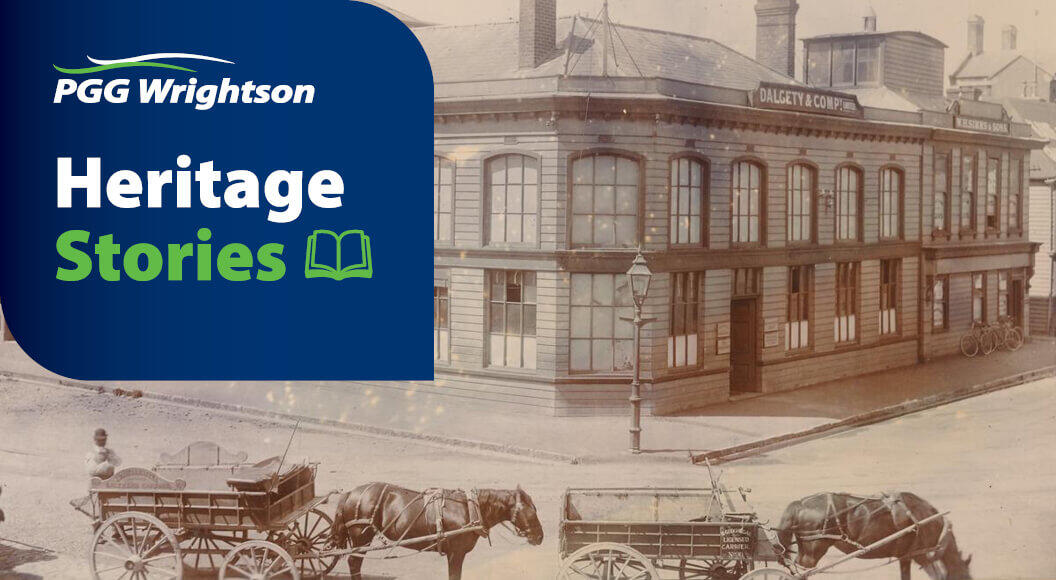
The Origins of Dalgety & Co
Frederick Gonnerman Dalgety was born in Canada to a Scottish family with a strong military tradition. At 16 years old, he emigrated to Sydney, Australia, where sheep farming was increasingly viewed as prosperous business. In the years prior to Frederick’s arrival, wool exports to England had already reached 2 million lbs. By 1845, that figure had soared to 24 million lbs.
Starting out at J. B. Montefiore in Sydney, Frederick gained valuable mercantile experience over the next seven years before striking out on his own. Not wishing to compete with his mentor, he looked to Melbourne for the next stage of his career, joining Griffith, Borradaile & Co as a Manager, with the promise of partnership.
Through its London connection with John Gore & Co, the firm placed wool clips on the London market and arranged short-term credit for sheep farmers. While the business initially showed promise, the 1840s brought difficulties and saw the partners go their separate ways, leaving Frederick managing his portion of the business through the wool boom collapse.
By 1849 Frederick’s business had recovered, however he needed capital to expand. With reliable backing only available in England, he travelled to London, leaving his Melbourne and Geelong operations in the hands of trusted agents. A year later, the Australian Gold Rush saw the populations of quiet pastoral communities explode. Though concerned the boom would forever change the character of Melbourne, his businesses faced exceptional demand for merchandise at the diggings. Over the next five years, population growth and booming sales of tea, flour, spades, pickaxes and gold drove the firm’s prosperity. Throughout however, Dalgety ensured the business remained connected to farmers and those working the land.
The New Zealand arm of Dalgety & Co began in 1858, when Frederick advanced his brother Richard £3,000 to enter partnership with George Buckley of the Melbourne office. Landing at Lyttelton, they founded Dalgety, Buckley & Co. Within a year, Richard had been replaced by his younger brother Edmund, who was joined by James Rattray, a Scottish partner from Geelong. They formed Dalgety, Rattray & Co, with offices in Lyttelton and Dunedin.
Although Frederick remained London-based, the New Zealand operations followed the same model as in Australia: supplying merchandise, offering short-term credit, and managing wool exports. The 1861 gold discoveries in Nelson and Otago again drove population growth and soaring demand for merchandise. Unlike Frederick’s cautious approach a decade earlier, James Rattray expanded aggressively, opening grand offices in Dunedin and branches in Oamaru and Invercargill. When the gold ran out and wool profits dipped, the company was left with unsaleable properties. James concealed the crisis as long as possible, but word eventually reached Frederick in London. He quickly appointed Charles Nichols, whose Tasmanian firm had strong ties to Dalgety, to stabilise operations.
Frederick himself returned to New Zealand in 1881. After a three-month tour from north to south, he was confident in the country’s future. He purchased land on a vast scale, becoming New Zealand’s largest landowner, with holdings of over one million acres.
The transition from partnership to company came in 1884, shortly after the unexpected death of his wife, Blanche. With his children grown and uninterested in the business, Frederick relented on his long-held aversion to public investment. Dalgety & Co was floated on the London Stock Exchange with a successful share issue, and Frederick became Chairman, overseeing operations in both Australia and New Zealand.
After years of ill health, Frederick Dalgety died in 1894 at Lockerley Hall, Hampshire, England. In the decades that followed, the company endured banking collapses, rabbit plagues, severe droughts in Australia, two world wars, the Great Depression, and the arrival of synthetic fibres and casual fashion.
In 1962, Dalgety & Co Ltd merged with New Zealand Loan and Mercantile to form Dalgety & New Zealand Loan Ltd. The company then became incorporated as a New Zealand company in 1970 under the name Dalgety New Zealand Ltd.
By the early 1980s, Dalgety New Zealand Ltd had become a household name across New Zealand, supplying merchandise, animal feed, timber, malt, fertiliser, property services, milling, and even tourism, while handling around 25% of the wool clip from New Zealand and Australia. In a wave of rationalisation and consolidation, Dalgety acquired the Hawke’s Bay Farmers Association in 1891 and merged with Crown Farmers Ltd in 1983.
As consolidation continued through the 1980s and 1990s, Dalgety Crown Ltd became part of the Wrightson network.
Today, Frederick Dalgety’s legacy lives on through PGG Wrightson’s continued commitment to New Zealand farmers.
Read more about our heritage >
References: Wynford Vaughn -Thomas. Dalgety: The Romance of a Business. 1984. https://adb.anu.edu.au/biography/dalgety-frederick-gonnerman-283
Title Image: Dalgety & Co Ltd - New Zealand Premises. Dalgety's first New Zealand office, Cathedral Square, Christchurch, 1870. Fletcher Trust Archives P5000/65/1
Related News
Video or image
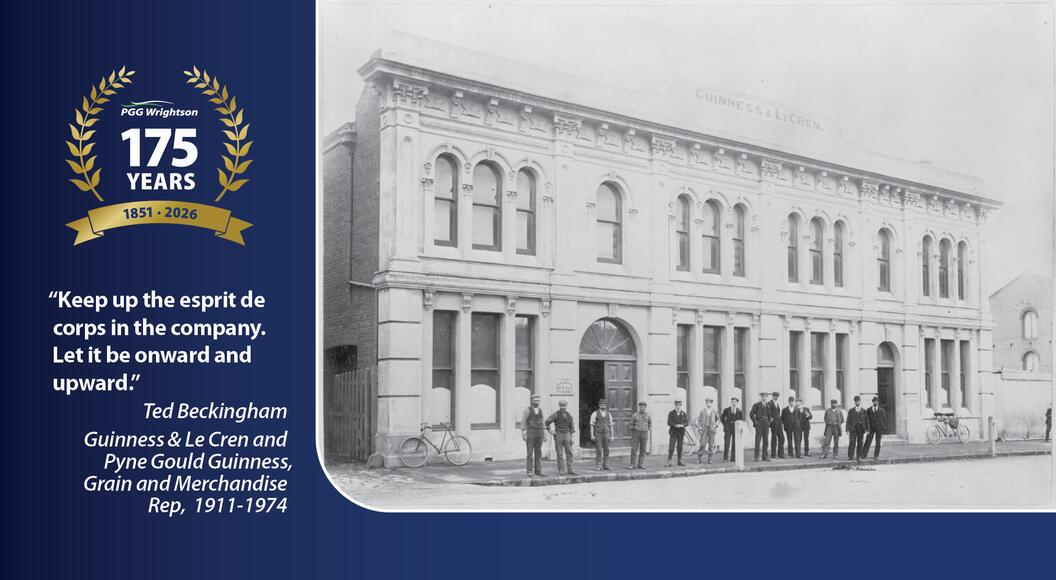
From ‘Toe Rag’ to trusted company man: Ted Beckingham’s memories of life at Pynes
When Ted Beckingham joined Guinness and Le Cren Limited in Timaru in September 1911, he was a 16-year-old office junior earning £26 a year. His official position may have been office boy, but the role came with another, less distinguished title - the ‘Toe Rag’. Decades later, Beckingham recorded his...
Video or image
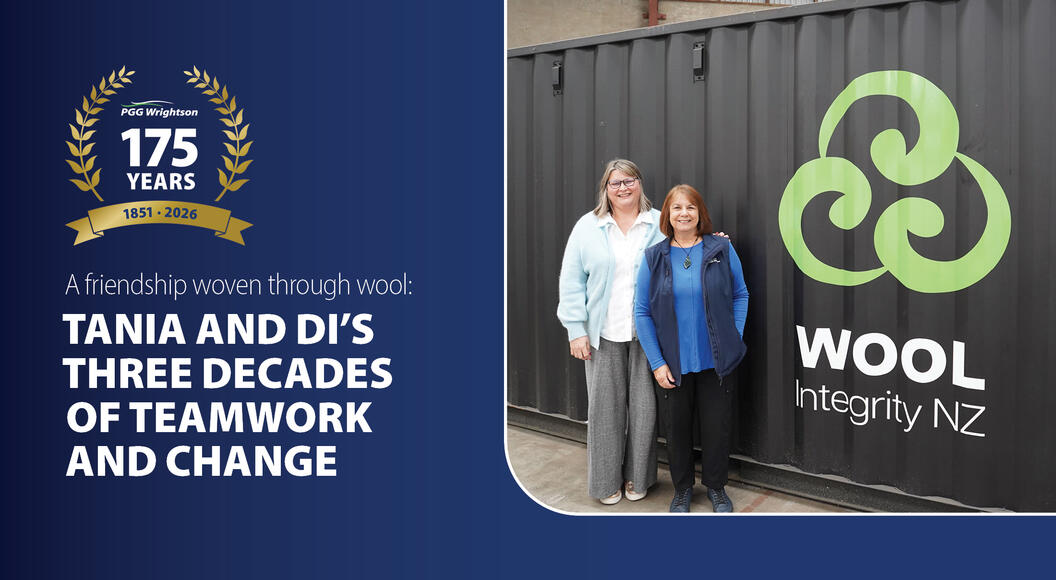
A friendship woven through wool: Tania and Di’s three decades of teamwork and change
When Diane Hermansson (Di) joined Tania Stockton at work for what was meant to be two weeks back in 1996, neither could have predicted that they would still be working side-by-side almost 30 years later. Today, Tania is Shipping and Finance Manager for Bloch & Behrens Wool (NZ) Ltd, a subsidiary of...
Video or image
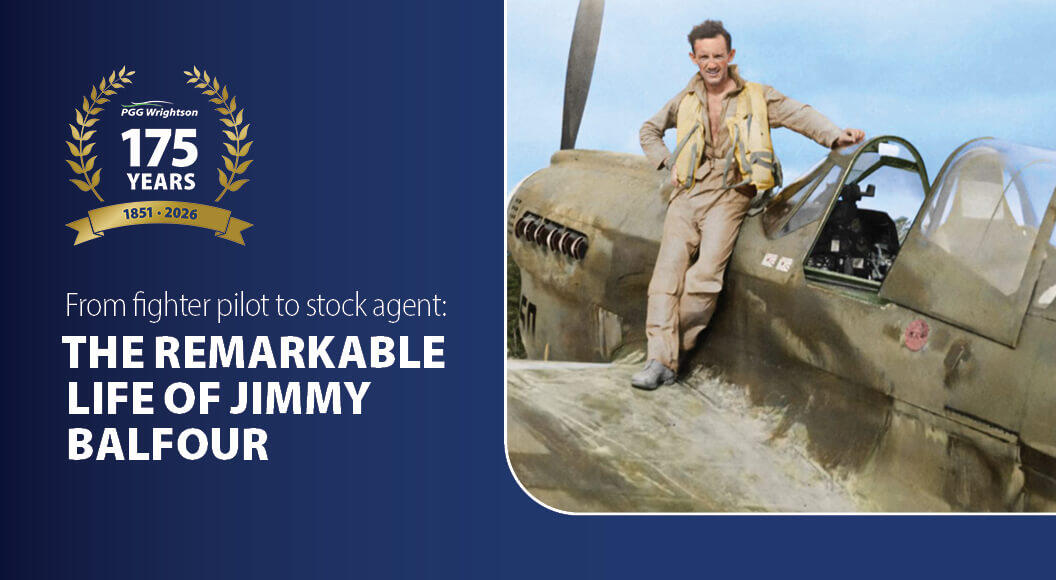
From fighter pilot to stock agent: The remarkable life of Jimmy Balfour
Every family has its storytellers. For the Balfours, many of those stories begin with Jimmy. Depending on who you ask, Robert Hamish ‘Jimmy’ Balfour will either be remembered as the decorated fighter pilot who took on impossible odds over the Pacific, the stock agent who could somehow convince...
Video or image
From ‘Toe Rag’ to trusted company man: Ted Beckingham’s memories of life at Pynes
When Ted Beckingham joined Guinness and Le Cren Limited in Timaru in September 1911, he was a 16-year-old office junior earning £26 a year. His official position may have been office boy, but the role came with another, less distinguished title - the ‘Toe Rag’. Decades later, Beckingham recorded his...
Video or image
A friendship woven through wool: Tania and Di’s three decades of teamwork and change
When Diane Hermansson (Di) joined Tania Stockton at work for what was meant to be two weeks back in 1996, neither could have predicted that they would still be working side-by-side almost 30 years later. Today, Tania is Shipping and Finance Manager for Bloch & Behrens Wool (NZ) Ltd, a subsidiary of...
Video or image
From fighter pilot to stock agent: The remarkable life of Jimmy Balfour
Every family has its storytellers. For the Balfours, many of those stories begin with Jimmy. Depending on who you ask, Robert Hamish ‘Jimmy’ Balfour will either be remembered as the decorated fighter pilot who took on impossible odds over the Pacific, the stock agent who could somehow convince...