
Video or image
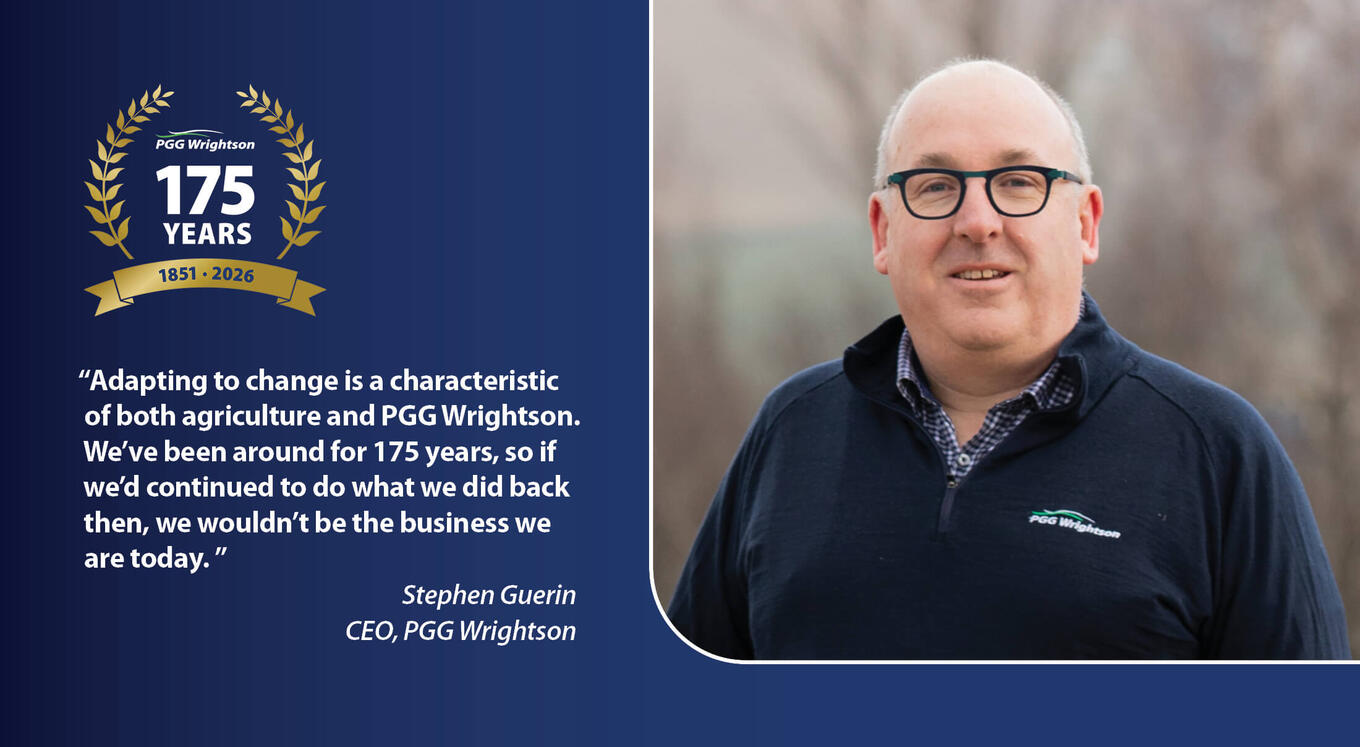
Never planned, always learning: Stephen Guerin’s journey alongside New Zealand’s agriculture industry
Some careers are carefully planned. Others are built one opportunity at a time.
For Stephen Guerin, there was never a grand ambition to become Chief Executive Officer of PGG Wrightson. In fact, when he joined the business in 1988, agriculture wasn't even the industry he expected to spend his career in.
His background was in tourism - the family business - where long hours were simply part of the job. So when he was looking for a more structured role, he joined Fruitfed. While he was studying towards a business degree, he got a position in the finance department and was supported by the company to finish his qualification.
Nearly four decades later, that decision has led him down various pathways to the role of CEO of PGW, one of New Zealand's most enduring rural businesses. But it wasn't a destination he had mapped out all those years ago.
"I never started thinking I'd be the CEO of this business with a turnover in excess of $1 billion dollars and some 2000 staff operating from 160 sites across New Zealand," Stephen reflects. "At one point I thought maybe I'd become CFO, but that takes you away from the people. And it’s the people, more than anything else, that have kept me in the industry.”
Stephen admits he knew very little about horticulture when he first joined Fruitfed. But it didn't take long before he discovered an industry that combined science, business and problem-solving in equal measure.
"I found out really quickly that this was somewhere I wanted to stay for the long term."
Working first in Christchurch before transferring to Auckland later that same year, he became immersed in New Zealand's horticultural sector during a period of enormous change. The upper North Island's kiwifruit and avocado industries were evolving rapidly, while the kiwifruit sector itself was navigating economic challenges and the creation of Zespri. And as a young accountant, Stephen found himself learning about far more than numbers.
"It was the science and challenge of growing fruit and managing market issues, along with great colleagues and working with customers who were genuinely trying to make a difference."
His career evolved alongside the business itself. Fruitfed was listed on the stock exchange before becoming part of Williams & Kettle, eventually joining PGG Wrightson in 2005. And along the way, Stephen's own role changed too. After years in finance, he moved into operational leadership, becoming involved in managing supplier relationships, reporting and business performance before leading Fruitfed nationally.
Then around 2010, another opportunity emerged - one that would take him well beyond horticulture and into the wider agricultural sector - accepting responsibility for PGG Wrightson's Retail and Water businesses. This expanded Stephen’s knowledge from orchards and vineyards into livestock, cropping and rural supplies across New Zealand. Few people have probably witnessed as much transformation in New Zealand agriculture from within one organisation. Stephen remembers the lasting impact of deregulation during the late 1980s – a period that still shapes conversations with farming families today.
"They were really challenging and scary times for people. There was this real lack of confidence from the banking and finance sector and even to this day, people still talk about how difficult it was."
Since then, he's seen industries rise and evolve, from the emergence of corporate farming to the growth of iwi-owned agricultural businesses, alongside increasing expectations around environmental stewardship, animal welfare and food provenance. And for Stephen, adapting to change has become one of the defining characteristics of both agriculture and PGW itself.
"We've been around for 175 years, so if we'd continued to do what we did back then, we wouldn't be the business we are today.
“There’s been the rise of requirements for transparency in agriculture and accountability - from how we look after animals to how we farm and look after water ways. And customers are constantly changing too - the global food system moves very fast - so regular adaptation is also required.”
Technology has transformed farming too.
"The use of data and automation continues to increase as consumers want to know where their food comes from and how it's produced."
While market fluctuations and weather events have shaped much of Stephen's career, becoming CEO in 2019 meant facing one challenge few leaders could have anticipated. Within months, COVID-19 had arrived.
Leading an essential service through lockdowns meant translating rapidly changing government guidance into practical decisions for two thousand of employees while ensuring farmers across New Zealand continued receiving the products and services they depended on. Stephen remembers filming one of his earliest company updates from his own backyard, with his wife holding the camera. The video has become something a number of staff still comment on in the business, as rather than a polished corporate messaging, employees saw authenticity and reassurance.
"People got the fact that it was real. We had to distill the language from the government and the main thing everyone needed to know was that they still had a job, we'd continue to pay them and we'd keep functioning as a business.”
For Stephen, the experience reinforced an important lesson about leadership.
"Covid was probably the greatest reflection for me as a leader. Luckily I don’t tend to panic, and there was plenty of pivoting - particularly as we were an essential industry and early on the government was grappling with how to deal with New Zealand on a macro scale. So we had to work out what that meant for our business.
“Ultimately it came down to demonstrating that what we say on the posters is actually how we operate."
Throughout those uncertain months, he also leaned on mentors and fellow CEOs, valuing conversations with people outside the organisation who could offer perspective without the emotion of the moment. It's advice he now regularly shares with emerging leaders.
"Have people who'll give you grounded advice and as your career progresses, don't be afraid to check in with them.”
Reflecting on nearly 40 years in the business, Stephen believes one of his greatest responsibilities today is helping develop the next generation.
“Take advantage of opportunities and with the right support, take some risks - I certainly have in my career. I also probably didn't appreciate it earlier in my career, but I had great mentors who placed their trust in me."
Now, he sees mentoring as a way of paying that trust forward. He's also passionate about changing perceptions of agriculture. Born in Greymouth and married to a dairy farmer's daughter, Stephen is quick to point out that modern agriculture needs a range of skills beyond actually working on the land.
"There are opportunities no matter what skillset you bring. Finance professionals, marketers, data scientists, engineers, environmental specialists, technical experts and scientists all have important roles to play.
"It's not just standing in a milking shed."
He's equally encouraged by the increasing number of women entering the sector.
"Science teams are predominantly female in many areas now. We're seeing more women across livestock and horticulture too and while we're not exactly where we need to be yet, real progress has been made."
And despite varying events affecting the industry - both ‘man-made’ and ‘acts of god’ - Stephen remains optimistic about the future of New Zealand agriculture. But it’s not all about bottom lines and profit.
“We’re a corporate business but are very conscious of the role we play in the rural sector as a whole.
“So there’s celebrating excellence, scholarships to bring more talent into the sector and speaking to the banks about the removal of services and loss of cash for those living rurally.
“From our enduring sponsorship with IHC to the support of Land Search & Rescue New Zealand to other rural organisations, it’s really important to me that we are delivering programmes and advocating for positive changes which directly benefit rural communities.
“At the end of day, we know that everything we do is about people.”
And as global consumers increasingly seek quality, provenance and sustainability, he believes New Zealand's opportunity lies in producing premium food rather than competing on volume.
"When I travel overseas, I'm a bit of a food geek. I like seeing how our products are positioned and how other countries are selling them.
“And knowing how international consumers buy and use New Zealand products, whether it's lamb, dairy, kiwifruit or emerging products like deer velvet, will become increasingly important. Because what we produce is mostly on a small scale compared to other markets, it’s best for us to focus on the quality end of the market.
"While there is conflict going on in the world, countries still want to trade so we need to understand how our food is actually consumed, and adapt accordingly.”
It's a philosophy that mirrors the career Stephen has built himself. He didn't begin with a detailed roadmap or ambitions of becoming CEO. Instead, he stayed curious, embraced opportunities, trusted good people and kept learning.
Looking ahead, Stephen sees no shortage of challenges and opportunities for the rural sector. The continued adoption of technology, greater use of biological products, safer ways of working on farms, adapting to changing global food trends, protecting New Zealand's environment and waterways, and ensuring farmers remain profitable will all be key priorities in the years ahead.
Nearly four decades after joining the business as a young accountant with little knowledge of horticulture, the lessons Stephen has learned continue to shape his leadership. The importance of people, building strong teams, putting customers first and continually adapting to change are principles that have guided his career - and will continue to guide the future of one of New Zealand's oldest and largest rural businesses.
For Stephen, success has never really been about climbing the ladder, it's been about growing alongside an industry that never stands still.
We're celebrating 175 years alongside rural New Zealand. Read the next story.
Related News
Video or image
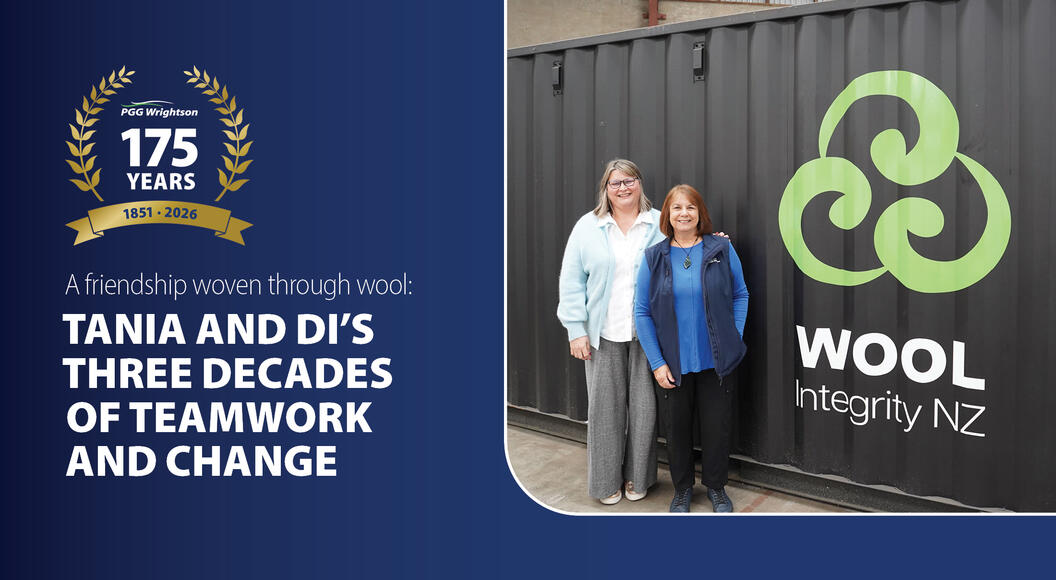
A friendship woven through wool: Tania and Di’s three decades of teamwork and change
When Diane Hermansson (Di) joined Tania Stockton at work for what was meant to be two weeks back in 1996, neither could have predicted that they would still be working side-by-side almost 30 years later. Today, Tania is Shipping and Finance Manager for Bloch & Behrens Wool (NZ) Ltd, a subsidiary of...
Video or image
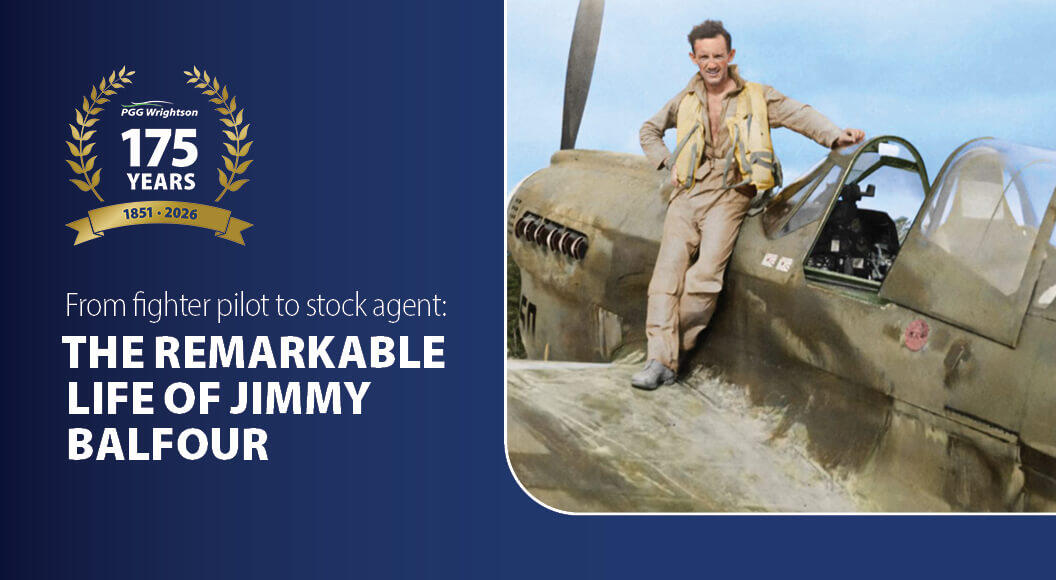
From fighter pilot to stock agent: The remarkable life of Jimmy Balfour
Every family has its storytellers. For the Balfours, many of those stories begin with Jimmy. Depending on who you ask, Robert Hamish ‘Jimmy’ Balfour will either be remembered as the decorated fighter pilot who took on impossible odds over the Pacific, the stock agent who could somehow convince...
Video or image
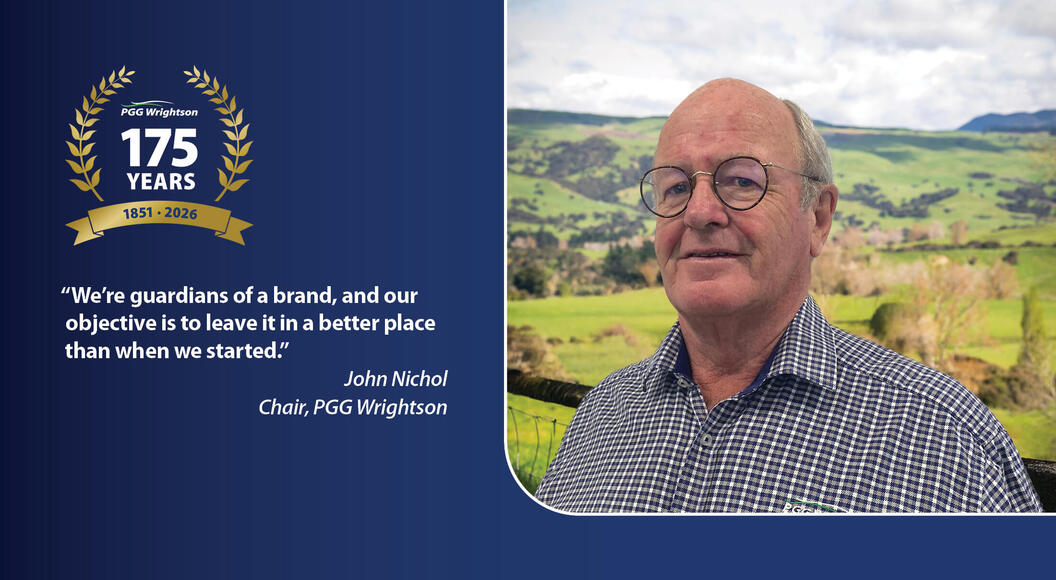
More than a chair on the Board: How PGG Wrightson has been woven through John Nichol's life
For John Nichol, PGG Wrightson has never simply been a company he has chaired or served on the board of. Long before joining the boardroom, its predecessor businesses were intertwined with his family's story, his career and, ultimately, his belief in the importance of New Zealand's rural sector...
Video or image
A friendship woven through wool: Tania and Di’s three decades of teamwork and change
When Diane Hermansson (Di) joined Tania Stockton at work for what was meant to be two weeks back in 1996, neither could have predicted that they would still be working side-by-side almost 30 years later. Today, Tania is Shipping and Finance Manager for Bloch & Behrens Wool (NZ) Ltd, a subsidiary of...
Video or image
From fighter pilot to stock agent: The remarkable life of Jimmy Balfour
Every family has its storytellers. For the Balfours, many of those stories begin with Jimmy. Depending on who you ask, Robert Hamish ‘Jimmy’ Balfour will either be remembered as the decorated fighter pilot who took on impossible odds over the Pacific, the stock agent who could somehow convince...
Video or image
More than a chair on the Board: How PGG Wrightson has been woven through John Nichol's life
For John Nichol, PGG Wrightson has never simply been a company he has chaired or served on the board of. Long before joining the boardroom, its predecessor businesses were intertwined with his family's story, his career and, ultimately, his belief in the importance of New Zealand's rural sector...