
Video or image
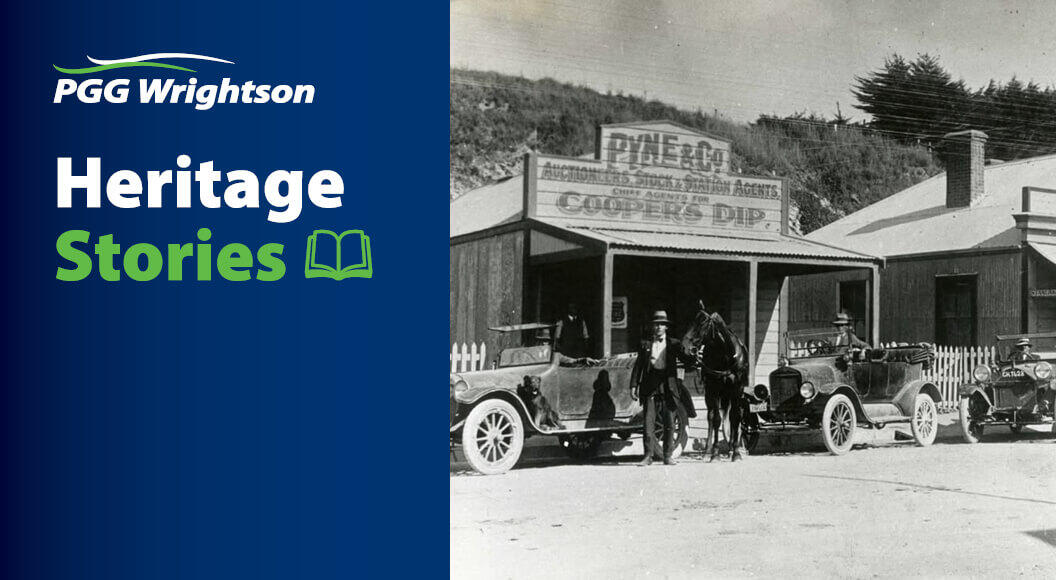
The Origins of Pyne & Co.
In 1887, in the heart of Canterbury, a name synonymous with integrity and service was established: Pyne & Co. Founded in Christchurch by Frederick Henry Pyne and Alexander Boyle, the firm began as a modest stock and station agency. Their rented office was located on Cashel Street, between High Street and Manchester Street, near the Tattersall’s Horse Bazaar—now the site of a bustling retail precinct home to Glassons, Hallenstein Brothers, and Lululemon.
Both founders shared a deep passion for horses, and the equine trade formed the cornerstone of their early business. Before partnering with Alexander, Frederick worked for J. M. Heywood & Co., then Christchurch’s leading transport provider, renowned for its high-quality horses. His equine expertise, particularly his impressive memory for breeding and performance lineage, earned him a reputation as an outstanding bloodstock auctioneer. Frederick’s love for racing was reflected in his tenure as Chairman of the Canterbury Jockey Club from 1908 to 1910.
Alexander’s enthusiasm for racing was no less fervent. He succeeded Frederick as Chairman of the Jockey Club in 1910, continuing their shared legacy in Canterbury’s equestrian circles.
At the time of the firm’s founding, the land boom of the 1870s had long passed, and New Zealand was entering a period of economic depression. The farming community was hit hard by falling sheep prices, even as the national sheep population rose to four million. The export of frozen meat offered some hope, but inefficient refrigeration and high freight costs meant little profit reached the farmer. While crop farming provided some relief, fluctuating prices offered only limited respite.
The horse, however, remained a mainstay of both domestic and commercial life. Light horses were the primary means of transport, and draught horses were an indispensable performer on the farm. As a result, the early business of Pyne & Co always saw demand.
The firm expanded steadily, opening offices and yards throughout the Canterbury region.
Frederick’s business philosophy was grounded in trust, honesty, and practical support for the rural community. His deep understanding of farmers' needs earned him a lasting reputation and drove growth in the company’s stock and station services.
A milestone came in 1893 with the Cheviot Hills dispersal sale—one of the most significant events in the firm’s early history. The three-day sale, entrusted to Pyne & Co., Miles & Co., and the NZ Loan & Mercantile Agency Co., drew around 500 buyers from across Canterbury. Selling in rotation—five lots each—the firms facilitated the sale of 109,000 sheep, along with cattle and horses.
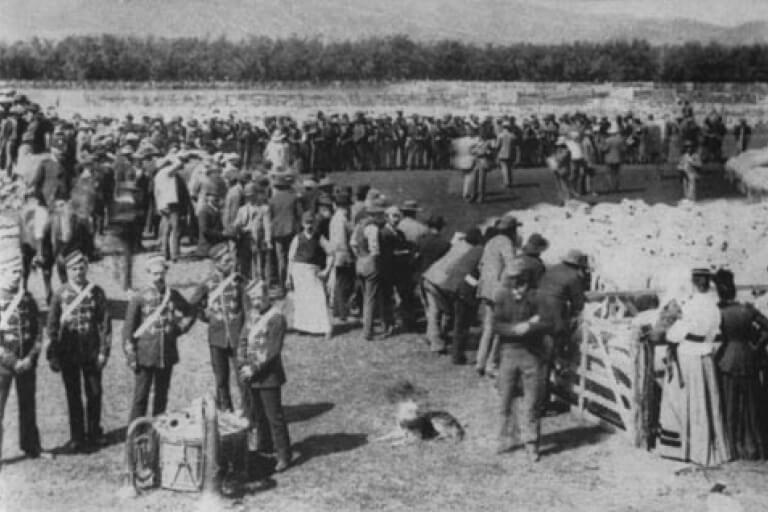
Cheviot Hills Dispersal Sale, March 1893.
Frederick Pyne was a forward-thinking entrepreneur who understood that long-term success stemmed not from transactions, but from relationships. His standing in the community was evident when, upon his death in 1915, his funeral procession stretched over a mile.
In 1919, Pyne & Co. merged with Gould Beaumont & Co. and Guinness & Le Cren to form Pyne Gould Guinness Ltd (PGG). This landmark merger laid the foundation for what would, decades later, become PGG Wrightson in 2005.
Read more about our heritage >
References: P. G. Stevens, Pyne, Gould, Guinness Ltd: the Jubilee History, 1919-1969.
Title image: West End, Circa 1930. Kaikoura Museum.
Image: Cheviot Hills Dispersal Sale, March 1893. P. G. Stevens, Pyne, Gould, Guinness Ltd: the Jubilee History, 1919-1969. Page 113.
Related News
Video or image
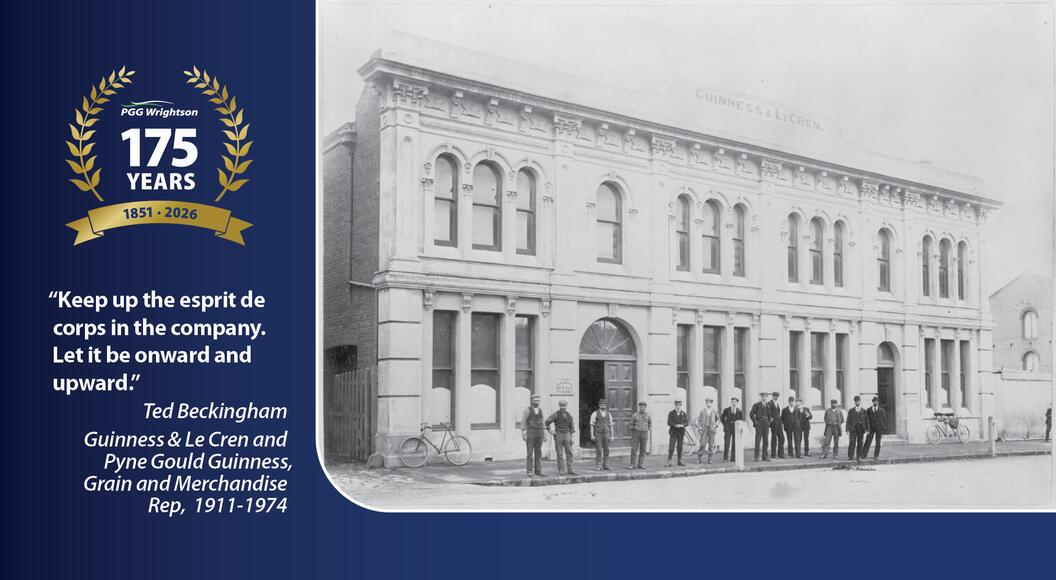
From ‘Toe Rag’ to trusted company man: Ted Beckingham’s memories of life at Pynes
When Ted Beckingham joined Guinness and Le Cren Limited in Timaru in September 1911, he was a 16-year-old office junior earning £26 a year. His official position may have been office boy, but the role came with another, less distinguished title - the ‘Toe Rag’. Decades later, Beckingham recorded his...
Video or image
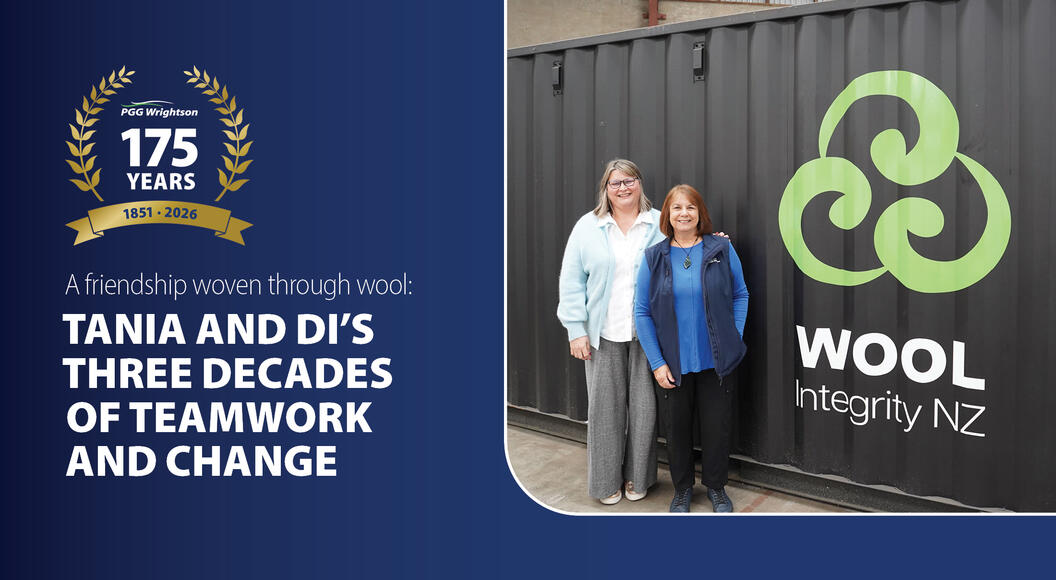
A friendship woven through wool: Tania and Di’s three decades of teamwork and change
When Diane Hermansson (Di) joined Tania Stockton at work for what was meant to be two weeks back in 1996, neither could have predicted that they would still be working side-by-side almost 30 years later. Today, Tania is Shipping and Finance Manager for Bloch & Behrens Wool (NZ) Ltd, a subsidiary of...
Video or image
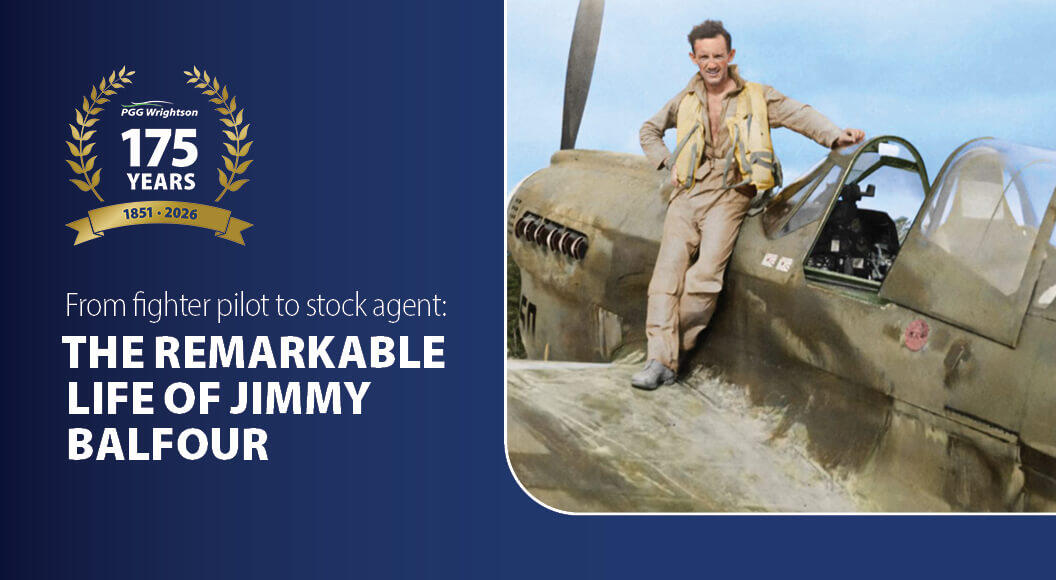
From fighter pilot to stock agent: The remarkable life of Jimmy Balfour
Every family has its storytellers. For the Balfours, many of those stories begin with Jimmy. Depending on who you ask, Robert Hamish ‘Jimmy’ Balfour will either be remembered as the decorated fighter pilot who took on impossible odds over the Pacific, the stock agent who could somehow convince...
Video or image
From ‘Toe Rag’ to trusted company man: Ted Beckingham’s memories of life at Pynes
When Ted Beckingham joined Guinness and Le Cren Limited in Timaru in September 1911, he was a 16-year-old office junior earning £26 a year. His official position may have been office boy, but the role came with another, less distinguished title - the ‘Toe Rag’. Decades later, Beckingham recorded his...
Video or image
A friendship woven through wool: Tania and Di’s three decades of teamwork and change
When Diane Hermansson (Di) joined Tania Stockton at work for what was meant to be two weeks back in 1996, neither could have predicted that they would still be working side-by-side almost 30 years later. Today, Tania is Shipping and Finance Manager for Bloch & Behrens Wool (NZ) Ltd, a subsidiary of...
Video or image
From fighter pilot to stock agent: The remarkable life of Jimmy Balfour
Every family has its storytellers. For the Balfours, many of those stories begin with Jimmy. Depending on who you ask, Robert Hamish ‘Jimmy’ Balfour will either be remembered as the decorated fighter pilot who took on impossible odds over the Pacific, the stock agent who could somehow convince...