
Video or image
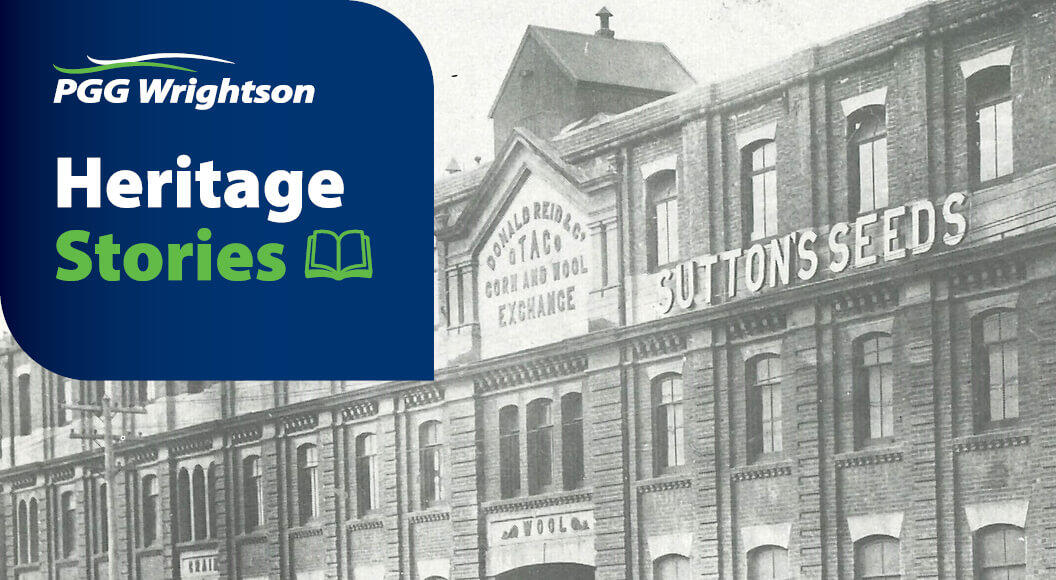
The Origins of Donald Reid & Co
In the winter of 1878, Donald Reid made a decision that would shape the future of farming in Otago. At 45, he founded Donald Reid & Co, a stock and station agency that would go on to serve generations of farmers across the region.
Donald’s background was rooted in agriculture. Born in 1833 in Perthshire, Scotland, he immigrated to New Zealand as a young man and built a successful farming operation in North Taieri. By the 1870s, he was grazing sheep and cattle, growing wheat and oats, and using some of the earliest agricultural machinery in the district. He was known for his frankness and integrity and spoke with a broad Scots accent. A meticulous record-keeper, he watched his expenditure carefully.
His farming success was matched by a notable political career. Donald served on the Otago Provincial Council and later in Parliament, where he advocated for land access for smallholders. His introduction of the deferred payment system helped many settlers acquire land without the burden of immediate full payment—a policy that had a lasting impact on land settlement in New Zealand.
Donald’s move from farming and politics into commerce came during a time of national economic transition. Wool prices were falling, and he was concerned about his farm's ability to support his large family of 12 children. He was also increasingly disillusioned with politics, despite holding senior roles—including Minister of Lands. He described parliamentary life as a “dreary wilderness of simply meaningless talk” and was frustrated by what he saw as a lack of principle among politicians. His move out of politics aligned with the rise of a new and distinctly Australasian institution: the stock and station agency.
From the 1850s, New Zealand and Australian farmers were in a unique position compared to their British counterparts. As independent owners of their land, farmers required support to sell produce, gain credit, and purchase essential household and farming goods. Colonial banks were reluctant to lend directly on such assets, so they extended overdrafts to merchants, who then financed farmers. In addition to providing advance payments on anticipated wool or grain sales, merchants arranged the shipping of produce to London and supplied general farm merchandise including seeds, fencing wire, wool packs, tools, and machinery. By 1878, stock and station agencies had evolved into a specialised branch of commerce which offered three core services, including the selling of farm produce (wool, grain, stock, and land), providing credit and advances on wool or crops, and supplying general farm merchandise.
The timing for Donald was ideal. Otago’s farming sector was expanding rapidly, with the government subdividing large pastoral blocks into smaller farms. Mixed cropping and grazing were becoming the norm, and farmers increasingly needed agents to help them manage sales, credit, and supplies.
The unique relationship between stock agent and farmer meant that the success of the stock and station agency closely paralleled the success of its clients, in both good times and bad. While the 1870s saw prosperous conditions, the 1880s brought unexpected economic hardship. Falling wool and grain prices hit farmers hard, and many left the land. Through this difficult period, Donald’s cautious financial management helped his firm weather the downturn. He continued to offer credit, often backed by his own farm, and maintained strong relationships with clients.
By the early 1900s, Reid’s firm was one of several shaping the agricultural economy of Otago and New Zealand more broadly. Other key players—including Cargill, Gibbs & Co, Dalgety & Co, National Mortgage & Agency Co, Wright Stephenson & Co, New Zealand Loan & Mercantile Agency Co, Otago Farmer’s Co-operative Association, and Stronach Morris & Co—were all becoming central to Otago’s agricultural commerce.
Firmly placed among these players, Donald Reid & Co expanded cautiously, with branches opening in Milton (1900), Balclutha (1904), Owaka (1908), and Middlemarch (1909). His approach to growth was measured and this philosophy kept the firm provincial, while others expanded nationally.
Donald Reid remained involved in the business until 1918, when illness forced his retirement. He passed away later that year at age 86, having led the firm for four decades.
The legacy of Donald Reid is a reminder of the enduring value of practical leadership, family connection, and a deep understanding of the land and the people who work it. His contributions helped shape not just a company, but a way of doing business that continues to resonate with farmers and growers across the region.
In 2001, Reid Farmers Ltd was acquired by Pyne Gould Guinness, which in turn merged with Wrightson in 2005 to become PGG Wrightson.
Read more about our heritage >
References: John H. Angus. Donald Reid Otago Farmers Limitd, The Centennial History 1878-1978.
Image Credit: John H. Angus. Donald Reid Otago Farmers Limitd, The Centennial History 1878-1978. Pg 41.
Related News
Video or image
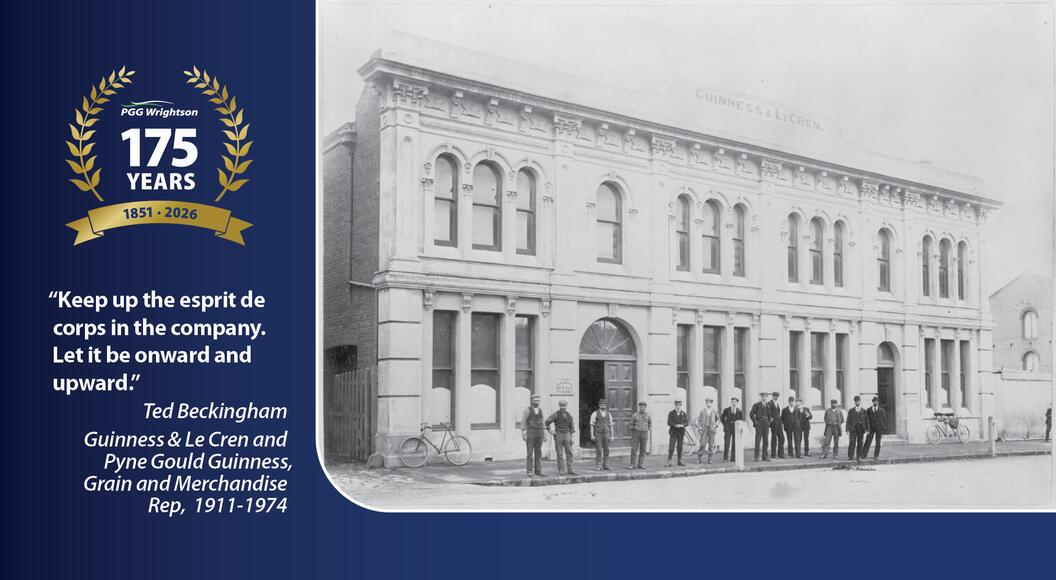
From ‘Toe Rag’ to trusted company man: Ted Beckingham’s memories of life at Pynes
When Ted Beckingham joined Guinness and Le Cren Limited in Timaru in September 1911, he was a 16-year-old office junior earning £26 a year. His official position may have been office boy, but the role came with another, less distinguished title - the ‘Toe Rag’. Decades later, Beckingham recorded his...
Video or image
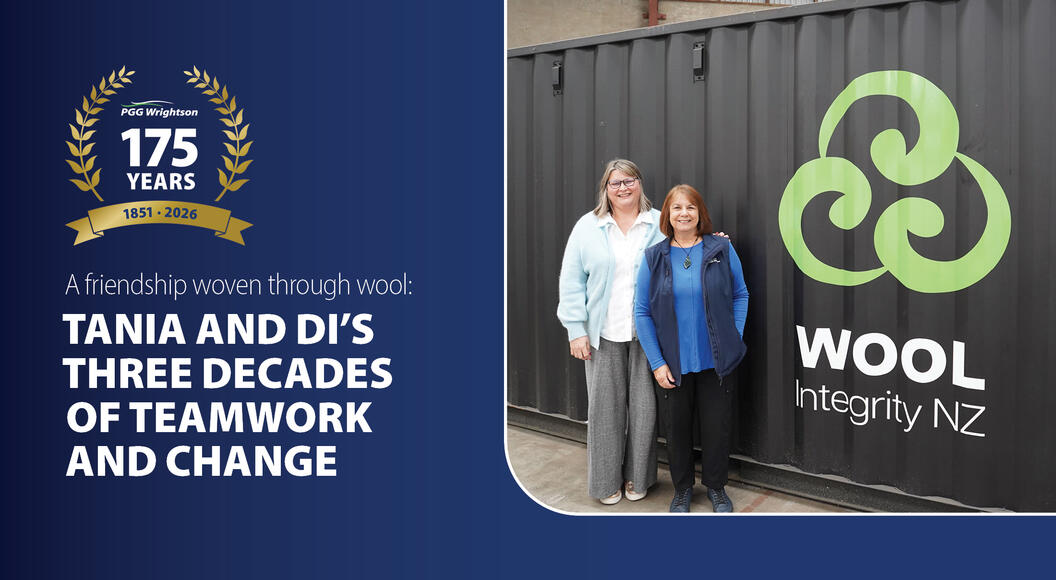
A friendship woven through wool: Tania and Di’s three decades of teamwork and change
When Diane Hermansson (Di) joined Tania Stockton at work for what was meant to be two weeks back in 1996, neither could have predicted that they would still be working side-by-side almost 30 years later. Today, Tania is Shipping and Finance Manager for Bloch & Behrens Wool (NZ) Ltd, a subsidiary of...
Video or image

From fighter pilot to stock agent: The remarkable life of Jimmy Balfour
Every family has its storytellers. For the Balfours, many of those stories begin with Jimmy. Depending on who you ask, Robert Hamish ‘Jimmy’ Balfour will either be remembered as the decorated fighter pilot who took on impossible odds over the Pacific, the stock agent who could somehow convince...
Video or image
From ‘Toe Rag’ to trusted company man: Ted Beckingham’s memories of life at Pynes
When Ted Beckingham joined Guinness and Le Cren Limited in Timaru in September 1911, he was a 16-year-old office junior earning £26 a year. His official position may have been office boy, but the role came with another, less distinguished title - the ‘Toe Rag’. Decades later, Beckingham recorded his...
Video or image
A friendship woven through wool: Tania and Di’s three decades of teamwork and change
When Diane Hermansson (Di) joined Tania Stockton at work for what was meant to be two weeks back in 1996, neither could have predicted that they would still be working side-by-side almost 30 years later. Today, Tania is Shipping and Finance Manager for Bloch & Behrens Wool (NZ) Ltd, a subsidiary of...
Video or image
From fighter pilot to stock agent: The remarkable life of Jimmy Balfour
Every family has its storytellers. For the Balfours, many of those stories begin with Jimmy. Depending on who you ask, Robert Hamish ‘Jimmy’ Balfour will either be remembered as the decorated fighter pilot who took on impossible odds over the Pacific, the stock agent who could somehow convince...