
Video or image
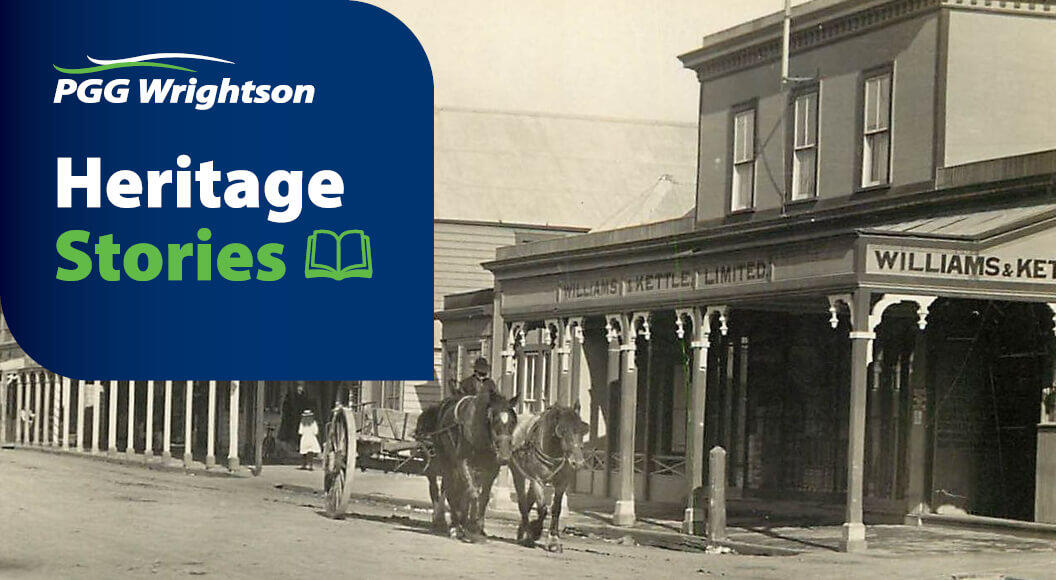
East Coast Legacy: The Origins of Williams & Kettle
From the windswept hills of Hawke’s Bay to the wharves of Ahuriri, our East Coast legacy is built on the bold decisions of rural icons like Frederick Williams and Nathaniel Kettle, who formed Williams & Kettle during one of New Zealand’s toughest economic periods in the 1880s.
Amidst challenging times, including severe weather events, low wool prices, and the spread of rabbits and mange, a young entrepreneur named Frederick Williams saw opportunity. In 1880, at just 26 years old, he stepped out from his apprenticeship at Kinross & Co and established his own stock and station agency in Napier. Born at the Manutuke Mission Station near Gisborne in 1854, Frederick was part of a pioneering family that understood the value of resilience and community.
Frederick's new firm gained a reputation for reliability and client loyalty. He offered services in livestock trading, rural finance. In 1885, he was joined by Nathaniel Kettle, a businessman known for his sharp mind and strong ethics. Together, they built Williams & Kettle into one of the most respected firms in Hawke’s Bay.
Both founders were committed to their region, supporting local causes and helping farming families get ahead, especially during times of hardship. Over the next century, Williams & Kettle expanded across the lower North Island, becoming a cornerstone of rural life.
Through mergers and industry evolution, Williams & Kettle eventually became part of the Wrightson network and contributed to the formation of PGG Wrightson in 2005. The Williams & Kettle legacy of local service, innovation, and farmer-first thinking remains embedded in the company today.
Read more about our heritage >
References: McGregor, E. The Price of Success. Williams and Kettle (2019).
Title image: Waipawa, Circa 1915. A branch of Williams & Kettle. Aussie~mobs from Brisbane, Australia, CC BY-SA 2.0
Related News
Video or image
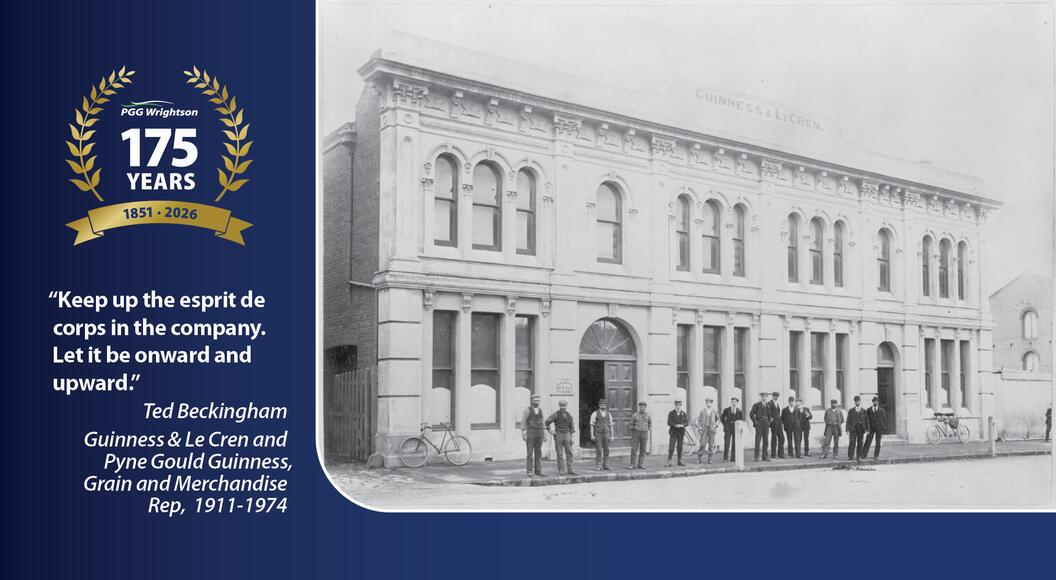
From ‘Toe Rag’ to trusted company man: Ted Beckingham’s memories of life at Pynes
When Ted Beckingham joined Guinness and Le Cren Limited in Timaru in September 1911, he was a 16-year-old office junior earning £26 a year. His official position may have been office boy, but the role came with another, less distinguished title - the ‘Toe Rag’. Decades later, Beckingham recorded his...
Video or image

A friendship woven through wool: Tania and Di’s three decades of teamwork and change
When Diane Hermansson (Di) joined Tania Stockton at work for what was meant to be two weeks back in 1996, neither could have predicted that they would still be working side-by-side almost 30 years later. Today, Tania is Shipping and Finance Manager for Bloch & Behrens Wool (NZ) Ltd, a subsidiary of...
Video or image
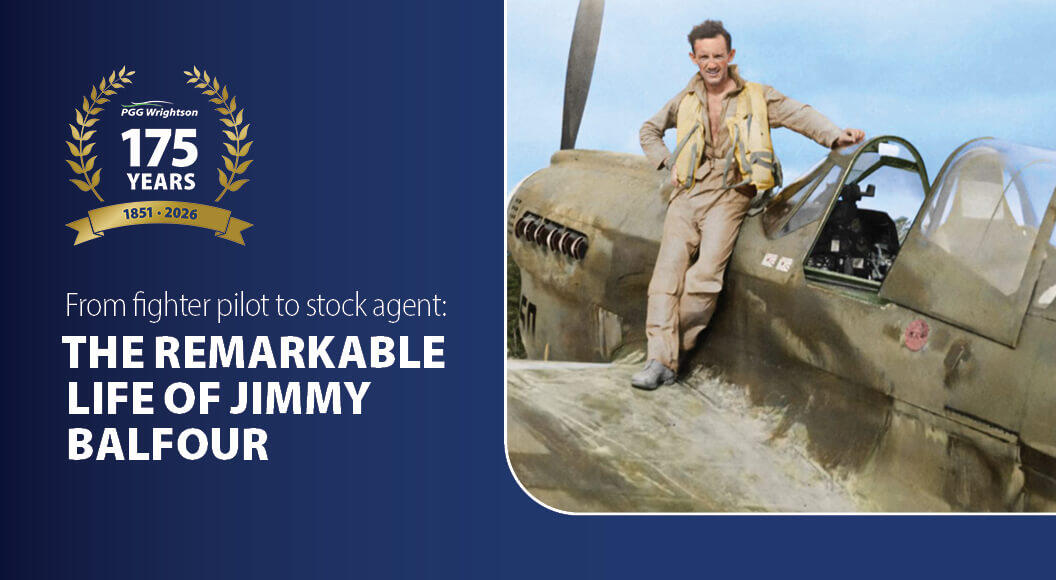
From fighter pilot to stock agent: The remarkable life of Jimmy Balfour
Every family has its storytellers. For the Balfours, many of those stories begin with Jimmy. Depending on who you ask, Robert Hamish ‘Jimmy’ Balfour will either be remembered as the decorated fighter pilot who took on impossible odds over the Pacific, the stock agent who could somehow convince...
Video or image
From ‘Toe Rag’ to trusted company man: Ted Beckingham’s memories of life at Pynes
When Ted Beckingham joined Guinness and Le Cren Limited in Timaru in September 1911, he was a 16-year-old office junior earning £26 a year. His official position may have been office boy, but the role came with another, less distinguished title - the ‘Toe Rag’. Decades later, Beckingham recorded his...
Video or image
A friendship woven through wool: Tania and Di’s three decades of teamwork and change
When Diane Hermansson (Di) joined Tania Stockton at work for what was meant to be two weeks back in 1996, neither could have predicted that they would still be working side-by-side almost 30 years later. Today, Tania is Shipping and Finance Manager for Bloch & Behrens Wool (NZ) Ltd, a subsidiary of...
Video or image
From fighter pilot to stock agent: The remarkable life of Jimmy Balfour
Every family has its storytellers. For the Balfours, many of those stories begin with Jimmy. Depending on who you ask, Robert Hamish ‘Jimmy’ Balfour will either be remembered as the decorated fighter pilot who took on impossible odds over the Pacific, the stock agent who could somehow convince...