
Video or image
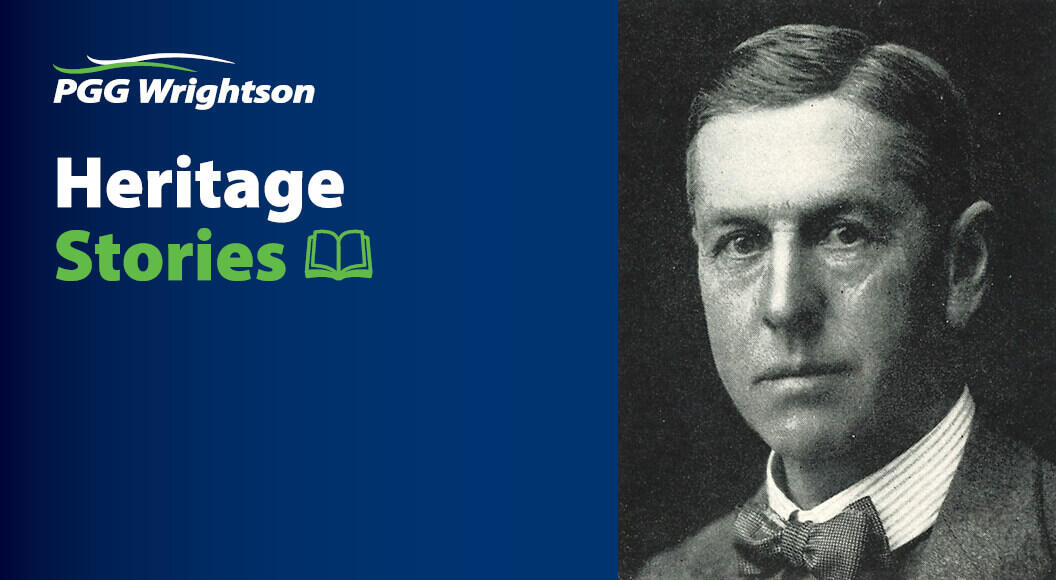
The Origins of Gould Beaumont & Co
This October marks 20 years since the iconic merger of Wrightson Ltd and Pyne Gould Guinness Ltd, so we’re delving into the archives to revisit the stories of our founders. In 1919, Gould Beaumont & Co merged with Pyne & Co to form Pyne Gould Guinness Ltd, creating one of the largest rural service providers in the South Island. The story of Gould Beaumont & Co however traces its origins to one of Canterbury’s most well-known early settlers: George Gould (1823-1889).
In 1850, 27-year-old George Gould immigrated to Wellington with his wife, Hannah. By February the following year, they sailed to Lyttelton accompanied by their pre-built house frame, which they transported up the Avon River to the eastern corner of Colombo and Armagh Street. The home became Christchurch's first General Store in 1851, and business boomed as more settlers arrived in Christchurch. Canterbury’s early sheep numbers were growing at this time, from 17,000 in 1851 to over 100,000 by 1853.
Originally starting as a General Merchandiser, George soon expanded the business. In 1854, George Gould welcomed Grosvenor Miles into partnership, and for six years they traded as Gould & Miles. Over this time, the firm provided stock and station, and wool shipping services.
By 1869, George’s interests in farming included a half share of Springfield, the other half owned by his appointed farm manager, Duncan Cameron. With 16,000 acres of water-less land, Duncan constructed forty miles of water races—an undertaking that later led to the development of the water-race system that now covers the Canterbury Plains.
George's eldest son, Joseph Gould, took over a significant part of the business in 1878, as George’s health deteriorated. For a time, Joseph traded with George’s brother-in-law, John Lewis, then following John’s retirement, he traded with John Beaumont under the name Gould, Beaumont and Co from 1883.
George Gould Sr. passed away in 1889 and the region showed its respect with flags flown at half mast, the tolling of the Christchurch Cathedral bell, as well as the closure of businesses for the day.
Under Joseph’s watch, the family legacy continued with Gould Beaumont & Co earning a steadfast reputation in rural commerce. The firm reflected Joseph’s deep knowledge of pastoral farming and John’s skill as a practical and strategic businessman.
The firm’s services extended beyond livestock into grain and seed trading, insurance, and finance. As rural Canterbury grew more sophisticated, so too did the business model of Gould Beaumont & Co. The company was known for backing its clients through difficult periods, such as the depression of the 1880s and the economic fluctuations of the early 1900s. Joseph Gould’s legacy in Canterbury includes serving as president and patron of the A&P Association and contributing extensively to the Canterbury Museum collections.
George Gould (Joseph’s younger brother) joined Gould Beaumont & Co in 1893 after completing his education and continued the family tradition of steadfast commitment to the Canterbury region. One of George's influential contributions was in sheep breeding. In 1913, he imported Suffolk sheep to New Zealand and in the 1930s crossbred them with Southdowns to develop the South Suffolk breed. In 1937, George Gould also gifted the Citizen’s War Memorial to the city of Christchurch, providing an enduring landmark to honour those who gave their lives in service.
Read more about our heritage >
References: P. G. Stevens. Pyne Gould Guiness Ltd. The Jubilee History 1919-1969.
Title image: George Gould, Gould, Beaumont & Co 1893-1919. P. G. Stevens. Pyne Gould Guiness Ltd. The Jubilee History 1919-1969.
Related News
Video or image
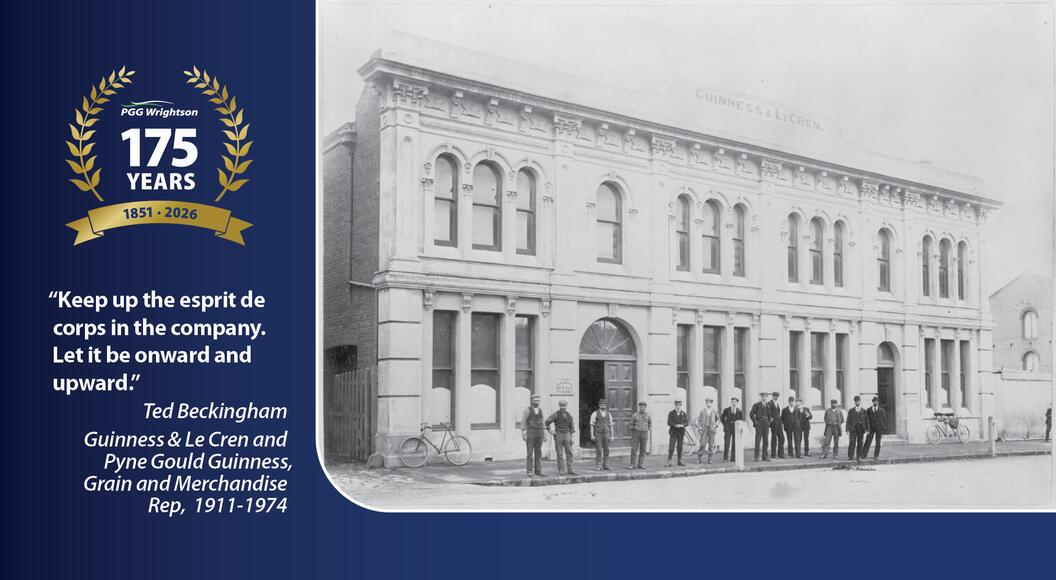
From ‘Toe Rag’ to trusted company man: Ted Beckingham’s memories of life at Pynes
When Ted Beckingham joined Guinness and Le Cren Limited in Timaru in September 1911, he was a 16-year-old office junior earning £26 a year. His official position may have been office boy, but the role came with another, less distinguished title - the ‘Toe Rag’. Decades later, Beckingham recorded his...
Video or image
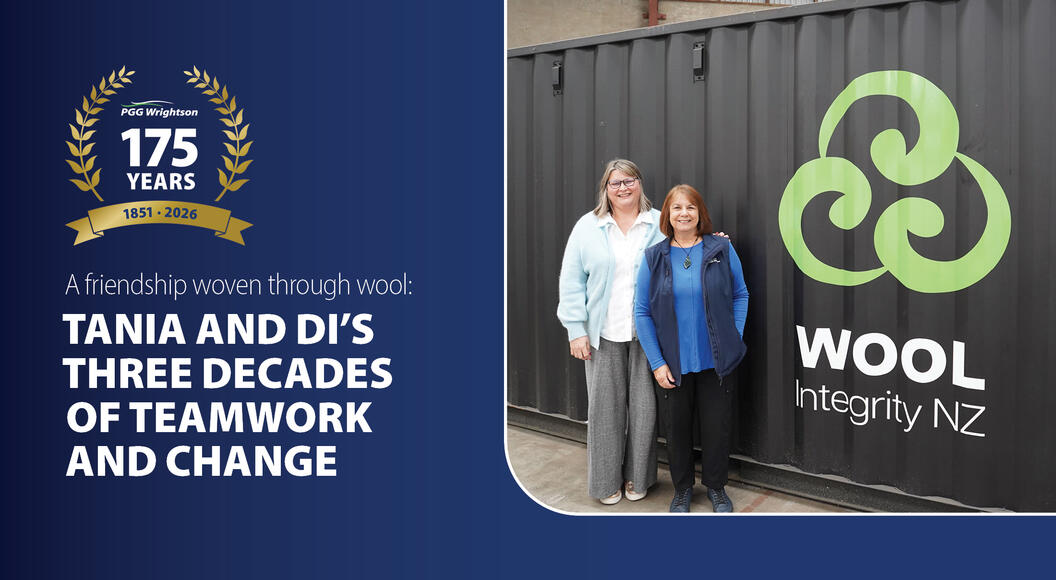
A friendship woven through wool: Tania and Di’s three decades of teamwork and change
When Diane Hermansson (Di) joined Tania Stockton at work for what was meant to be two weeks back in 1996, neither could have predicted that they would still be working side-by-side almost 30 years later. Today, Tania is Shipping and Finance Manager for Bloch & Behrens Wool (NZ) Ltd, a subsidiary of...
Video or image
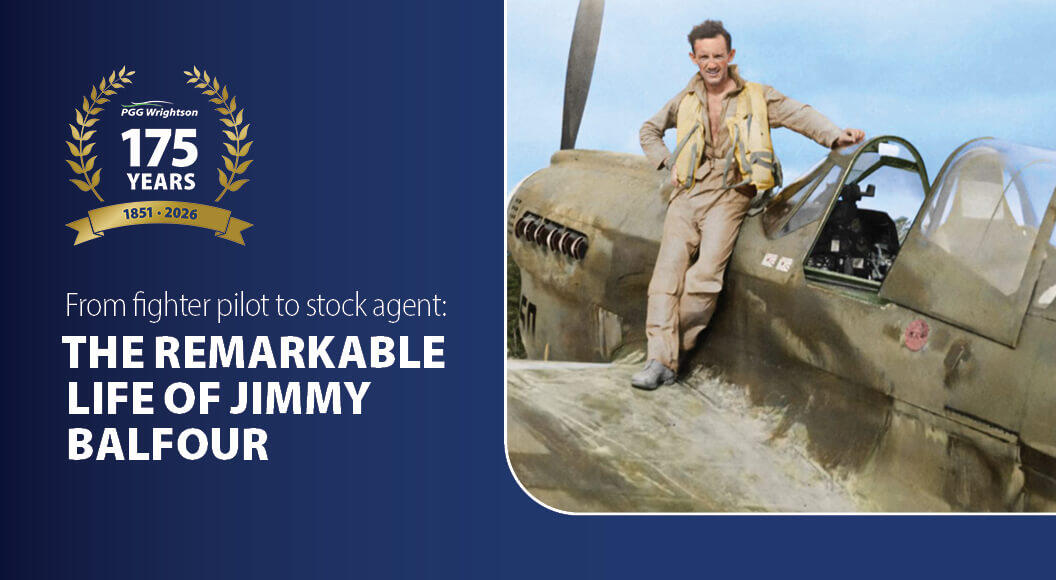
From fighter pilot to stock agent: The remarkable life of Jimmy Balfour
Every family has its storytellers. For the Balfours, many of those stories begin with Jimmy. Depending on who you ask, Robert Hamish ‘Jimmy’ Balfour will either be remembered as the decorated fighter pilot who took on impossible odds over the Pacific, the stock agent who could somehow convince...
Video or image
From ‘Toe Rag’ to trusted company man: Ted Beckingham’s memories of life at Pynes
When Ted Beckingham joined Guinness and Le Cren Limited in Timaru in September 1911, he was a 16-year-old office junior earning £26 a year. His official position may have been office boy, but the role came with another, less distinguished title - the ‘Toe Rag’. Decades later, Beckingham recorded his...
Video or image
A friendship woven through wool: Tania and Di’s three decades of teamwork and change
When Diane Hermansson (Di) joined Tania Stockton at work for what was meant to be two weeks back in 1996, neither could have predicted that they would still be working side-by-side almost 30 years later. Today, Tania is Shipping and Finance Manager for Bloch & Behrens Wool (NZ) Ltd, a subsidiary of...
Video or image
From fighter pilot to stock agent: The remarkable life of Jimmy Balfour
Every family has its storytellers. For the Balfours, many of those stories begin with Jimmy. Depending on who you ask, Robert Hamish ‘Jimmy’ Balfour will either be remembered as the decorated fighter pilot who took on impossible odds over the Pacific, the stock agent who could somehow convince...