
Video or image
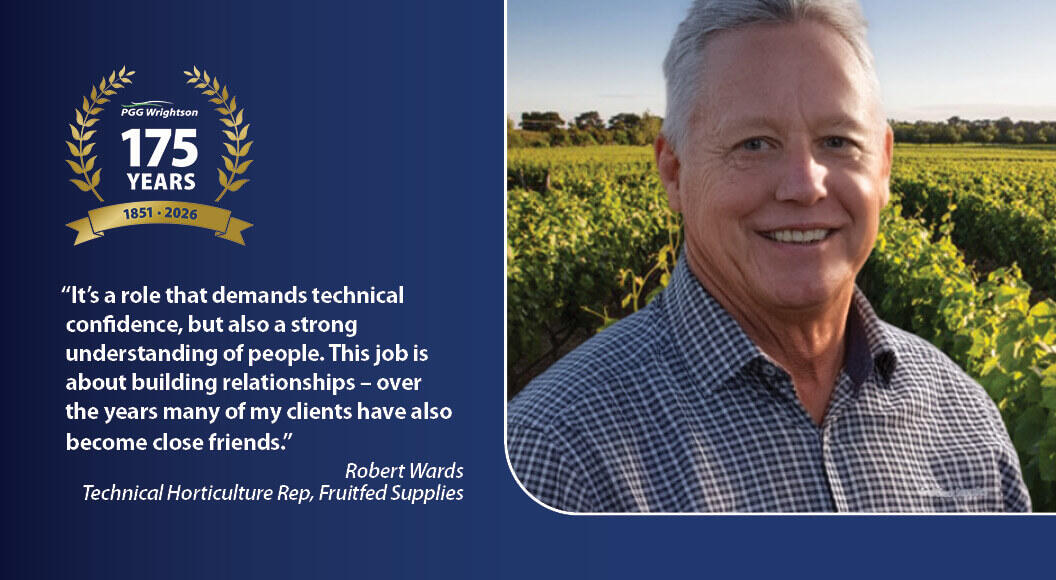
Through good seasons, tough seasons, and everything in between – Rob Wards’ lifetime among growers
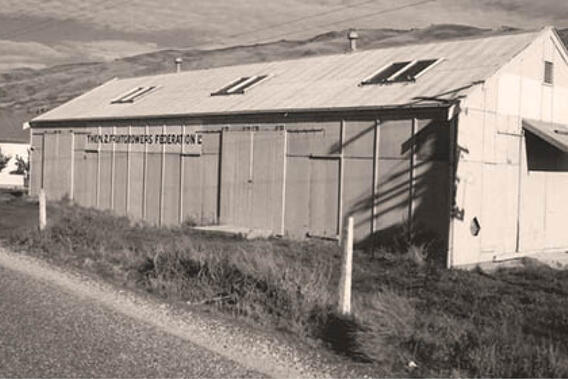
Rob Wards still knows the old building on Bennetts Road like the back of his hand. It sits a few kilometres east of Roxburgh township and has been part of the district’s horticultural backbone for decades - long before modern supply chains and forklifts, it was used as a storage point for fruit destined for markets around New Zealand.
Rob also has a family link to the area itself, with Bennetts Road named after his wife Diane’s Great-Grandfather John Bennetts, who was a gold miner and one of the first pioneer fruit growers in the Teviot Valley.
And when the railway line closed in 1968, the building became a storage centre for frost pots and fertiliser for the New Zealand Fruitgrowers Federation - now Fruitfed Supplies. Rob remembers it clearly, because as a young worker, it was one of his jobs to stack the goods inside by hand.
“There were no forklifts back then, it was all manual work,” Rob recalls.
Now a Technical Horticultural Representative with Fruitfed Supplies, Rob has spent more than 50 years in the horticulture industry, working alongside growers through good seasons, tough seasons, and everything in between.
He has seen the industry change completely, from new varieties to new chemistry, new orchard systems, and of course, the major shift of small family-owned blocks to large-scale corporate developments. But through all of it, his role has stayed grounded in the same fundamentals - relationships, practical advice, and being available when growers need support.
Rob was brought up in Roxburgh, where orchard work was part of everyday life. So, like many young people in the area, he spent school holidays pruning, picking and working outdoors. Then when he left school in 1970 and took a job with the New Zealand Fruitgrowers Federation, it felt like a natural fit.
“It seemed the perfect job for me, I had already worked in many different orchards, and I also enjoyed growing all sorts of plants.”
His first years were spent in the Roxburgh store, helping with deliveries and learning the day-to-day reality of servicing growers. He also spent time at the Fruitgrowers Federation tree nursery in Levin and later worked on chemical trials in Hastings with Don McKenzie, the NZ Fruit Federation’s Technical Adviser.
And it was those early experiences which helped shape Rob’s career. He wasn’t just learning products, he was learning how to apply them properly, how to solve problems, and how important good technical advice was for orchardists making high-stakes decisions.
In 1974, the company invested further in Rob’s future, sending him to Massey University to complete a Diploma of Horticulture in Orchard Management. For Rob, it was a significant milestone, and one that reflected the way Fruitfed was investing in its staff during those years.
After completing his studies, Rob returned to Roxburgh as a Field Representative and his territory was extensive, servicing orchard and berry fruit clients from Roxburgh through to Outram and Invercargill.
“It was a role that demanded technical confidence, but also a strong understanding of people. This job is about building relationships – over the years many of my clients have also become close friends.”
Throughout the decades, Rob has seen horticulture go through major shifts. He remembers the challenging years of the 1970s and 80s in Central Otago, when the apple industry crashed and the summer fruit syndicate orchards struggled.
“They were challenging times in Central Otago years ago, you’d see the highs and lows of all those crops. Many growers at the time were family businesses, but often with other sources of income to support them through the downturns – they were a hardy bunch.
“When I first started work, there were dozens of small orchard blocks, and I had over 100 clients in my territory. Now many have been sold up or replaced by larger operations, the structure of the industry has changed dramatically over the years.”
In 1987, Rob took a major step in a new direction. He resigned and joined Sun Harvest Orchards as Operations Manager, overseeing four large, syndicated orchards, while also running his own family orchard and a leased orchard. And then in 1989 Diane and Rob started Wards Horticulture offering a consultancy service for local growers.
“Around the same time the Fruitgrowers Federation had closed their Roxburgh store and relocated to Alexandra. So, as a result of that, we expanded the consultancy part of our business to include horticultural supplies operating out of the family orchard property in Roxburgh.
“In 1993 we opened another store in Alexandra to service orchardists and the expanding grape industry. Then in 1994, we purchased the closed Wrightson’s store in Roxburgh and reopened it as Wards Horticulture Ltd, supplying orchardists and farmers throughout the region.
“When we started our own business in Central Otago, it was a significant achievement. Then being able to on sell it to PGG in 2003, that was certainly one of our highlights.”
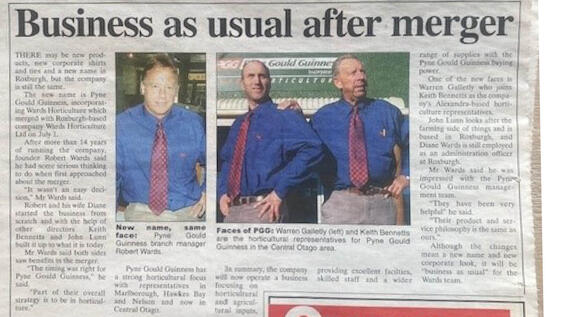
Having completed a two-year contract term with PGG, in 2005 Rob and his wife left New Zealand for their OE. In 2009, Rob returned to Christchurch and it wasn’t long before he was back working in the industry again, this time with Fruitfed Supplies.
“I was offered a job by Jason Fraser as a THR. When you’re in the agchem industry, everyone knows everyone and I’d met Jason when I had my own business. So when I came back from the UK, he said ‘let’s have a coffee, and he offered me the job.”
Rob later became Area Sales Manager for Canterbury. And today, he continues working three days a week as a Technical Horticultural Representative, still active, still connected, and still doing the work he enjoys most.
“I’m still working for Fruitfed three days a week. And when I look back on it all, I’ve had 55 years’ service working in a great industry for an awesome company.
“Fruitfed Supplies is a technical-based business and the company prides itself on giving sound technical advice to growers.”
Since his early days on the job, Rob has watched the practical side of horticulture change significantly.
“The tree planting and pruning methods have changed over the years. Now it’s intensive plantings, two-dimensional trees with more trees per hectare.”
Of course, mechanisation has also increased, and spraying methods have shifted dramatically from manual spraying with handguns to modern equipment with more precise application.
“Chemistry has changed a lot over the years - the products we are now using are so much safer for the consumer and the environment, and look after the friendly beneficial insects,” says Rob.
He also points to the increasing interest in organic production, with some growers seeking premium markets and alternative approaches. But even with modern technology, Rob says the job still comes down to growers needing someone they can trust.
“No two days are the same, you meet so many interesting characters. That’s one of the most rewarding parts of the job.”
After decades in the field, Rob has collected more stories than he could ever tell (or is allowed to tell) and some that still make him laugh. He recalls one morning during blossom time, a grower rang him about brown rot and asked whether Rob had changed his recommended spray mix.
The grower explained he’d already sprayed the orchard using a product he had in the shed, a blue-looking liquid. The problem was that the correct product should have been brown - it turned out he’d sprayed the whole orchard with anti-freeze. Rob had been eating breakfast when the call came through, but the moment the grower explained what he’d done, Rob couldn’t help himself.
“I was lying on the floor laughing,” he says. “And I remember Diane very curtly telling me to get up and talk to him.”
The advice was immediate, wash it off using sprinklers and thankfully not much damage was done. Another more serious situation involved spray oil drums that had been mistakenly filled with hydraulic oil. All the drums from the supplier looked the same and the grower hadn’t checked the label, tipped it into the sprayer, and the trees quickly started showing damage.
“The grower told me that all his trees were showing signs of being burnt, and it was actually a bit of a mess. It didn’t kill the trees but they were very sick for a while.”
Thankfully those kinds of mistakes are rare, Rob says, but they underline why technical support matters, and why it’s important for growers to have someone they can ring when things go wrong.
Rob believes the future of horticulture will continue trending toward bigger operations and more corporate ownership, with many major developments already underway in the South Island.
“We’ve got the space,” he says. “There’s good flat land, good water, and cheap land compared to the North Island.”
And despite some of the challenges those in the industry face, Rob is optimistic, believing New Zealand continues to set the benchmark for apple quality and production standards internationally.
“New Zealand is right up there,” he says. “In fact, we’re renowned for our apples.”
With 55 years of service to his name, Rob is clear on what matters most – people and relationship-building skills, technical knowledge, reliability, and being willing to keep learning.
“It’s a people’s game,” he says. “You’ve got to go the extra mile, coupled with the right advice.”
Rob says he still loves the variety, the problem-solving, and the relationships built through the work. And he believes it’s a career more young people should consider.
“It’s a great job,” he says. “I enjoy being outdoors helping our clients grow the best crops they possibly can. It's very satisfying to know you’ve contributed to your client’s success.”
After a lifetime spent working with growers, advising through the good and the bad seasons and helping the industry evolve, Rob’s story is one that fits naturally into PGG Wrightson’s 175-year legacy, built not only through business growth, but through people who have stayed committed to rural New Zealand for the long haul.
We're celebrating 175 years alongside rural New Zealand. Read the next story.
Related News
Video or image
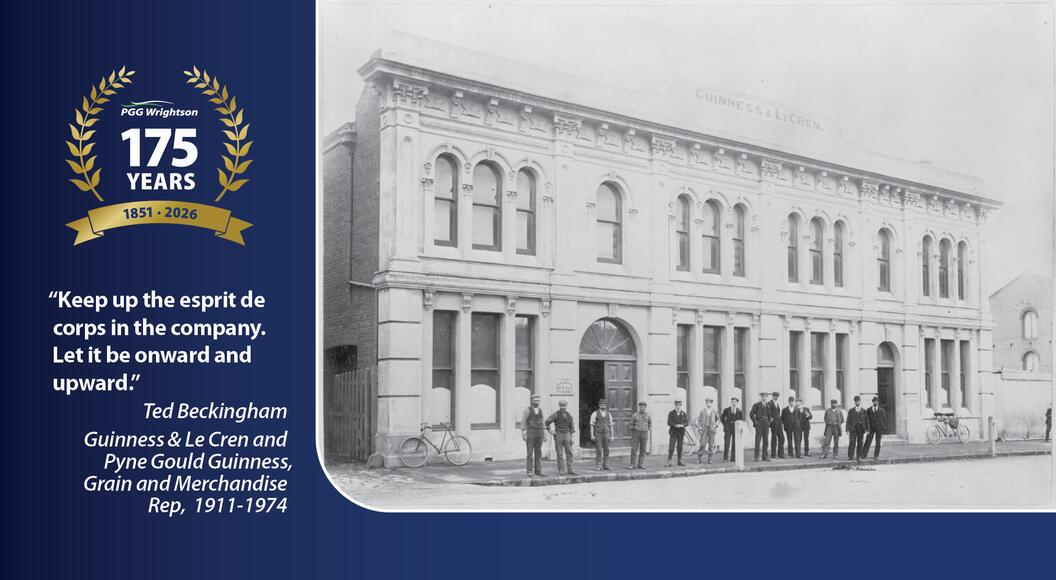
From ‘Toe Rag’ to trusted company man: Ted Beckingham’s memories of life at Pynes
When Ted Beckingham joined Guinness and Le Cren Limited in Timaru in September 1911, he was a 16-year-old office junior earning £26 a year. His official position may have been office boy, but the role came with another, less distinguished title - the ‘Toe Rag’. Decades later, Beckingham recorded his...
Video or image

A friendship woven through wool: Tania and Di’s three decades of teamwork and change
When Diane Hermansson (Di) joined Tania Stockton at work for what was meant to be two weeks back in 1996, neither could have predicted that they would still be working side-by-side almost 30 years later. Today, Tania is Shipping and Finance Manager for Bloch & Behrens Wool (NZ) Ltd, a subsidiary of...
Video or image

From fighter pilot to stock agent: The remarkable life of Jimmy Balfour
Every family has its storytellers. For the Balfours, many of those stories begin with Jimmy. Depending on who you ask, Robert Hamish ‘Jimmy’ Balfour will either be remembered as the decorated fighter pilot who took on impossible odds over the Pacific, the stock agent who could somehow convince...
Video or image
From ‘Toe Rag’ to trusted company man: Ted Beckingham’s memories of life at Pynes
When Ted Beckingham joined Guinness and Le Cren Limited in Timaru in September 1911, he was a 16-year-old office junior earning £26 a year. His official position may have been office boy, but the role came with another, less distinguished title - the ‘Toe Rag’. Decades later, Beckingham recorded his...
Video or image
A friendship woven through wool: Tania and Di’s three decades of teamwork and change
When Diane Hermansson (Di) joined Tania Stockton at work for what was meant to be two weeks back in 1996, neither could have predicted that they would still be working side-by-side almost 30 years later. Today, Tania is Shipping and Finance Manager for Bloch & Behrens Wool (NZ) Ltd, a subsidiary of...
Video or image
From fighter pilot to stock agent: The remarkable life of Jimmy Balfour
Every family has its storytellers. For the Balfours, many of those stories begin with Jimmy. Depending on who you ask, Robert Hamish ‘Jimmy’ Balfour will either be remembered as the decorated fighter pilot who took on impossible odds over the Pacific, the stock agent who could somehow convince...