
Video or image
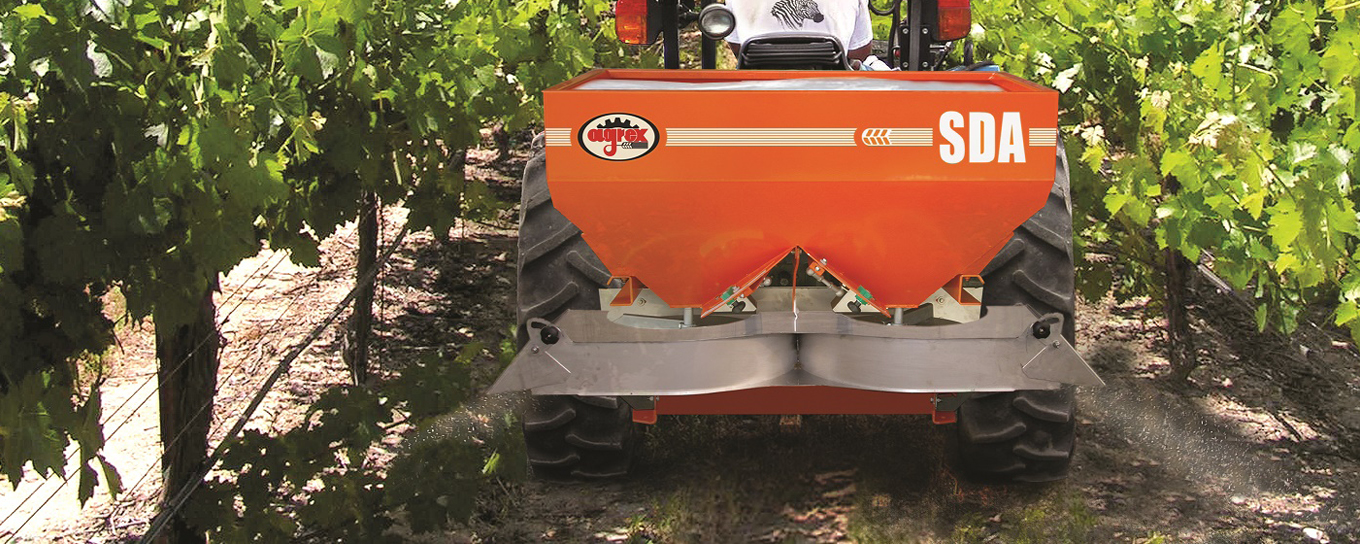
Save time with spreaders built for the job
With soil tests done and fertiliser recommendations made by your Fruitfed Supplies representative, the next step is application of the recommended inputs. But is your spreader up to the task? Available from Fruitfed Supplies, the Vogal SDA range of orchard and vineyard spreaders suit many New Zealand horticultural operations including top fruit orchards, small fruit crops like blackcurrants, and vine crops like grapes and hops.
The Vogal SDA range is imported and distributed by Rata Industries Group with Director and North Island Sales Manager Glenn Walton saying these spreaders are designed to give operators flexibility in many areas. “The SDA fertiliser spreaders have simple designs that are well thought through. They’re not only practical to use but also offer integrated precision fertiliser placement,” says Glenn.
Among the features are:
- The design of the dual-sided quantity control aperture settings to guarantee accurate fertiliser distribution. You can adjust the quantities being spread onto each disc separately to apply fertiliser out both apertures or just one.
- The stainless-steel dual-side discharge kit allows fertiliser to be localised into rowsof 1.5 to 5 metres wide. Deflectors ensure fertiliser is discharged where it’s needed to avoid unnecessary waste.
- Alternatively, remove the dual-side discharge conveyer for broadacre spreading of up to 18 metres wide.
- The spreading discs’ rotation arepowered by the tractor’s PTO, while the opening and closing function of the aperture mechanism is controlled by the tractor’s hydraulic system. This is great for being able to open one side of the dual-sided spreader and close the other, when a block has an uneven number of rows or not all rows are of equal length.
Glenn adds: “We all know too well that fertiliser, and especially high analysis fertiliser, has the potential to corrode virtually anything made from iron. This is why particular attention has been made to the build materials of the components in the SDA spreaders. Stainless steel stands the test of time and is used for all the main spreading components including rotating discs, vanes,flow control aperture and frame shields.”
As many growers look for ways to improve the precision and efficiency of inputs, more machinery are equipped with geographic intelligence features. “Independent research shows that uneven spreading costs between $5 and $30 a hectare on pasture and $30 and $300 on high value crops,” Glenn says. “With a steady decrease in the cost of data-based electronic equipment and more available options, it’s often hard to know when to make the plunge and make your purchase of this intelligent equipment.
Our Vogal spreaders fit this increasing demand for precision application. “Economically and environmentally, technology such as GPS is a great tool to ensure the evenness of fertiliser spreading. This accuracy allows operators to increase the distance between each pass in a block, or adjust the application pattern width to fit rows. GPS helps to reduce application time and increase efficiency without compromising the evenness of spread. “The evenness of fertiliser application obviously directly affects yield, and therefore profitability: Where too much fertiliser is applied, some is taken up by plants but not used. Excess fertiliser not taken up by plants leaches below the root zone and is lost, or it can cause soil acidification, inhibiting plants' ability to access nutrients and thus reduce yield. Areas that receive too little fertiliser have less plant growth, also reducing yield.
“Poorly applied fertiliser may also reach rivers and water races, contaminate water supplies, and cause nitrification of ponds and drains, clogging them with vegetation and algae. Legislation is already in place making those who apply fertiliser responsible for preventing any negative impacts on the environment, such as polluting waterways or contaminating groundwater. Increasingly, regional councils are taking steps to ensure fertiliser is applied correctly, and businesses are required to provide evidence of this. The GPS system has an inbuilt memory to create downloadable maps that can be kept for future use, allowing operators to prove where applications were made.”
Related News
Video or image

PGG Wrightson joins A Lighter Touch crop protection change
PGG Wrightson (PGW) is partnering with A Lighter Touch to support growers in moving to more sustainable crop protection programmes. A Lighter Touch is a $27 million industry and government partnership which is co-funded by the Ministry for Primary Industries, 15 product group partners and three crop...
Video or image
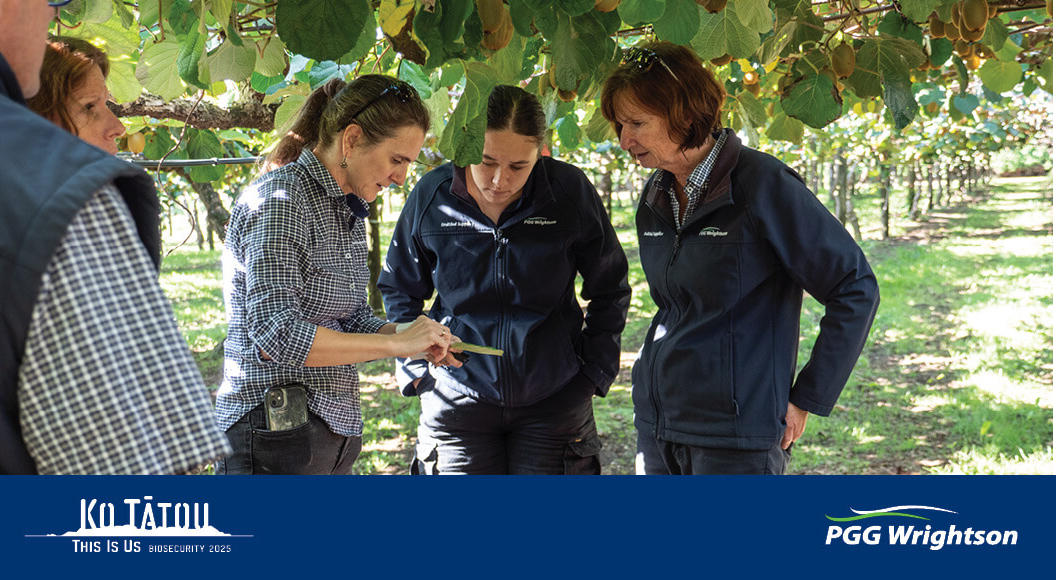
PGG Wrightson signs Biosecurity Pledge
Aotearoa New Zealand sits in a unique position being an isolated island nation which has historically protected it from a number of pests and diseases found elsewhere, but the high volume of trade and tourism increases the risk of them getting across the border. Biosecurity is a major risk to...
Video or image

Sheffield Primary receives boost from Cash for Communities Programme
Raising funds to provide Kiwi kids with additional resources and equipment to enjoy while at school takes considerable time and effort in fundraising. For Sheffield Primary School in Mid Canterbury, the Cash for Communities programme delivered a win recently with the school being donated $333. Nigel...
Video or image
PGG Wrightson joins A Lighter Touch crop protection change
PGG Wrightson (PGW) is partnering with A Lighter Touch to support growers in moving to more sustainable crop protection programmes. A Lighter Touch is a $27 million industry and government partnership which is co-funded by the Ministry for Primary Industries, 15 product group partners and three crop...
Video or image
PGG Wrightson signs Biosecurity Pledge
Aotearoa New Zealand sits in a unique position being an isolated island nation which has historically protected it from a number of pests and diseases found elsewhere, but the high volume of trade and tourism increases the risk of them getting across the border. Biosecurity is a major risk to...
Video or image
Sheffield Primary receives boost from Cash for Communities Programme
Raising funds to provide Kiwi kids with additional resources and equipment to enjoy while at school takes considerable time and effort in fundraising. For Sheffield Primary School in Mid Canterbury, the Cash for Communities programme delivered a win recently with the school being donated $333. Nigel...