
Video or image

Wool News: Sleep better in, under and on wool
Article written by the Australian Wool Innovation / The Woolmark Company (AWI/TWC)
Good sleep is important; the impacts of poor sleep can manifest as a range of negative physical, neurological and psychological effects on one’s health. These include compromised cognition, a weakened immune system, increased risk of depression and poor physical health.
One way to improve sleep quality is through a combination of sleepwear and bedding that promotes a stable micro-climate in bed. Wool’s natural and inherent attributes help to create such an environment.
Research proves that wool helps maintain a more stable body temperature and combat sweating, thereby making a more comfortable sleep environment. In particular, wool has been shown to provide superior buffering of heat and moisture changes compared to other fibre types. This enables wool to protect against low or high temperatures and high humidity that have been shown to detrimentally affect sleep.
The positive effects of sleeping with wool apply to people of all ages. However, because a person’s sleep quality and the ability to regulate body temperature generally decrease with age, wearing wool sleepwear and using wool bedding can particularly improve the quality of sleep of adults as they grow older.
WOOL SLEEPWEAR
A 2018 study showed older adults wearing woollen sleepwear fall asleep faster and have less disturbed sleep compared to those wearing other fibre types.
This study demonstrated that adults aged 65 or over, experienced significantly faster sleep onset, falling asleep in 12 minutes on average, compared to 22 minutes when wearing polyester and 27 minutes when wearing cotton.
Although the beneficial effects of wool sleepwear on sleep quality are observed most prevalently for older adults, studies have shown these benefits also apply to younger adults.
Adults aged 65 or over, experienced significantly faster sleep onset, falling asleep on average:
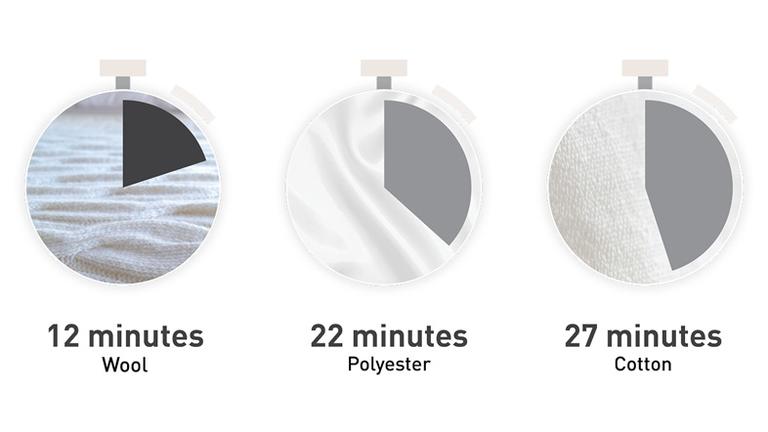
A 2016 study assessing the effects of wool and cotton sleepwear on sleep quality at 17°C showed that men & women aged 19-27 had significantly shortened sleep onset when wearing wool compared to cotton.
WOOL BEDDING
The comparative thermo-physiological advantages of wool blankets compared to cotton/acrylic blend blankets were shown by Umbach using laboratory measurements and human sleep studies. The author concluded that wool blankets deliver better thermal insulation, moisture transport, and moisture buffering than the cotton/acrylic blanket.
Another investigation found that wool underlays increased REM (Rapid Eye Movement) sleep periods and that wool bedding (duvets with or without underlays) increased REM sleep by 25% and allowed greater natural skin cooling associated with Stage 4 sleep. The subjects of this study also rated the wool bedding products as more comfortable.
Adults sleeping on wool underlays have been shown to sleep more peacefully and wake feeling more refreshed (“feeling better”). Compared to other fibre types, wool underlays provide greater diffusion of pressure points, better insulation and better perspiration absorption making it more comfortable.
- Sufferers of fibromyalgia (diffuse chronic pain and presence of tender points) showed significant lessening of pain scores, and significantly improved assessments of sleep quality (Pittsburgh Sleep Quality Index) when sleeping on wool underlays.
- Affected patients needed to be turned or rolled less often on the sheepskin underlay and developed fewer pressure ulcers due to reduced moisture build-up from wool’s natural moisture transport and breathability.
This very solid and contemporary body of scientific evidence, which continues to grow, shows that wool is beneficial to a good night’s sleep for both older and younger adults. In particular, wool promotes a better sleep for poor sleepers. These research findings should give confidence to consumers to choose sleepwear and bedding made from wool in preference to products made from other fibres.
REFERENCES
The impacts of poor sleep can manifest as compromised cognition, a weakened immune system, increased risk of depression and poor physical health
Sleep, recovery, and metaregulation: explaining the benefits of sleep. Vyazovskiy VV. Nat Sci Sleep. 2015;7:171–184
– Stone, K. L., & Xiao, Q. (2018). Impact of Poor Sleep on Physical and Mental Health in Older Women. Sleep medicine clinics, 13(3), 457–465. https://doi.org/10.1016/j.jsmc.2018.04.012
– Chien, M. Y., & Chen, H. C. (2015). Poor sleep quality is independently associated with physical disability in older adults. Journal of clinical sleep medicine : JCSM : official publication of the American Academy of Sleep Medicine, 11(3), 225–232. https://doi.org/10.5664/jcsm.4532
Wool has been shown to provide superior buffering of heat and moisture changes compared to other fibre types. This enables wool to protect against low or high temperatures and high humidity that have been shown to detrimentally affect sleep.
– David, H. G. (1964) The Buffering Action of Hygroscopic Clothing, Tex. Res. J, 34, 814 – 816.
– Okamoto-Mizuno, K. & Mizuno, K. (2012) Journal of Physiological Anthropology, 31.
– Okamoto, K., Mizuno, K., Michie, S., Maeda, A. & Iizuka, S. (1999) Sleep, 22, 767-773
Older adults wearing woollen sleepwear fall asleep faster and have less disturbed sleep compared to those wearing other fibre types. Chow, Shin, Mahar, Halaki, Ireland (2018) The impact of sleepwear fibre type on sleep quality in older adults under warm ambient conditions. p2-18.
At 17°C men & women aged 19-27 had significantly shortened sleep onset when wearing wool compared to compared cotton. Shin, Halaki, Swan, Ireland, Chow (2016) The effects of fabric for sleepwear and bedding on sleep at ambient temperatures of 17°C and 22°C.
Umbach using laboratory measurements and human sleep studies demonstrated that wool blankets achieve better thermal insulation, moisture transport, and moisture buffering than the cotton/acrylic blanket. Umbach, K.H. (1986), Journal of the Textile Institute, 77:3, 212-222.
Wool underlays increase REM (Rapid Eye Movement) sleep periods. Wool bedding (duvets with or without underlays) increased REM sleep by 25% and allowed greater natural skin cooling associated with Stage 4 sleep. Wool was also rated more comfortable. IWS Interior Textiles Technical Information Letter 46, 21st November 1990.
Adults sleeping on wool underlays have been shown to sleep more peacefully and wake feeling more refreshed (“feeling better”). Dickson, P.R. (1984), The Medical Journal of Australia, January 21, 1984, p87-89.
Sufferers of fibromyalgia (diffuse chronic pain and presence of tender points) showed significant lessening of pain scores, and significantly improved assessments of sleep quality (Pittsburgh Sleep Quality Index) when sleeping on wool underlays. Kiyak, E., Akdemir, N., Fesci, H. (2010), Australian Journal of Advanced Nursing, 26:3, 47-52.
Affected patients needed to be turned or rolled less often on the sheepskin underlay and developed fewer pressure ulcers. Jolly, D.J., Wright, R., McGowan, S., Hickey, M.B., Campbell, D.A., Sinclair, R.D., and Montgomery, K.C. (2004), Medical Journal of Australia, 180, 324-327.
Related News
Video or image
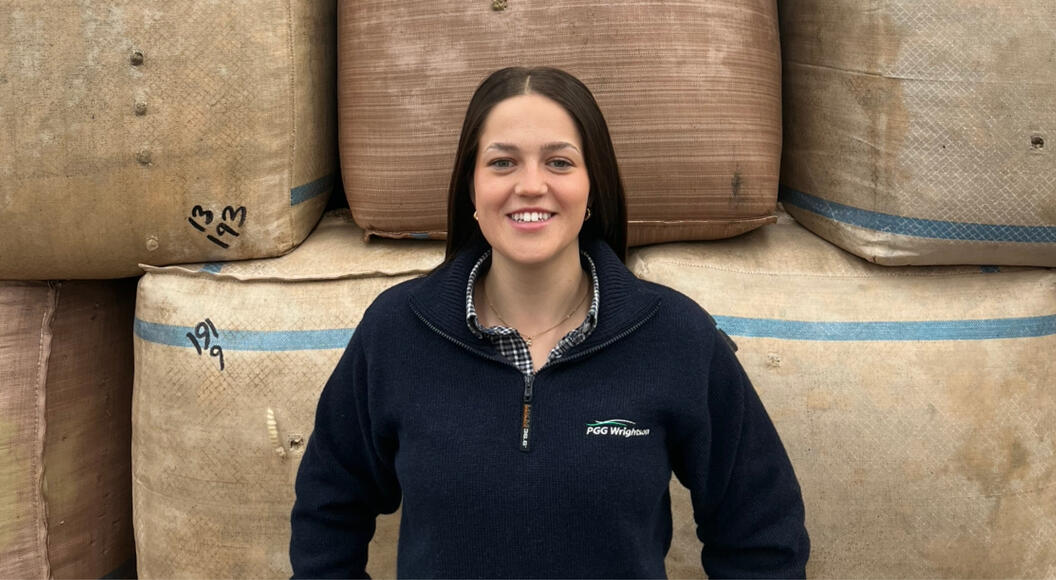
From the woolshed to the road: Carley Pryce steps into her new role as a PGW Wool rep
For Carley Pryce, wool has never been ‘just a job’. It’s been a thread running through her working life since she was a teenager, shaping her skills, her confidence, and her connection to rural New Zealand. Now, after years of building experience across the agricultural sector, Carley has taken the...
Video or image
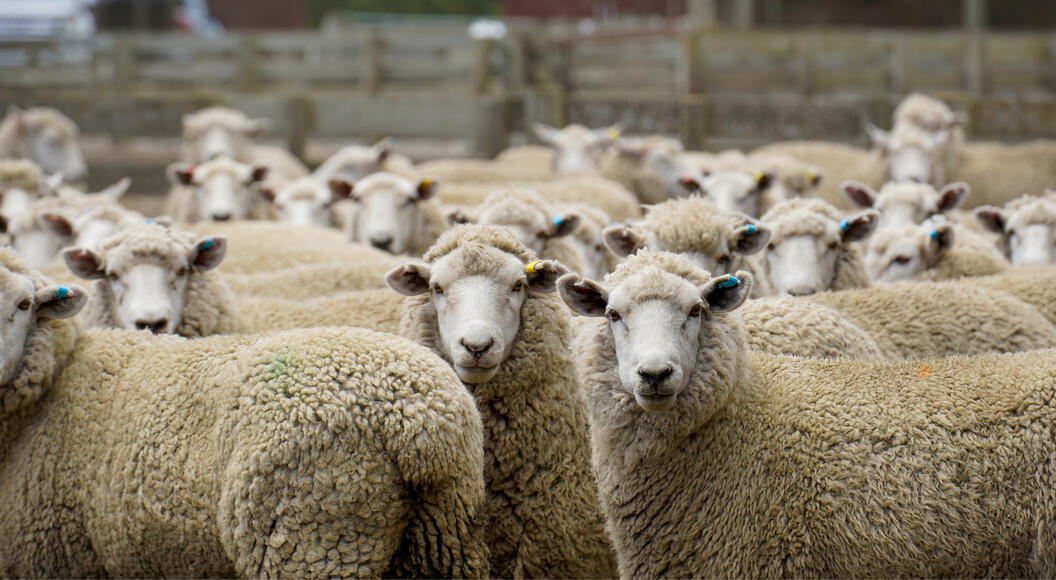
Confidence holds as wool market maintains momentum
After a sustained period of growth, the wool market has continued to hold at significantly improved levels through recent sales. Strong competition and tightening supply are supporting confidence across the sector, with prices paid in the auction room the highest they have been since 2011. The move...
Video or image

7-year-old Clyde student becomes one of New Zealand’s youngest PGW wool clients
A Clyde Primary School project may have launched a future career for seven-year-old student Beau A’Court, as he has become one of New Zealand’s youngest wool clients of PGW - after recently discovering a passion for the fibre and finding an unlikely mentor in wool representative Graeme Bell...
Video or image
From the woolshed to the road: Carley Pryce steps into her new role as a PGW Wool rep
For Carley Pryce, wool has never been ‘just a job’. It’s been a thread running through her working life since she was a teenager, shaping her skills, her confidence, and her connection to rural New Zealand. Now, after years of building experience across the agricultural sector, Carley has taken the...
Video or image
Confidence holds as wool market maintains momentum
After a sustained period of growth, the wool market has continued to hold at significantly improved levels through recent sales. Strong competition and tightening supply are supporting confidence across the sector, with prices paid in the auction room the highest they have been since 2011. The move...
Video or image
7-year-old Clyde student becomes one of New Zealand’s youngest PGW wool clients
A Clyde Primary School project may have launched a future career for seven-year-old student Beau A’Court, as he has become one of New Zealand’s youngest wool clients of PGW - after recently discovering a passion for the fibre and finding an unlikely mentor in wool representative Graeme Bell...