
Video or image
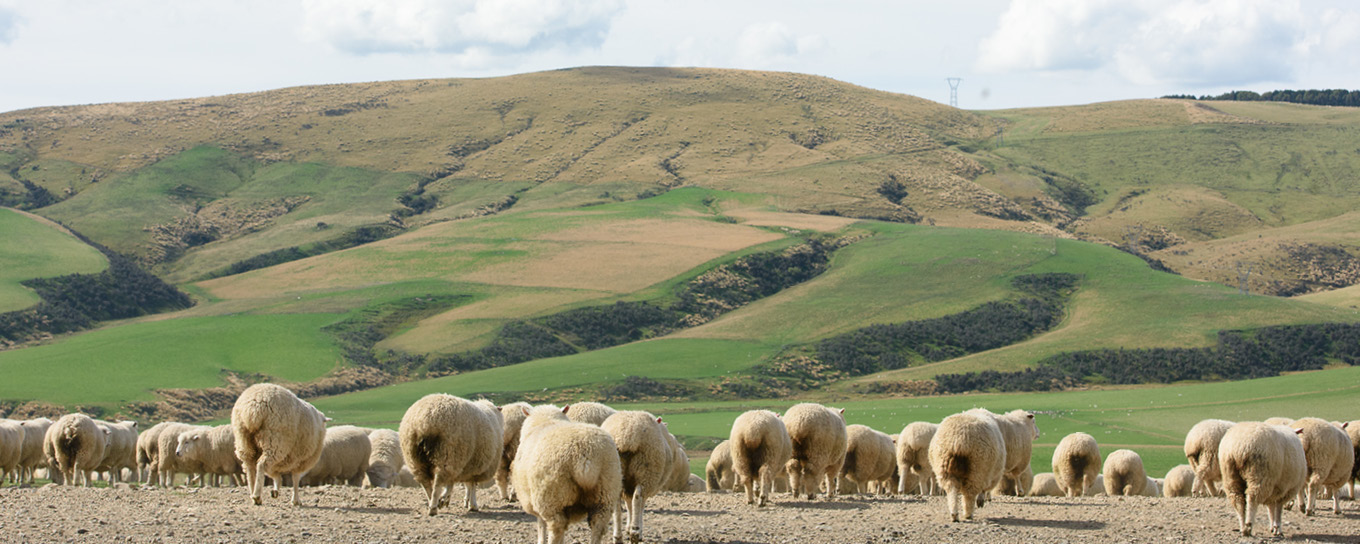
Uncertainty Clouds Wool Market
Market influences are extremely difficult to predict and, there are often questions as to why the wider wool trade doesn’t pass on market intelligence to growers as an aid to grow the “right” wool, it is impossible to predict any movements with certainty. Sure there are sectors of the manufacturing industry who spend considerable resource searching and creating market requirement, however we all know that much of that can be dismantled in an instant with one swipe of a politician’s pen (or one click of a politician’s mouse) and the movement of a decimal point one place to the right!
The recent actions of probably our best two allies, plus our largest trading partner, meant New Zealand wool growers suffered even further downside from the already pathetically weak coarse wool market. Until recently fine wool growers had basked in sunshine for a couple of years while price improvements appeared to be unstoppable, however during the past couple of months they too have taken a beating as the China-US trade war has clouded the market causing confusion and real fears of recession.
It appears that China’s economy is still easing, as it has done over the past few years, with additional economic strain recently, due to increased tariffs imposed by the US, affecting the approximately 20% of exported goods from China to the US. With approximately 75% of Australian and 50% of New Zealand wool exported into China for processing, and at least 60% of finished woolen goods remaining within China, the outlook is murky. Pro-democracy protests in Hong Kong have affected their tourism and retail business with economists predicting a second consecutive quarter of negative growth. India reports a dramatic reduction in domestic spending with job losses in some industries. Singapore’s economy has also been affected by weaker global demand as well as the trade war and, although recent commentary suggests that countries like Japan, South Korea and Bangladesh have enjoyed slightly better economic performance during the second quarter of 2019, there is future uncertainty.
Australian wool testing data released at the end of July confirmed that wool volumes are certainly down compared to the previous year as anticipated, with July 2019 being back by around 5% to 6% compared to July 2018.
At time of writing Australian wool auctions continued to experience difficulty after prices had fallen quite dramatically during late August. As a result, it was not uncommon for around 30% of grower wool to be withdrawn from auction catalogues prior to sale day, with the remainder generally market sellers, however passing rates were still around 15%. Wool quality in Australia remained an issue with many lines measuring less than 30nkt (newtons per kilotex), indicating mixed processing length due to fibre tenderness, a direct result of drought. (As a comparison, several lines of merino catalogued Christchurch recently, tested between 45nkt and 53nkt). Amongst the negativity a positive comment from Australian brokers was that wool from non-mulesed flocks definitely drew good buyer attention.
From a NZ wool perspective there are many positives and we do have globally recognized points of difference. Despite extremely poor prices, with many oddment types very difficult to sell, generally our crossbred wool is still regarded as the best in the world and, therefore, we must pay attention to wool preparation to ensure that we keep it that way. Mulesing has been banned in NZ therefore our fine wools have an advantage over some of our counterparts. Wool is being re-invented as the fibre of choice within a wide range of products, some of which are completely new, and with increased reaction to plastic pollution globally, natural fibres are in a great space. NZ is still located where it’s always been on the planet. We’re a long distance from major markets and populations. I think we’re best to control what we can and forget about trying to control what we can’t.
That’s my view.
Rob Cochrane, Wool Procurement Manager
Related News
Video or image

Election uncertainty slows rural property market, but dairy demand stays strong
Rural property buyers and sellers are taking a wait-and-see approach ahead of the election, says PGG Wrightson General Manager, Livestock & Real Estate, Peter Newbold. “I think if you go to lifestyle and residential, definitely it is having a bearing,” Newbold told The Country’s Jamie Mackay. “Rural...
Video or image
Livestock Report: How GO-STOCK Helps Farmers Grow with Confidence
Strong livestock prices have created opportunities for farmers across New Zealand, but they've also highlighted the importance of having flexible trading options. According to PGG Wrightson National GO-STOCK Manager John O'Neill, livestock values have undergone a significant shift over the past 12...
Video or image
Strong dairy demand continues to support New Zealand rural property market
Strong demand for dairy farms is continuing to underpin New Zealand’s rural property market, says PGG Wrightson General Manager Livestock & Real Estate Peter Newbold. Newbold said Canterbury dairy properties were selling for as much as $89,000 a hectare, with others fetching prices in the high $70...
Video or image
Election uncertainty slows rural property market, but dairy demand stays strong
Rural property buyers and sellers are taking a wait-and-see approach ahead of the election, says PGG Wrightson General Manager, Livestock & Real Estate, Peter Newbold. “I think if you go to lifestyle and residential, definitely it is having a bearing,” Newbold told The Country’s Jamie Mackay. “Rural...
Video or image
Livestock Report: How GO-STOCK Helps Farmers Grow with Confidence
Strong livestock prices have created opportunities for farmers across New Zealand, but they've also highlighted the importance of having flexible trading options. According to PGG Wrightson National GO-STOCK Manager John O'Neill, livestock values have undergone a significant shift over the past 12...
Video or image
Strong dairy demand continues to support New Zealand rural property market
Strong demand for dairy farms is continuing to underpin New Zealand’s rural property market, says PGG Wrightson General Manager Livestock & Real Estate Peter Newbold. Newbold said Canterbury dairy properties were selling for as much as $89,000 a hectare, with others fetching prices in the high $70...