
Video or image
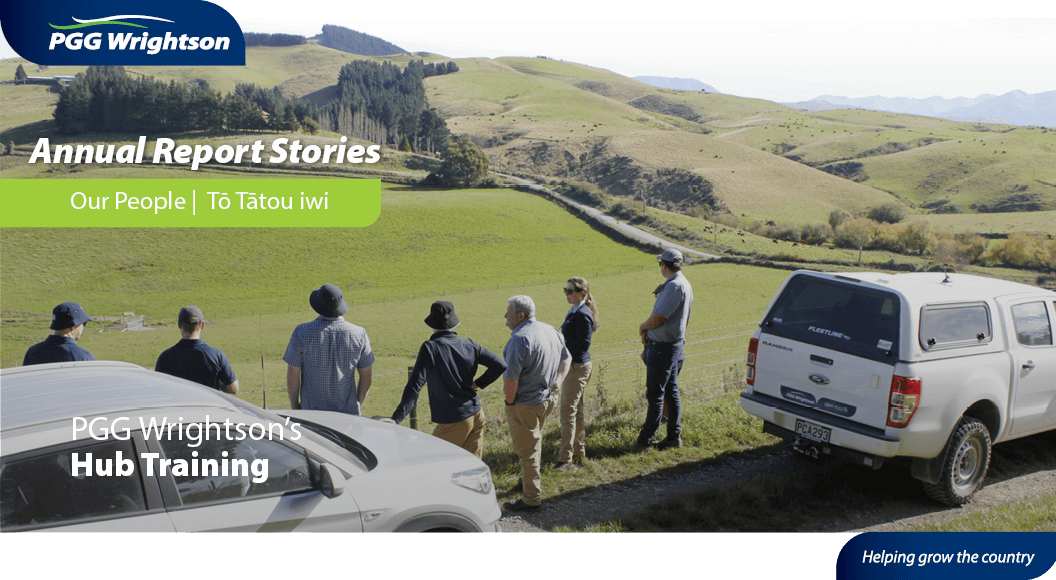
PGG Wrightson’s Hub Training
PGW’s eight strategic priorities include ‘Our Differentiated Offering’, which is a competitive advantage for the company.
One aspect of PGW’s differentiated offering is the leveraging of its Technical Team, who are dedicated to growing technical knowledge and ability across the company, our clients, and the industry.
The Technical Team is made up of the R&D Team, who trial new products for the New Zealand market, and two Extension Teams. The Rural Supplies Extension Team covers animal health and veterinary science, agronomy, and soil and environmental science, while the Fruitfed Supplies Extension Team is responsible for everything from pipfruit, viticulture, subtropical, vegetables, to plant nutrition.
One of the Extension Teams’ responsibilities is training and upskilling our reps and sales staff to increase their technical knowledge and understanding. This leads to our reps and sales teams having deeper conversations, giving better service to our clients and adding more value to their businesses. A primary tool the Extension Teams use is our internal face-to-face practical training sessions. These small group trainings are regionally and seasonally focused, and are designed to help solve current issues on-farm and on-orchard.
As regulation and environmental awareness increases, so too does the need for technical and smart solutions for our farmer and grower clients. Within Rural Supplies, the Extension Team runs four Hub Trainings a year, with two in spring and two in autumn.
New Zealand agriculture has seen changing legislation create new parameters for farmers to operate in and to reduce their environmental footprint on-farm. A key aspect of this legislation relates to Intensive Winter Grazing (IWG) of forage crops. Farmers are required to identify and seclude Critical Source Areas (CSAs) within their IWG operations. A CSA is an overland flow path which can convey contaminants to waterways. CSAs must be fenced off from stock and farmers must minimise the loss of sediment and nutrients.
Regional Councils across New Zealand are responsible for implementing what is and is not a CSA. However, there is an opportunity for our reps and sales teams to positively assist farmers and be a conduit to direct farmers on where to go for advice and confirmation.
This autumn the Technical Team Rural Supplies soil Technical Specialist Dr Jay Howes and soil Technical Specialist Angela Cottle, in conjunction with the Retail Environment Management Strategy Team, developed a Hub Training programme to teach our reps and sales teams how to identify a CSA and what mitigation strategies are available to minimise the environmental footprint. The day was split into two sessions, the morning included a classroom session covering legislation, concepts of CSA, and how to identify them on paper, while the afternoon session was a practical on-farm experience.
Angela is passionate about upskilling her colleagues and says, “It’s amazing to see the Hub Training participants grasp the intentions of the legislation and practically translate these into tangible benefits which add value to our clients’ businesses.”
At the Canterbury Hub, the team visited Chris and Rachel Benny on their 300 hectare sheep and beef and cropping farm, Flockton, in Sheffield. Using the skills they learnt that morning, participants were required to identify the CSA in paddocks which are going to be planted into an IWG crop next year and map out the CSA. Participants then put themselves in the farmer’s shoes and created an IWG grazing plan to minimise the environmental footprint of the IWG.
While PGW reps do not do CSA identification for farmers, a result of this training is our reps are now more knowledgeable about CSA requirements and can help ensure the sustainability of IWG systems. Reps can provide referrals to consultants where necessary and help direct farmers to the right contacts at the Regional Councils.
Chris appreciates the technical support he receives from his PGW Technical Field Representative, “I enjoyed hosting PGW’s Hub Training on my farm, and it was great to see how passionate the PGW team is about upskilling which ultimately benefits me and my business,” says Chris.
Technical Team Manager, Milton Munro, explains, “This type of practical training really works. We have been running these trainings for ten years and we have seen the value come through. We have watched our salespeople really put their technical knowledge to good work, increasing clients’ production in a more sustainable way.”
Working with PGG Wrightson
Angela Cottle joined PGG Wrightson in 2020 and is a Technical Specialist in the Rural Supplies Technical Team. Angela relishes helping others in the agri sector to learn, grow, and go on and do great things, while challenging the status quo. “I want my primary sector work colleagues to develop and grow so that we can work together to create opportunities for our farming clients,” says Angela.
Related News
Video or image
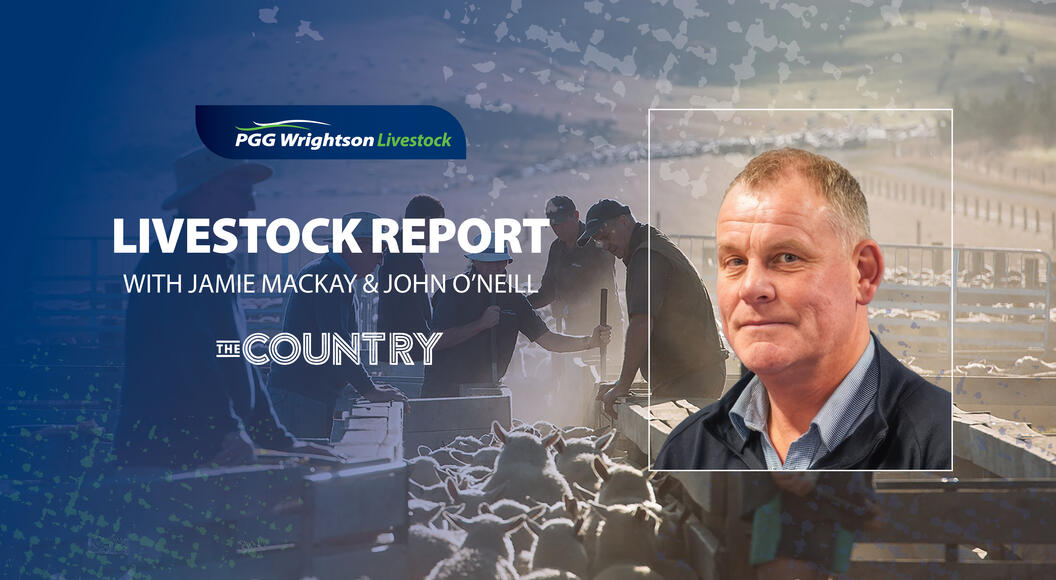
Livestock Report: How GO-STOCK Helps Farmers Grow with Confidence
Strong livestock prices have created opportunities for farmers across New Zealand, but they've also highlighted the importance of having flexible trading options. According to PGG Wrightson National GO-STOCK Manager John O'Neill, livestock values have undergone a significant shift over the past 12...
Video or image
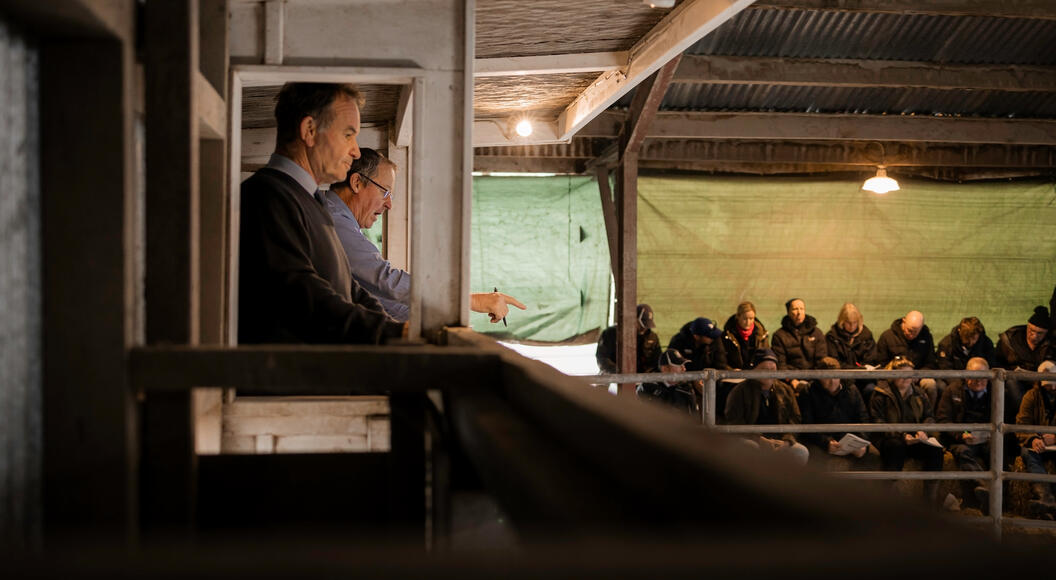
Celebrating 175 Years at Stern Angus with The Country Live
From a partnership spanning 85 years to a milestone 175th anniversary, Stern Angus provides the perfect backdrop for a special live broadcast of The Country. On 7 October, PGG Wrightson will mark a significant milestone, celebrating 175 years of supporting New Zealand farmers and rural communities...
Video or image
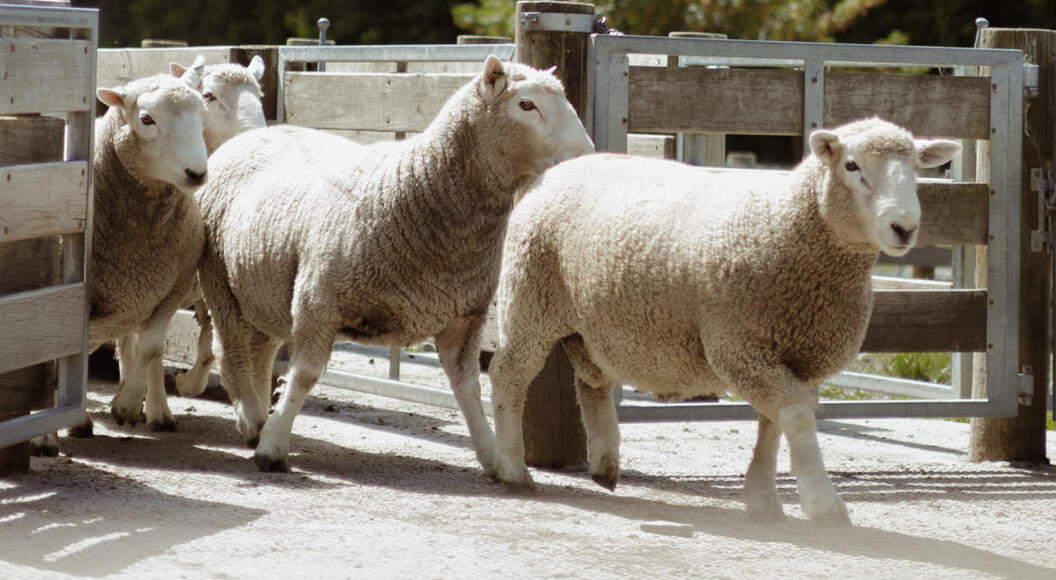
Renowned CHB stud offers first ever on-farm ram auction
With traits to counter FE and worms, Marlow Genetics is preparing a sale catalogue with 30 Romworths and 50 Coopworth rams After 57 years, a prominent Central Hawke’s Bay stud is holding its first ever on farm ram sale. Along with his wife Rosa, in 2023 Jason Wyn-Harris took over Marlow Genetics...
Video or image
Livestock Report: How GO-STOCK Helps Farmers Grow with Confidence
Strong livestock prices have created opportunities for farmers across New Zealand, but they've also highlighted the importance of having flexible trading options. According to PGG Wrightson National GO-STOCK Manager John O'Neill, livestock values have undergone a significant shift over the past 12...
Video or image
Celebrating 175 Years at Stern Angus with The Country Live
From a partnership spanning 85 years to a milestone 175th anniversary, Stern Angus provides the perfect backdrop for a special live broadcast of The Country. On 7 October, PGG Wrightson will mark a significant milestone, celebrating 175 years of supporting New Zealand farmers and rural communities...
Video or image
Renowned CHB stud offers first ever on-farm ram auction
With traits to counter FE and worms, Marlow Genetics is preparing a sale catalogue with 30 Romworths and 50 Coopworth rams After 57 years, a prominent Central Hawke’s Bay stud is holding its first ever on farm ram sale. Along with his wife Rosa, in 2023 Jason Wyn-Harris took over Marlow Genetics...