
Video or image
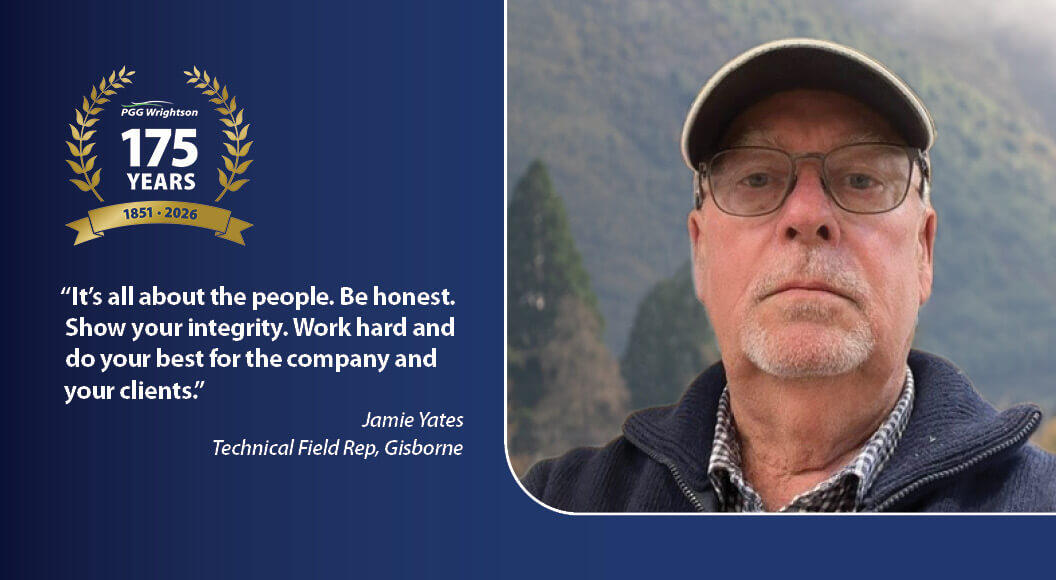
“It’s all about the people” - Jamie Yates reflects on a career of rural service
Jamie Yates has spent almost four decades doing what many in rural New Zealand might call the ‘real work’ - turning up, staying loyal to his people, and building relationships that have lasted longer than some farming cycles.
He’s gone through a few different roles over the years, but is currently enjoying life as a ‘semi-retired’ Technical Field Representative for PGG Wrightson in Gisborne. And while a few months ago he officially dropped back to three days a week, he’s the first to admit it doesn’t quite work like that.
“You do what you do because you like it,” he says.
And in Jamie’s case, that’s clearly true. His story is one that threads neatly through the East Coast’s farming history, from changing land use, to changing technology, changing business ownership, and changing expectations on farmers. But at its heart, Jamie’s career has always been about the same thing, people.
Jamie’s working life began behind the counter of the Nūhaka General Store (a small settlement 67km south of Gisborne) a business his parents bought back in 1959. Then when Jamie left school in the late 70s, his father became unwell - so at just 17 years old, he took over.
Running a rural store in those days wasn’t simply about selling groceries and supplies, it was community service as much as it was business. But eventually, Jamie and his wife made the difficult decision to sell to move closer to his wife’s family in Gisborne. And it just so happened that one of his customers at the general store was none other than John Bayly - who at the time was not only farming and living on Tahaenui Station in Nuhaka, but was also a major shareholder and Director of Williams & Kettle.
“John and his wife Jan did their grocery shopping with us. He was an amazing man, and Jan was such a lovely person. They are now both passed on now unfortunately, but John’s legacy in farming lives on through their son, Humphrey, who has stepped into his shoes and is very much his father’s son - kind-hearted, intelligent and not afraid to get his boots and hands dirty on the farm.
“Anyway, John gave me a very flattering reference and I was very honoured as he wasn’t known for giving references. I was also quite chuffed that he was the one who asked me if I would like one! And then he told me to send my resume into Williams & Kettle in Gisborne to see if there were any jobs available.”
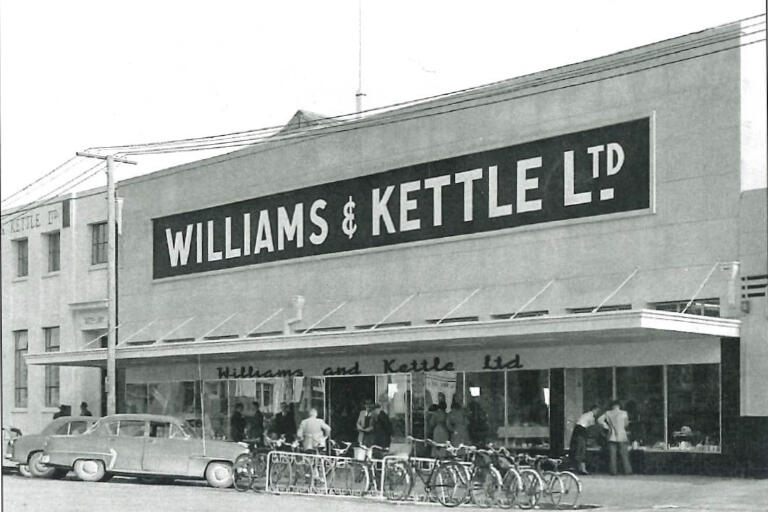
Williams & Kettle, Gisborne, Circa 1950
So Jamie did as he was told and not long after, he was starting the next chapter of his life, one that would stretch across nearly 40 years in the rural supply industry.
Jamie began working for Williams & Kettle in Gisborne in the early 1990s, under someone he still refers to as a local legend - Trevor Coker. He can’t remember the exact month he started, but he doesn’t need to. The feeling of those early days is what remains strongest.
“It seems like a very long time ago now but I have extremely fond memories of those days, where all the staff were such a close-knit community of ‘Kettles’ people.
“We were extremely loyal to the business and in return, the company truly valued its employees and clients. They were the good old days.”
Not long into the role, Jamie relocated to Wairoa, where he became manager of the Wairoa Williams & Kettle store. His reporting line included Richard Keller and David Allen, both names Jamie still speaks of with respect.
After nearly two years in Wairoa, he was asked to return to Gisborne to manage the Gisborne branch. Jamie accepted, and what followed was more than a decade of leadership, responsibility, and steady service.
He eventually became the last Merchandise Manager employed by Williams & Kettle in the Gisborne region, a significant moment, marking the end of an era before the business was absorbed by Wrightson’s.
“It was such a pleasure and honour to work there and it was with great sadness that I had to be the last shop manager in the store, ending nearly 120 years or more of a fantastic Gisborne farm merchandise company.”
With the acquisition came change, but Jamie stayed steady, managing the Wrightson store for another two years.
Today, Jamie’s role as a Technical Field Representative is broad and hands-on. He works across agronomy, animal health, irrigation, and fencing, supporting a diverse range of clients including key accounts.
That range is part of what he enjoys most - the variety, the problem-solving, and the constant need to stay sharp.
Jamie says he’s probably enjoyed ‘every minute’ of his 37 years in the industry, and it’s clear why. His job isn’t transactional. It’s personal. Over time, Jamie’s clients stopped being clients in the traditional sense.
“They’re more than that,” he says. “They are friends.”
And some of those relationships now stretch into second-generation farm ownership, a sign of just how long Jamie has been part of the fabric of farming life on the East Coast.
For Jamie, good service is not pretending to know everything.
“You strive to do the best for them, to make sure any decisions made that impact them are beneficial for them. If I don’t have an answer, I will research it thoroughly for them.”
Over Jamie’s career, he’s watched rural New Zealand change dramatically, particularly on the East Coast. He recalls the large-scale shift from farming to forestry, which had a major impact on communities.
But in true rural fashion, the industry adapted. And Jamie played his part by doing what he could to support those still farming and to keep rural service networks alive. Jamie is quick to point out the innovations that have helped to change how he operates on a daily basis in his role.
“Cellphones and company vehicles,” he says, without hesitation.
“Once farmers could call us directly, our service could be delivered faster. Clients could ring you 24/7, and some of them did!”
Then came laptops, email on phones, and the shift toward real-time communication. It made work more efficient, but it also made it harder to switch off. However Jamie still sees it as progress, because it allowed him to be there when people needed him most.
Four months ago, he decided it was time to retire. But the response from his clients surprised him.
“I got a lot of kickback with many of them asking me to give it another year or two.”
After a lifetime in rural service, Jamie’s advice to younger team members is direct and grounded.
“Be honest with people. Forthcoming. Show your integrity. Work hard and do your best for the company and your clients.”
He also acknowledges something that can’t be taught in training manuals - the emotional side of the job.
“As the relationships deepen, you have to be prepared to be a guidance counsellor, help them with their budgets, get to know their family - it’s all part of what you do.”
Farmers carry enormous pressure, and a good rural rep often becomes part of their support system, someone they trust to stand beside them. And that’s what Jamie has done for decades.
“My job hasn’t felt like a job, because of the people I work with, it has always been like an extended family.”
And in a 175-year legacy built on connection, service, and resilience, Jamie Yates is exactly the kind of story that proves what rural heritage really looks like.
We're celebrating 175 Years alongside rural New Zealand. Read the next story.
Image: Ewan McGregor, Williams & Kettle: The Price of Success.
Related News
Video or image
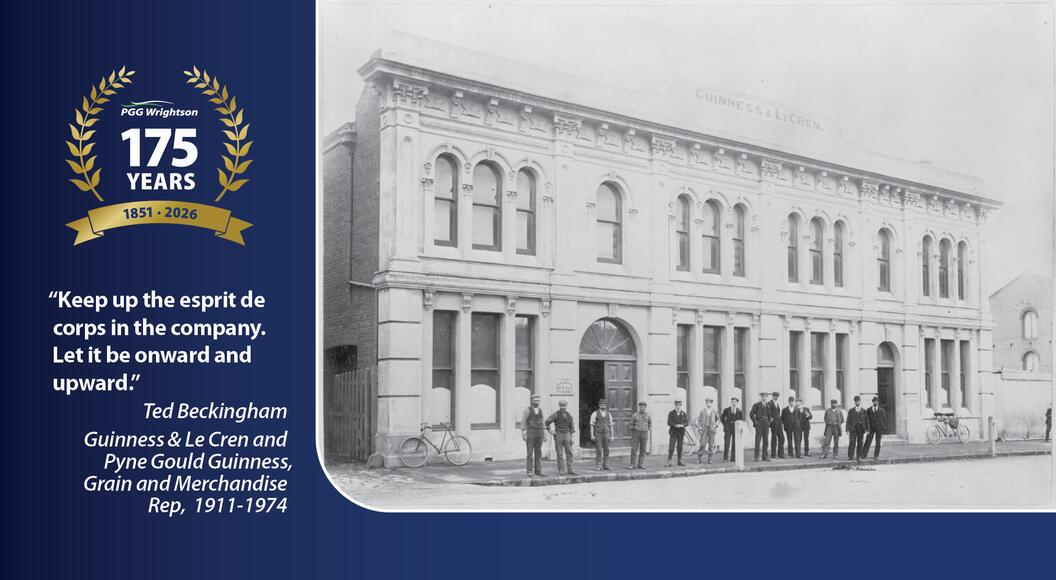
From ‘Toe Rag’ to trusted company man: Ted Beckingham’s memories of life at Pynes
When Ted Beckingham joined Guinness and Le Cren Limited in Timaru in September 1911, he was a 16-year-old office junior earning £26 a year. His official position may have been office boy, but the role came with another, less distinguished title - the ‘Toe Rag’. Decades later, Beckingham recorded his...
Video or image
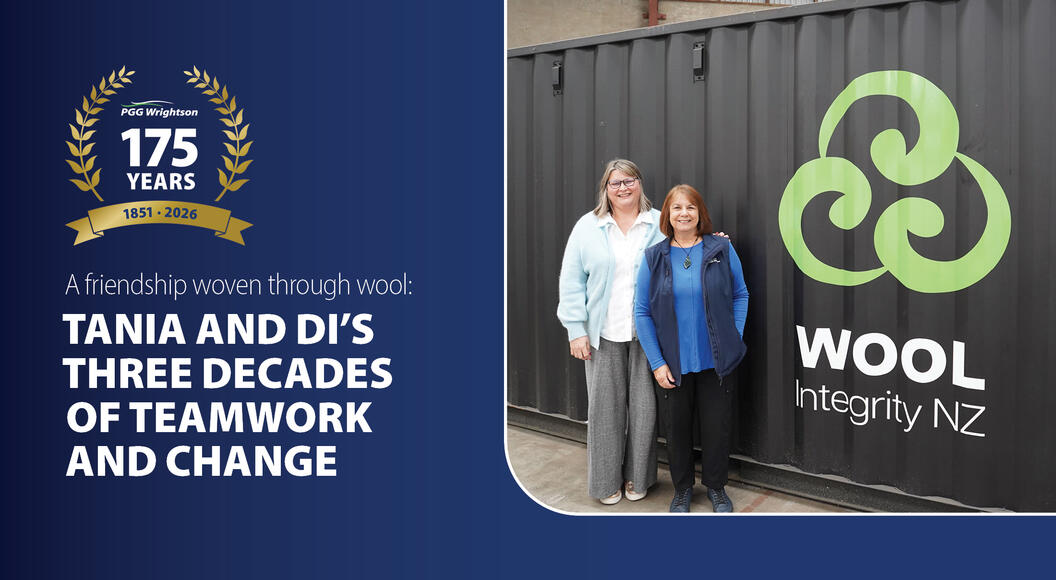
A friendship woven through wool: Tania and Di’s three decades of teamwork and change
When Diane Hermansson (Di) joined Tania Stockton at work for what was meant to be two weeks back in 1996, neither could have predicted that they would still be working side-by-side almost 30 years later. Today, Tania is Shipping and Finance Manager for Bloch & Behrens Wool (NZ) Ltd, a subsidiary of...
Video or image

From fighter pilot to stock agent: The remarkable life of Jimmy Balfour
Every family has its storytellers. For the Balfours, many of those stories begin with Jimmy. Depending on who you ask, Robert Hamish ‘Jimmy’ Balfour will either be remembered as the decorated fighter pilot who took on impossible odds over the Pacific, the stock agent who could somehow convince...
Video or image
From ‘Toe Rag’ to trusted company man: Ted Beckingham’s memories of life at Pynes
When Ted Beckingham joined Guinness and Le Cren Limited in Timaru in September 1911, he was a 16-year-old office junior earning £26 a year. His official position may have been office boy, but the role came with another, less distinguished title - the ‘Toe Rag’. Decades later, Beckingham recorded his...
Video or image
A friendship woven through wool: Tania and Di’s three decades of teamwork and change
When Diane Hermansson (Di) joined Tania Stockton at work for what was meant to be two weeks back in 1996, neither could have predicted that they would still be working side-by-side almost 30 years later. Today, Tania is Shipping and Finance Manager for Bloch & Behrens Wool (NZ) Ltd, a subsidiary of...
Video or image
From fighter pilot to stock agent: The remarkable life of Jimmy Balfour
Every family has its storytellers. For the Balfours, many of those stories begin with Jimmy. Depending on who you ask, Robert Hamish ‘Jimmy’ Balfour will either be remembered as the decorated fighter pilot who took on impossible odds over the Pacific, the stock agent who could somehow convince...