
Video or image
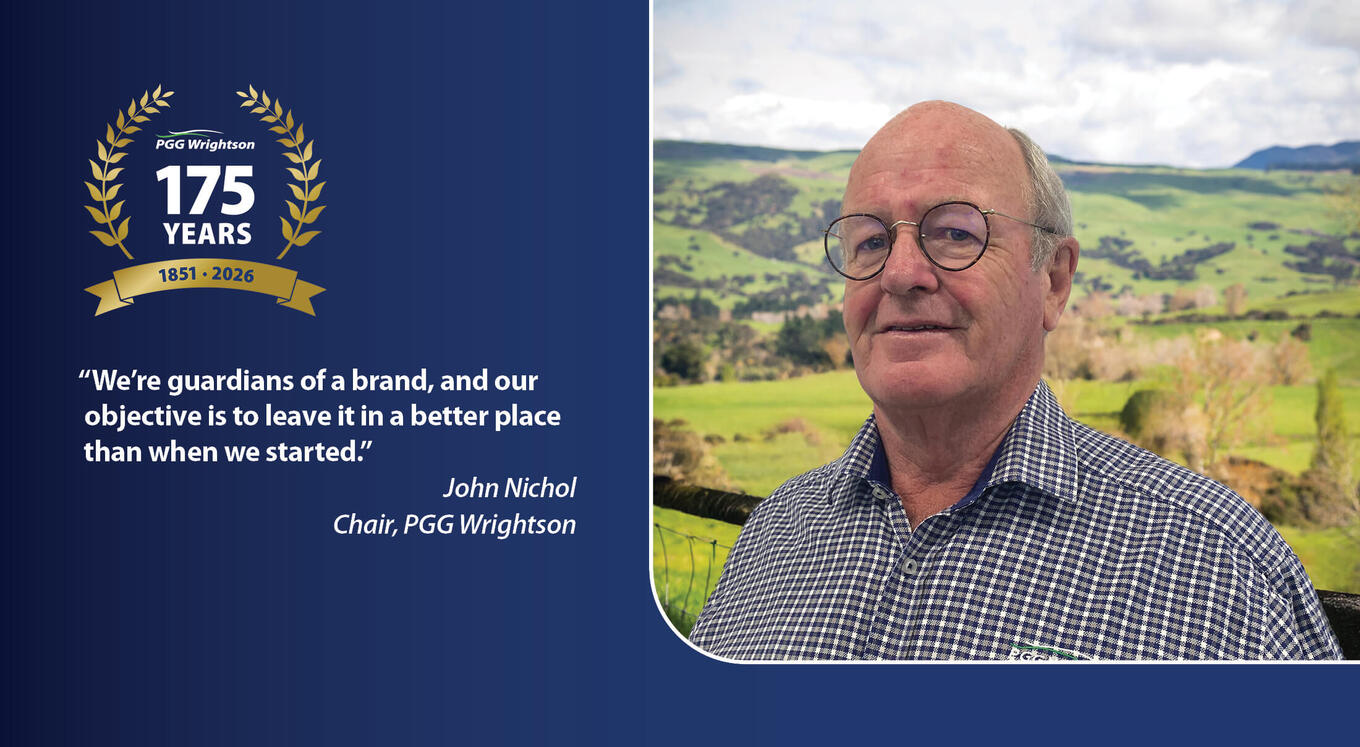
More than a chair on the Board: How PGG Wrightson has been woven through John Nichol's life
For John Nichol, PGG Wrightson has never simply been a company he has chaired or served on the board of. Long before joining the boardroom, its predecessor businesses were intertwined with his family's story, his career and, ultimately, his belief in the importance of New Zealand's rural sector.
Today, as Chair of the PGW board, John sees himself as a guardian of a brand with more than 175 years of history. But his connection to that history stretches back much further than his first board meeting.
"PGW has always felt familiar," he says. “Growing up in Invercargill, agriculture was part of everyday life. My family's business, Nichol Brothers, had been operating since 1865, supplying stock food, grain and seed throughout Southland and Otago.
“And my father had worked for Wright, Stephenson & Co. before eventually purchasing the family business after the Second World War.”
Although growing up in New Zealand may have never been on the cards for John if war hadn’t broken out.
Before he was born, his father had accepted a role as Branch Manager for Wrightson Stephenson in London. The family's belongings had already been loaded onto a cargo ship, and they were preparing to board a passenger vessel when a telegram arrived advising that war had broken out and they were not to travel. Their possessions, already at sea, were never returned.
"Suddenly the old man had no job," John recalls. "So he set about developing a new range of swedes before eventually buying the family business after the war."
As a young boy, the school holidays weren't spent sitting still. They were spent working.
John remembers making calf mix, laying mesh for poultry feed and grinding oyster shells for the hens.
"It wasn't my favourite job," he laughs. “You had to use this big hunk of machinery and it was a particularly dusty job that left little to enjoy beyond the satisfaction of getting it finished.”
But those early experiences also fuelled a lifelong fascination with machinery and farming. Holidays were often spent staying with farming families, where driving a Land Rover at six years old and learning to handle a tractor by the age of twelve seemed perfectly normal. Although he would eventually qualify as an accountant, agriculture never drifted far from view. John's career took him through banking, finance and corporate leadership, but PGW's predecessor companies continued to appear at key moments.
After university, he joined the National Bank before moving to the Development Finance Corporation. Later, he accepted a senior finance role with Southland Frozen Meat, a company in which Wrightson had a significant shareholding. At just 28 years old, he found himself managing corporate finance and gaining exposure to governance and shareholders at a relatively young age.
There were other near misses too. In the mid-1970s, Wrightson explored acquiring the Nichol Brothers family business, although John's father ultimately decided not to sell.
Years later, another unexpected opportunity arose. In 1995, while serving on the New Zealand Post board, John received a phone call from Michael Morris, then the audit partner for Wrightson.
"They're looking for a new CEO," Michael told him. "I think you could be the man for the role."
John was about to leave for a holiday in Port Douglas and asked for time to think. But by the time he returned, someone else had been appointed. Looking back now, it's another reminder of how often his path and the company's seemed destined to cross.
John first joined the PGW board in 2013, following his involvement with a number of primary sector organisations, including New Zealand Merino, where PGW was a shareholder. And after completing his term, he stepped away from the board, expecting that chapter to be over.
But it wasn't. In October 2025, while enjoying retirement and splitting his time between Kinloch (Taupō) and Stewart Island as what he jokingly describes as a ‘full-time fisherman’, everything changed in less than two days.
The morning had begun with his first-ever Pilates class. And unbeknownst to him, his phone, tucked away while he concentrated on unfamiliar stretches, filled with missed calls. When he emerged, he learned that PGW shareholders had unexpectedly voted to remove both the Chair and Deputy Chair, leaving the company needing immediate governance leadership.
By the end of that same day, John had agreed to return and within 48 hours, he had gone from retirement back into the boardroom - this time as Chair.
"If you're a PGW person, how could you not be pleased to come back?" he says. "I see it as nothing short of a privilege and an honour."
John speaks about governance less as directing a business and more as caring for something entrusted to you.
"We're guardians of a brand," he says. "And our objective is to leave it in a better place than when we started."
It's a philosophy that reflects his admiration for the people who have built PGW over generations. Since returning, he has visited more than 40 sites and met hundreds of staff across New Zealand.
“What stands out isn't simply their expertise, it's the passion."
He describes employees who genuinely care about customers, possess immense knowledge and bring both professionalism and a sense of humour to their work - always with a ‘twinkle in their eye’.
Those relationships, he believes, remain one of the company's greatest strengths, and one of its greatest responsibilities. As long-serving staff retire, John says that ensuring the decades of trust built with farming families can be successfully handed to the next generation will be critical.
"You can't replicate a 30-year relationship in just six months."
Despite helping to lead a business with 175 years of history, John spends much of his time thinking about what comes next. Artificial intelligence, automation and technology will certainly reshape agriculture in ways few can fully predict. However, rather than fearing disruption, he believes the company should embrace it.
"If PGW is going to be disrupted," he says, "how wonderful if we're the disruptor."
His advice to younger people entering the business reflects the same mindset that has guided his own career.
"Be patient, but have a go. Back yourself. Don't be cheeky, but be confident and above all else, show respect."
For someone whose connection with PGW began long before he ever sat around the board table, it seems fitting that his story isn't really about titles.
It's about relationships that endure across generations, industries that shape communities, and a business that, somehow, has always found its way back into his life.
For John Nichol, PGW has never simply been part of his career. It has been part of his story.
We're celebrating 175 years alongside rural New Zealand. Read the next story.
Related News
Video or image
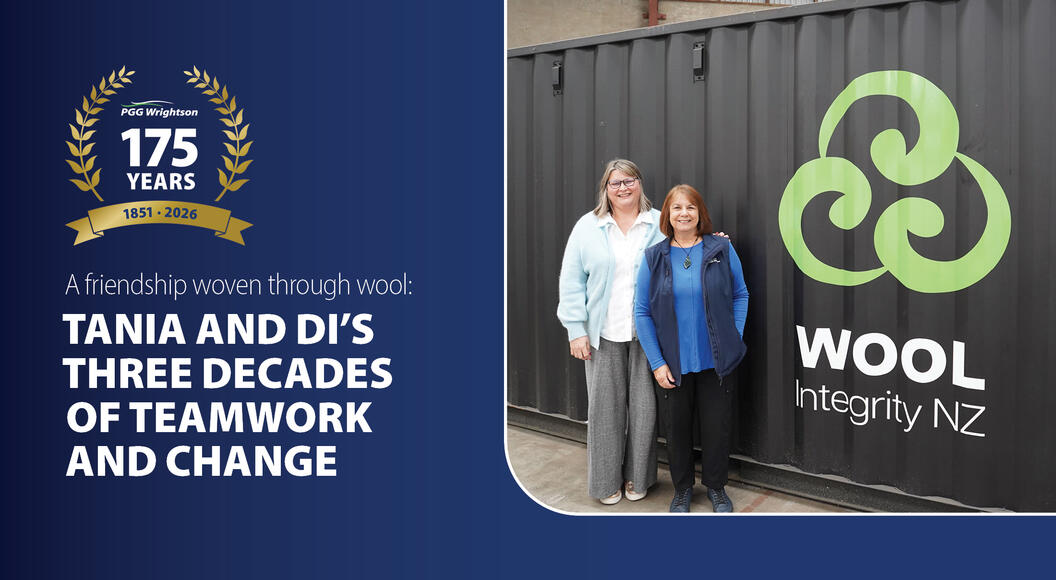
A friendship woven through wool: Tania and Di’s three decades of teamwork and change
When Diane Hermansson (Di) joined Tania Stockton at work for what was meant to be two weeks back in 1996, neither could have predicted that they would still be working side-by-side almost 30 years later. Today, Tania is Shipping and Finance Manager for Bloch & Behrens Wool (NZ) Ltd, a subsidiary of...
Video or image
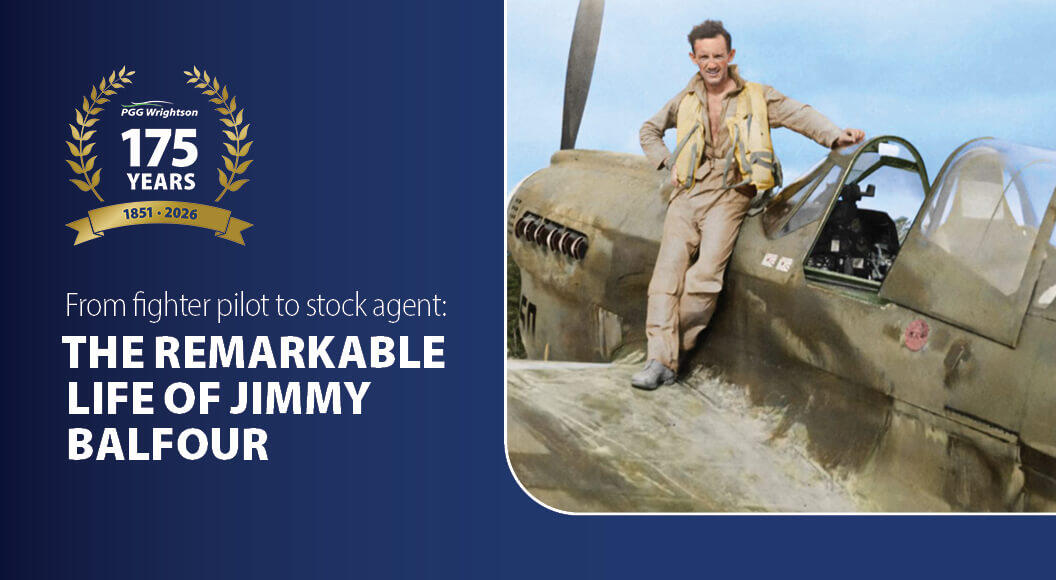
From fighter pilot to stock agent: The remarkable life of Jimmy Balfour
Every family has its storytellers. For the Balfours, many of those stories begin with Jimmy. Depending on who you ask, Robert Hamish ‘Jimmy’ Balfour will either be remembered as the decorated fighter pilot who took on impossible odds over the Pacific, the stock agent who could somehow convince...
Video or image
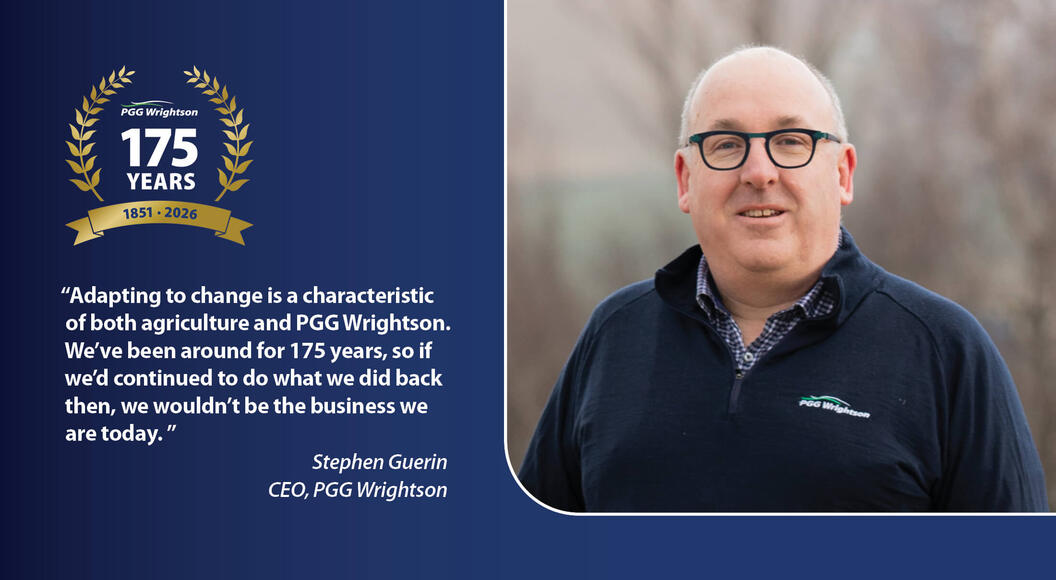
Never planned, always learning: Stephen Guerin’s journey alongside New Zealand’s agriculture industry
Some careers are carefully planned. Others are built one opportunity at a time. For Stephen Guerin, there was never a grand ambition to become Chief Executive Officer of PGG Wrightson. In fact, when he joined the business in 1988, agriculture wasn't even the industry he expected to spend his career...
Video or image
A friendship woven through wool: Tania and Di’s three decades of teamwork and change
When Diane Hermansson (Di) joined Tania Stockton at work for what was meant to be two weeks back in 1996, neither could have predicted that they would still be working side-by-side almost 30 years later. Today, Tania is Shipping and Finance Manager for Bloch & Behrens Wool (NZ) Ltd, a subsidiary of...
Video or image
From fighter pilot to stock agent: The remarkable life of Jimmy Balfour
Every family has its storytellers. For the Balfours, many of those stories begin with Jimmy. Depending on who you ask, Robert Hamish ‘Jimmy’ Balfour will either be remembered as the decorated fighter pilot who took on impossible odds over the Pacific, the stock agent who could somehow convince...
Video or image
Never planned, always learning: Stephen Guerin’s journey alongside New Zealand’s agriculture industry
Some careers are carefully planned. Others are built one opportunity at a time. For Stephen Guerin, there was never a grand ambition to become Chief Executive Officer of PGG Wrightson. In fact, when he joined the business in 1988, agriculture wasn't even the industry he expected to spend his career...