
Video or image
Importance of resistance management
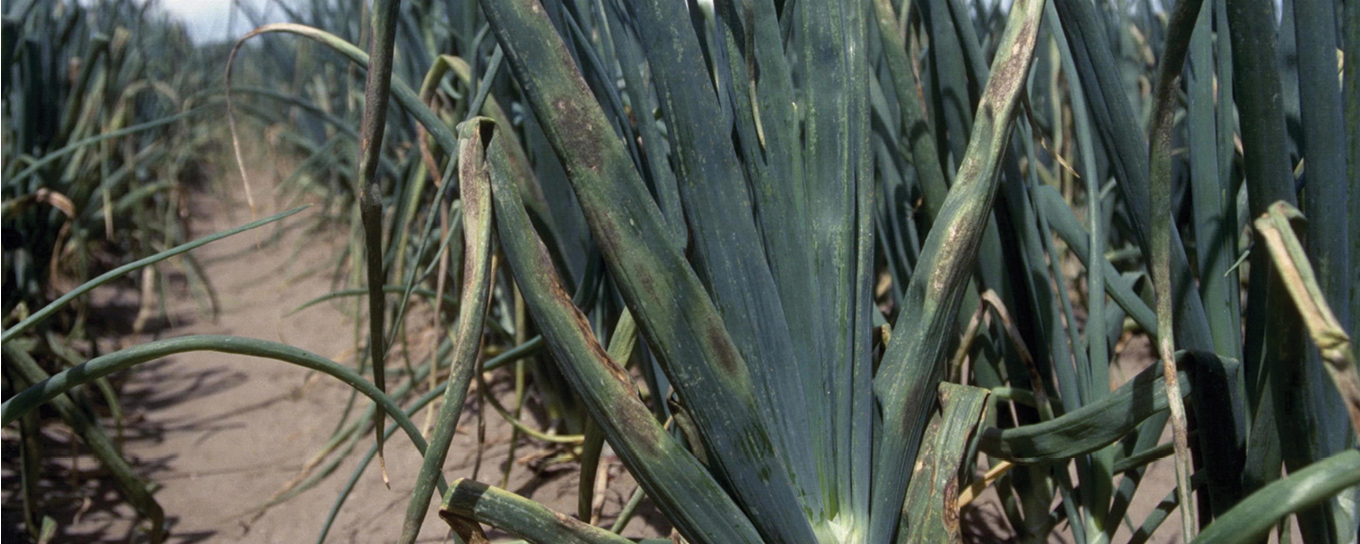
Image: Pathogens such as downy mildew require careful management of crop protection products to avoid the development of resistance [Photo credit: Howard F. Schwartz, Bugwood.org]
Resistance management is a factor in crop protection that cannot be ignored. The overuse or misuse of a chemical control option on an insect, pathogen or weed can lead to resistance building up.
There are many factors that can lead to a fungicide, insecticide or herbicide not controlling the desired target. The spray equipment may not be calibrated correctly, weather conditions such as wind or rain impacted the coverage, expired product was used, etc. All these factors can be corrected easily by the spray applicator. Where resistance is causing a lack of control, then a much more in-depth control strategy is required.
Resistance develops when a small number of individuals within a disease or pest population survive when control methods are applied. Resistant individuals can appear due to a number of different mechanisms including natural genetic variation, mutation, or exchange of genetic material. Over time, if continued exposure to the same chemicals occurs, then a shift in the population can occur as those resistant individuals start to dominate. Using fungicides as an example, pre-1970 fungicides such as mancozeb, copper, and sulphur offer non-specific, multi-site control making them low risk of developing resistance. Many modern chemicals are at much greater risk of resistance developing, due to the specific way these products target a pathogen.
Many of these chemical groups have guidelines on how they should be used to minimise resistance management:
- SDHI, Group 7 (e.g. Pristine, Luna Devotion, Seguris Flexi) – maximum of two applications per crop, alternating with an alternative group.
- QoI, Group 11 (e.g. Amistar, Reason) – maximum of three applications, with no more than two consecutive applications. These products should be mixed with an alternative group fungicide.
- CAA, Group 40 (e.g. Acrobat, Zampro, Reevus)– no more than 50% of applications for downy mildew or late blight should come from this group of chemistry.
- DMI, Group 3 (e.g. Score 250 EC, Alto, Cereous) – maximum of three applications in most vegetable crops, two applications in cucurbit crops.
All products should be used in a way that follows label instructions. While this covers a lot of the fungicide groups used in vegetables, it is not all of them. For more information around product selection, pest and disease management, please contact your local Technical Horticulture Representative.