
Video or image
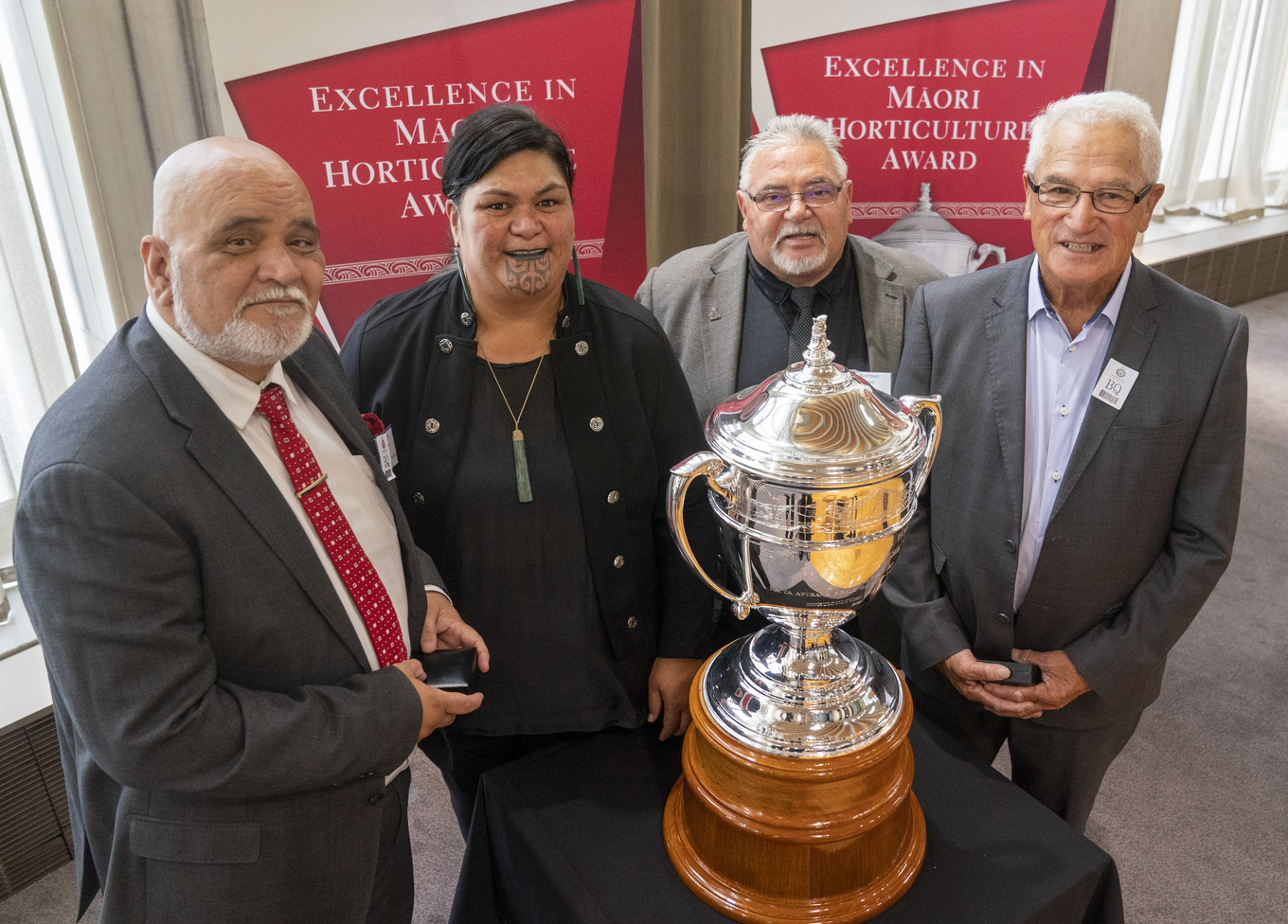
Ahuwhenua Trophy 2020 Finalists
The finalists in this year’s Ahuwhenua Trophy for the top horticultural enterprise were announced 21 Feb 2020 at Parliament by the Minister for Māori Development, the Hon Nanaia Mahuta.
This is the first time in the 87 year history of the competition that the trophy has been open to Māori horticulturalists.The Ahuwhenua Trophy is the most prestigious award for excellence in Māori farming and was inaugurated 87 years ago by the visionary Māori leader, Sir Apirana Ngata and the Governor General at the time, Lord Bledisloe. The objective was and still is to encourage Māori farmers to improve their land and their overall farming position with an emphasis on sustainability. On a three year rotational basis, the Trophy is competed for by Māori farmers in the sheep and beef, horticulture and dairy sectors.
The Chairman of the Ahuwhenua Trophy Management Committee, Kingi Smiler which organises the competition says it is exciting to see such a positive response from Māori in the horticultural sector. He says the high calibre of all the entrants and in particular the finalists, highlights the contribution that Māori are making. He says in the last twenty years, the horticulture sector in New Zealand has become one of the stars of the New Zealand primary sector economy and it is pleasing to see that Māori have been an integral part of that growth.
“Since the inception of this competition we have seen what our sheep and beef and dairy farmers can do and now it is great to have the opportunity to showcase the excellence of our horticulturalists,” he says. Kingi Smiler says while the sector is now basking in its success, the industry has been through hard times – especially the kiwifruit sector who have had to deal with PSA which significantly impacted on the industry. “What we see in our finalists in 2020 is a unique combination of vision, resilience, innovation good governance, smart management and a commitment to their people. They should be proud of their achievements and we are proud of them,” he says.
The three finalists are:
Hineora Orchard
Te Kaha 15B Ahu Whenua Trust
Te Kaha 15B is a Māori freehold land block located in the Eastern Bay of Plenty township of Te Kaha, 65km east of Ōpōtiki. The whenua falls within the tribal rohe of Te Whānau-a-Apanui, and more specifically, is associated with Te Whānau a Te Ehutu hapū. The land comprises an area of 11.5 hectares, on which the Trust run a kiwifruit joint venture operation, a commercial pack-house facility housing the local kiwifruit spray company (in which the Trust holds shares), and a four bedroom home for accommodation at the block.
Prior to the Trust’s creation in 1970, the land was largely occupied by different whānau who farmed the block maintaining a subsistence living growing a range of fruit and vegetables for the local community. Later a citrus orchard was established, however, given the small land area, this also failed to provide a sustainable economic return for its owners.
By 1998 the Trustees recognised that they were asset rich but lacked sufficient capital to develop their land. Fortunately, at the same time, a group of Eastern Bay of Plenty orchardists were seeking opportunities for development of the (then) new Gold variety of kiwifruit and were prepared to enter into 50/50 joint ventures with Trusts, effectively providing capital investment to the value of the land contributed for development by landowners.
The Hineora Orchard operation began in 1999 and was the last of six blocks to join the innovative joint venture development with decisions made, and profits shared, on a 50/50 basis with investors for a period of 20 years. Originally intended to end in 2021, the joint venture has managed the current orchard operation through the highs of the returns from the original Gold variety, to the lows of the PSA vine disease which devastated large parts of the kiwifruit industry. The land, and its orchard operation, is now due to be returned to 100% ownership by the trust in 2023.
As a result of this 20 year journey, the Trustees, who have each served over 15 years on the Trust, now jointly manage an 8.13 hectare orchard operation of G3 SunGold kiwifruit, producing just over 133,000 trays annually. They work closely with their contracted Orchard Manager, and local cool-storage company OPAC. Along with the other five joint venture blocks, they have formed a subsidiary spray company, Te Kaha Gold Sprayers who employ locals to work on OPAC orchards in the area. Significant investment from the six blocks has enabled the company to extend its operations across the Te Kaha and Omaio areas, and they now employ over 20 staff, many of whom are whānau.
The Trust was also influential in the establishment of Te Whānau-a-Apanui Fruitgrowers Incorporated – a charitable community education outreach group, responsible for upskilling 60 local workers to level 4 qualifications in Horticulture as well as supporting locals to build to Diploma level courses.
Whilst the Trust does not have any historic sites on its land, it continues to have a strong commitment to sustainability and offers annual kaumatua grants to shareholders as well as tangi, health, education, sporting, culture and travel grants.
Te Kaha 15B is another example of Māori having the vision, and courage, to embrace a new model of working, taking hold of their destiny and developing their land to its potential for future generations.
Hineora Orchard Te Kaha 15B Key Contact: Norman Carter, 027 280 9452, [email protected]
Otama Marere
Paengaroa North A5 Block
Otama Marere (Paengaroa North A5) Block in Paengaroa near the Bay of Plenty town of Te Puke has gone through a remarkable transition. The land was originally leased to the local golf club on a 60 year lease at two shillings and six pence per acre. When the lease on the 45.01 hectare block expired in the 1980s, Otama Marere took back the land and converted the golf course into an orchard.
Today, the orchard is a thriving diversified block. There is 11.87 hectares of Hayward Green kiwifruit which produces approximately 527,631 gross kgs per year. There are three blocks of SunGold G3 with 2.21 hectares in production. In 2018, Otama Marere became one of the first Maori owned orchards to embrace organic SunGold and converted 3.48 hectares of the existing SunGold G3 into an organic kiwifruit block. A further development of 3.06 hectares brings a total of 7.08 hectares to Otama Marere’s organic Gold programme. While the organic is still in development, Otama Marere’s SunGold kiwifruit produces approximately 418,435 gross kgs per year and this will rise in future years with the newly established organic blocks. Otama Marere has been branded a leader in organic SunGold kiwifruit with companies such as Zespri seeking to bring overseas visitors to the orchard. The conversion has also been an invaluable source for other Maori growers, with the Trust providing education and information to fellow growers and the public alike.
From 2018 – 2020, the Trust planted 950 Gem avocados spanning four separate blocks, a total of 2.1 hectares. A full return is expected on these avocados in year five. Adding to the diversity of the block, Otama Marere also receives Apiary income and grazing proceeds. The Trust is also in the proceeds of re-planting their forestry block which was milled in 2018 with a mix of Manuka and Kauri trees.
Otama Marere employs up to ten whanau owners at any one time, including the Orchard Manager Homman Tapsell. While these staff are employed on various tasks around the orchard, Seeka a packhouse and orchard services provider, assists with additional labour where needed, particularly around fruit picking.
While there are no sacred sites on the property, there is one on neighbouring land and the Trust is supporting the owners who are conducting investigations into how best to work with the neighbour on this issue. This is the pa site that was occupied by Rangiiwaho and his whanau. It provides the origins and significance of the name Otama Marere. At that time, the wetland around the pa was abundant in tuna and other vegetables, with the land where the orchard now is located being used for growing watercress, kumara, kamokamo and other vegetables. In order to acknowledge those who have come before and nourish the whenua, the Trust has now re-developed a wetland which has seen 7,600 native plants established to bring this area back to life. Birdlife have been attracted to this feature, along with the occasional eel.
The Otama Marere Trust has a strong commitment to its shareholders and provides a range of grants. These include grants to kaumatua, tangihana, cultural and sporting grants, education grants and a post-graduate scholarship. Owners in Otama Marere also receive annual dividends and are encouraged to reconnect to the orchard through visits and other events which are held there.
Otama Marere’s golf course to kiwi fruit orchard is undoubtedly one of the most unusual and successful agricultural conversions in New Zealand’s history.
Otama Marere Key Contact: Gemma Mills, 027 265 5695, [email protected]
Ngai Tukairangi Trust
Ngai Tukairangi Trust is very large kiwifruit operation with one of its orchards, based at Matapihi, just a few kilometres from the centre of Tauranga city. Their land is on a peninsular and was originally used for dairy farming. Forty years ago, a number of family members who owned the dairy farms feared that the land would become incorporated into urban development. They decided that they had a better chance of holding onto it by converting to kiwifruit.
At the start of the major kiwifruit boom in the 1990s, a Trust was formed, and the land was planted in kiwifruit. Today Ngai Tukairangi Trust has expanded and is said to be the largest Maori kiwifruit grower in the country. All told, it owns 110 hectares of land planted in kiwifruit including 60 hectares in Hastings which is covered.
Like most kiwifruit enterprises, Ngai Tukairangi was caught up in the PSA crisis, but unlike some growers who waited to see what might happen, they immediately grafted the G3 SunGold variety which is resistant to PSA. By acting early, the Trust became one of the first orchards to be producing SunGold and gained a commercial advantage.
When the Trust took over the Hastings orchard, they used their experience in the industry to make changes which saw production quadruple within a year. Today the Trust produces about 1.7 million trays of mainly Gold kiwifruit. They are confident that they can reach the magic two million tray mark and possibly even higher in the near future.
Innovation has been a hallmark of the Trust and they see themselves as very focused on the future and the demands of consumers. With that in mind they are considering strategies to convert their entire operation to organic.
Ngai Tukairangi Trust has 1,650 beneficial owners. They have made a point of encouraging whanau involvement and employ about 56 staff and as part of their commitment to sustainability have a substantial grants programme focused on education. Over the years they have supported several thousand of their hapū in this way. Grants have been to young people to gain PhDs, masters and graduate degrees, but they have also supported people to gain other skills-based qualifications such a truck driving.
The Trust has been through good and bad times with the kiwifruit industry but through good governance and management have developed a reputation as one of the leaders in the industry.
Ngai Tukairangi Key Contact: Ratahi Cross, 027 279 6284, [email protected]
History of the Ahuwhenua Trophy
It is now 87 years since the Ahuwhenua Trophy was inaugurated by the visionary Māori leader Sir Apirana Ngata and the Governor General at the time Lord Bledisloe. What is quite remarkable is that this competition remains as relevant and as prestigious now as it was almost a century ago.
While the values and vision of Sir Apirana and Lord Bledisloe have remained unchanged, the way the competition is run has moved with the times – especially since its re-launch of the competition in 2003.
The Ahuwhenua Trophy competition was introduced to encourage skill and proficiency in Māori farming. Sir Apirana Ngata realised the importance of retaining and improving what remained of Māori land was critical. He led the renaissance of Māori land development which had been decimated during the colonisation of New Zealand by forced sales and lack of opportunity and access to development capital.
The inaugural 1933 competition was open to individual dairy farmers in the Waiariki Land district and was won by William Swinton from Raukokore, Bay of Plenty. The following year the competition
Field Days:
Thursday 26 March: Hineora Orchard Te Kaha 15B Trust, Te Kaha
Thursday 2 April: Otama Marere, Te Puke
Thursday 9 April: Ngai Tukairangi Trust, Tauranga
Related News
Video or image
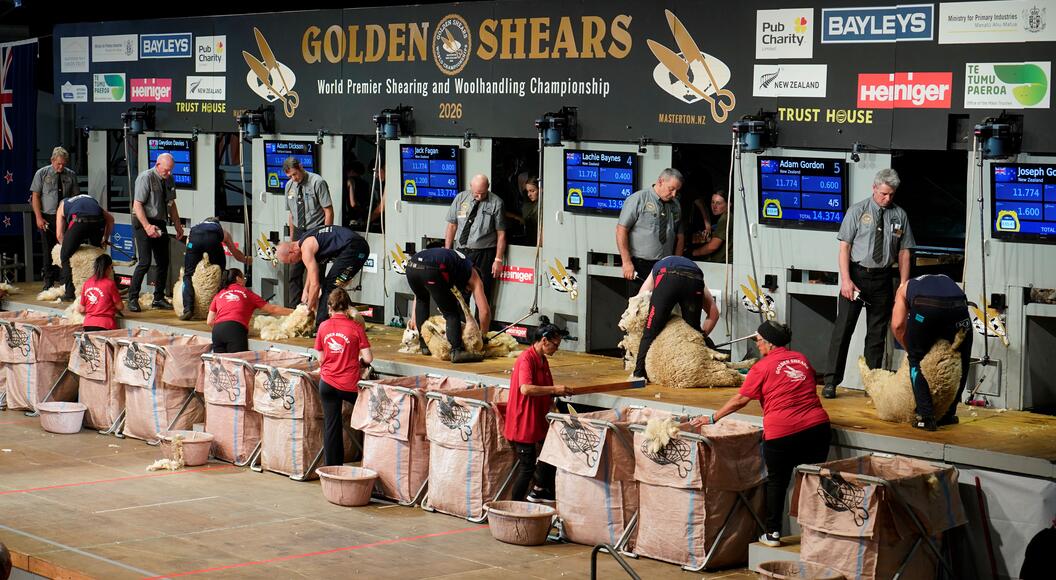
The road to Golden Shears starts again
A new season of the PGG Wrightson / Vetmed National Shearing Circuit gets underway in October, setting some of New Zealand’s best shearers on a five-round journey that will test their skill across the country and across five different wool types. The first points of the 2026/27 PGG Wrightson /...
Video or image
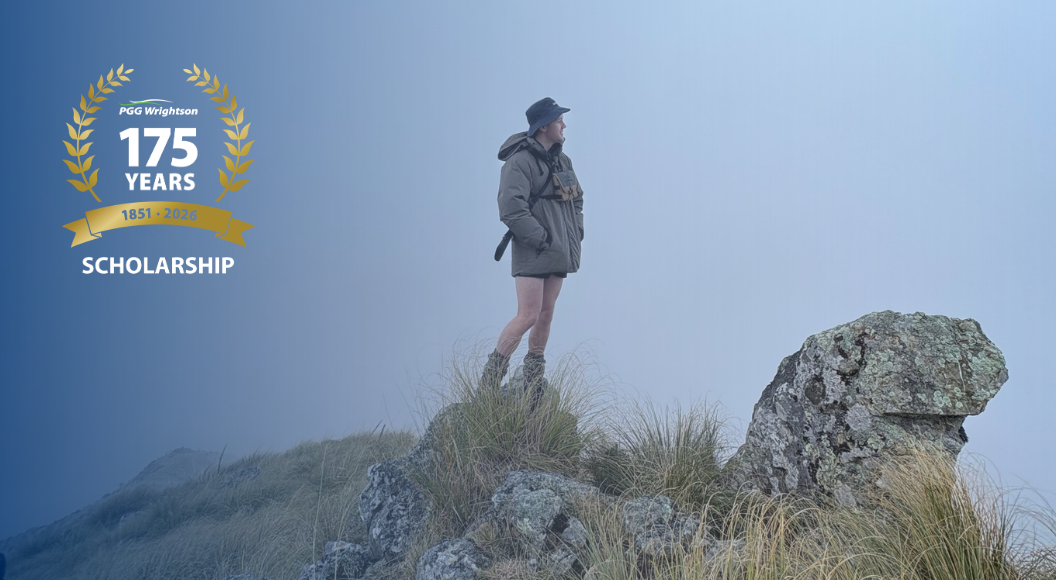
175 Year Scholarship Winning Entry: Hamish Shaw
As part of our 175 Year Scholarship, two final-year tertiary students were awarded $2,000 each to help fund their studies. Applicants were asked to respond to the following question in 1,000 words or less: "For 175 years, PGG Wrightson has helped New Zealand farmers and growers adapt to change...
Video or image
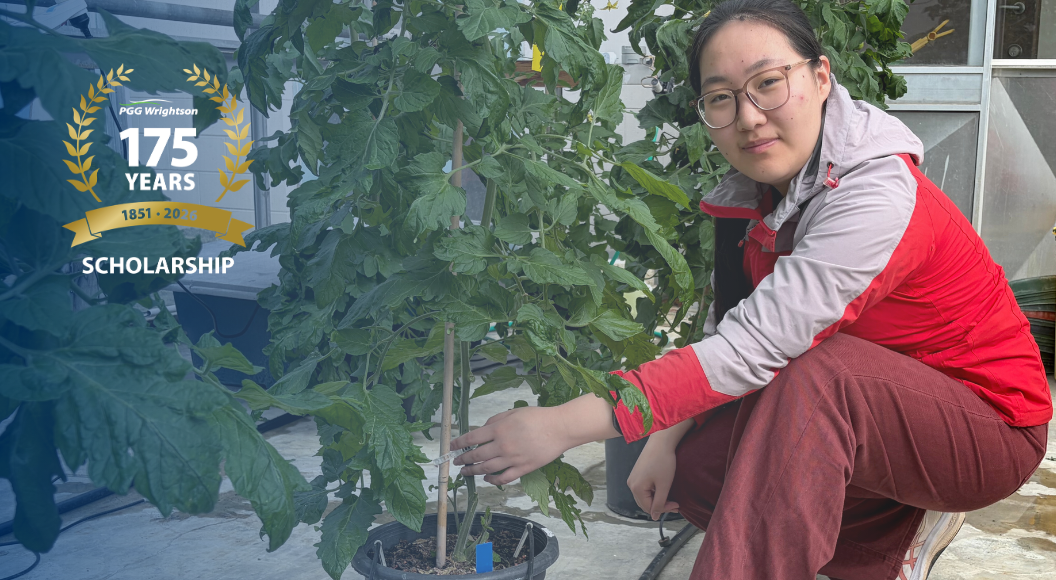
How to turn quality into wider and more sustainable export growth, with 175 Year Scholarship Winner, Xinyu Wu
As part of our 175 Year Scholarship, two final-year tertiary students were awarded $2,000 each to help fund their studies. Applicants were asked to respond to the following question in 1,000 words or less: "For 175 years, PGG Wrightson has helped New Zealand farmers and growers adapt to change...
Video or image
The road to Golden Shears starts again
A new season of the PGG Wrightson / Vetmed National Shearing Circuit gets underway in October, setting some of New Zealand’s best shearers on a five-round journey that will test their skill across the country and across five different wool types. The first points of the 2026/27 PGG Wrightson /...
Video or image
175 Year Scholarship Winning Entry: Hamish Shaw
As part of our 175 Year Scholarship, two final-year tertiary students were awarded $2,000 each to help fund their studies. Applicants were asked to respond to the following question in 1,000 words or less: "For 175 years, PGG Wrightson has helped New Zealand farmers and growers adapt to change...
Video or image
How to turn quality into wider and more sustainable export growth, with 175 Year Scholarship Winner, Xinyu Wu
As part of our 175 Year Scholarship, two final-year tertiary students were awarded $2,000 each to help fund their studies. Applicants were asked to respond to the following question in 1,000 words or less: "For 175 years, PGG Wrightson has helped New Zealand farmers and growers adapt to change...