
Video or image
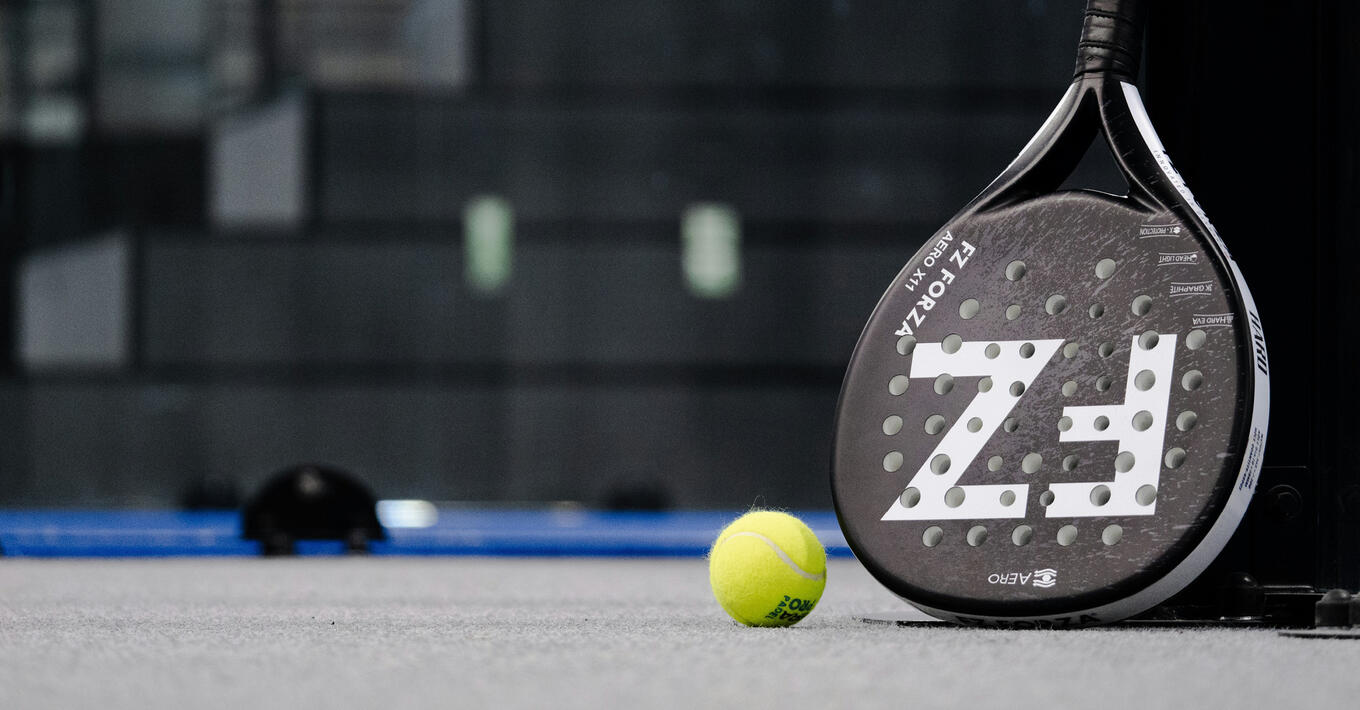
From the paddock to centre court: How Padel is powering demand for NZ wool
The global rise of Padel (a sport invented in Mexico that combines elements of tennis, squash and badminton), along with the continuing growth of traditional tennis, means the strong, clean wool that New Zealand is well known for is in hot demand.
Used to make the felt that covers tennis balls, it’s a particularly niche but important market for our wool growers. And a world-leading UK producer of tennis ball felt - whose products are used at three of the four Grand Slam tournaments - says new sports participation and sustainability pressures have combined to create a unique growth story.
“New Zealand’s wool is exceptionally clean and bright, which is crucial for felt production,” says CEO Duncan Kettell.
“It allows us to produce vibrant colours and achieve the consistency players demand. And every batch of balls has to perform the same way. New Zealand wool helps us deliver that standard, year after year.”
The felt on a tennis ball may seem like a small detail, but it’s a critical part of the game. Felt influences how the ball grips the court, how it bounces, and even how it spins off the racket strings. And in elite competitions, where balls are replaced after just nine games, quality and consistency are non-negotiable.
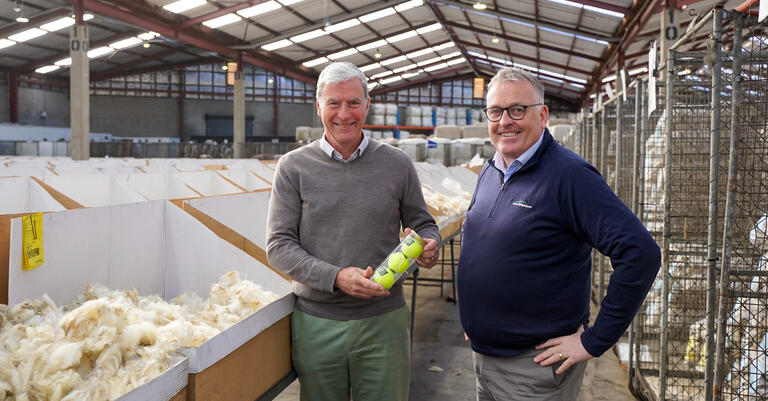
Pictured: Duncan Kettell (left) and Palle Petersen (right).
That’s why New Zealand wool has carved out such an important role, says Palle Petersen, the General Manager of Bloch & Behrens NZ, the international export arm of PGG Wrightson Wool. Its purity, brightness and reliability make it ideal for producing the woven cloth that coats high-performance balls.
“Other wool origins tend to be more variable in quality, or contain higher levels of vegetable matter,” explains Palle.
But this partnership between B&B and the UK felt manufacturer certainly isn’t new - they have been sourcing New Zealand wool from B&B for decades.
“It goes back at least half a century,” Palle says. “And it’s the attention to detail from our supply chain, in selecting the right wools for our batches, that has made it possible for us to supply the highest level of the game.”
While tennis remains the heavyweight driver of demand, the rise of Padel has added an unexpected twist. Played on a smaller, enclosed court with doubles teams, Padel is less physically demanding than tennis, making it accessible and highly social.
And worldwide, Padel clubs are popping up at speed. Its appeal spans generations - from younger players using it as an entry point into racquet sports, to older tennis players transitioning to a more forgiving but still competitive game. And while the balls used in Padel don’t need the same high-end felt as those used at Wimbledon or the French Open, the sheer number of new players and courts has pushed up global demand for tennis-style balls overall.
“Padel doesn’t replace tennis - it complements it,” says Palle.
“But its popularity does mean more balls are needed worldwide, and that inevitably helps drive demand for wool.”
Despite the buzz around Padel, traditional tennis is far from losing ground. In fact, Palle says it’s experiencing notable growth in participation, particularly in China, where the success of high-profile women’s players has inspired a new generation. More players mean more clubs, more matches - and many more tennis balls.
“The quantities are fairly significant.”
“Between ourselves and other producers, demand for tennis felt is strong, and in some cases we can hardly keep up,” says Duncan.
The reach of New Zealand wool into sport doesn’t stop at racquets though. The same UK company also produces high-end merino cloth for billiards and snooker tables, including the cloth used in the World Snooker Championships.
“That’s a completely different application, but it highlights wool’s versatility,” Duncan notes.
“From a snooker table in Sheffield to centre court at Wimbledon, wool has an extraordinary ability to adapt.”
And as global sports bodies face growing scrutiny over their environmental impact, wool’s natural attributes are becoming more relevant. Unlike synthetics, wool is renewable and biodegradable. With millions of tennis balls used every year and questions raised about their disposal, the case for natural fibres is strong.
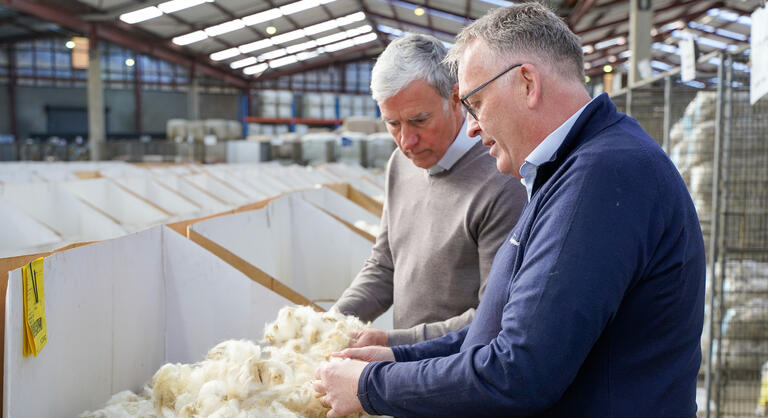
Duncan recently visited New Zealand, when he had the chance to see wool scouring operations firsthand.
“I was impressed with how seriously the industry is taking sustainability, where one scourer had just decommissioned an old coal boiler and replaced it with an electric one powered by renewable energy.
“That sort of investment shows New Zealand isn’t just producing quality wool, but also working hard to reduce its footprint.”
Those efforts are increasingly important to tennis federations and manufacturers alike. Initiatives to recycle used balls and minimise landfill waste are already underway, and natural fibres like wool are helping the industry move in the right direction.
For PGW Wool, Wool Integrity and Bloch & Behrens, the tennis and Padel story is a vivid reminder of how New Zealand's world-leading wool supply connects into global niches many growers may never have considered. It’s a story of attention to detail, supply chain integrity, and relationships built over decades - and it highlights wool’s ability to stay relevant in surprising new markets.
“From our perspective, the connection between a New Zealand farm and a Grand Slam final is something to celebrate,” says Palle. “It shows the value of wool in the most unexpected places.”

Related News
Video or image
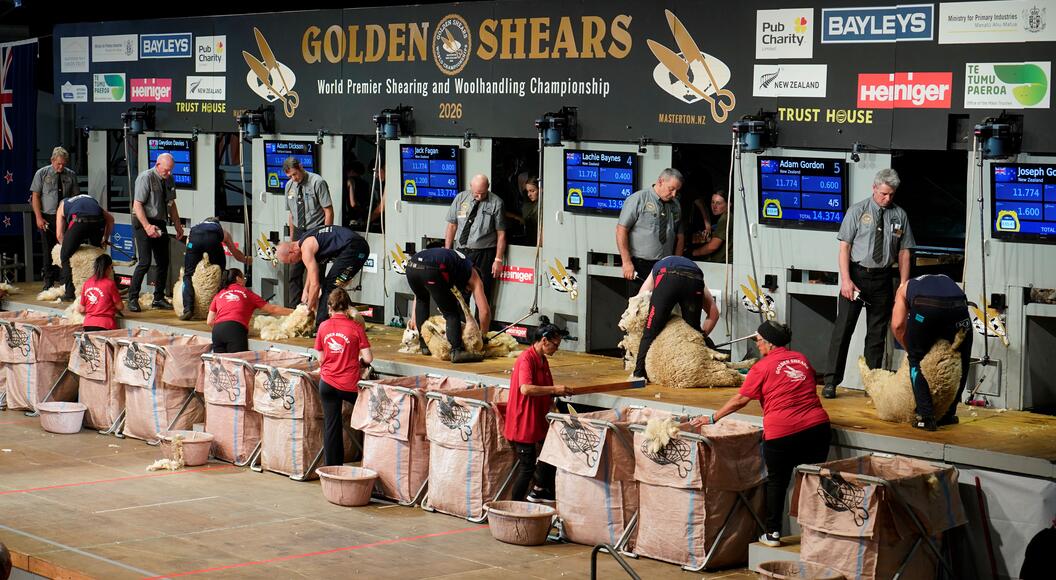
The road to Golden Shears starts again
A new season of the PGG Wrightson / Vetmed National Shearing Circuit gets underway in October, setting some of New Zealand’s best shearers on a five-round journey that will test their skill across the country and across five different wool types. The first points of the 2026/27 PGG Wrightson /...
Video or image
Australian buyers add heat as wool market regains confidence
Rachel Shearer, General Manager of PGW Wool, speaks with Hamish McKay from The Country about renewed competition at auction, strong wool prices and the factors shaping the longer-term outlook for New Zealand wool. Competition returned to the wool auction room in August, with increased buyer activity...
Video or image
Wool market eases as global buyers pause
Rachel Shearer, General Manager of PGW Wool, speaks with Jamie Mackay from The Country about recent market movements, global demand, and why the long-term outlook for wool remains positive. After several months of exceptional growth, the strong wool market has eased as major global buyers step back...
Video or image
The road to Golden Shears starts again
A new season of the PGG Wrightson / Vetmed National Shearing Circuit gets underway in October, setting some of New Zealand’s best shearers on a five-round journey that will test their skill across the country and across five different wool types. The first points of the 2026/27 PGG Wrightson /...
Video or image
Australian buyers add heat as wool market regains confidence
Rachel Shearer, General Manager of PGW Wool, speaks with Hamish McKay from The Country about renewed competition at auction, strong wool prices and the factors shaping the longer-term outlook for New Zealand wool. Competition returned to the wool auction room in August, with increased buyer activity...
Video or image
Wool market eases as global buyers pause
Rachel Shearer, General Manager of PGW Wool, speaks with Jamie Mackay from The Country about recent market movements, global demand, and why the long-term outlook for wool remains positive. After several months of exceptional growth, the strong wool market has eased as major global buyers step back...