
Video or image

175 Year Scholarship Winning Entry: Hamish Shaw
As part of our 175 Year Scholarship, two final-year tertiary students were awarded $2,000 each to help fund their studies. Applicants were asked to respond to the following question in 1,000 words or less:
"For 175 years, PGG Wrightson has helped New Zealand farmers and growers adapt to change. Looking ahead to the next 25 years, what do you believe will be the biggest challenge or opportunity facing New Zealand's agricultural and horticultural industries, and how would you build on the legacy of those who came before us to address it?"
Hamish Shaw, studying a Bachelor of Agricultural Science (Honours) majoring in Animal Science at Lincoln University, was one of the two scholarship recipients. Read Hamish's winning submission below.
Hamish's Winning Submission
Every year, New Zealand produces 1.7-1.9 million calves surplus to dairy replacement requirements. A large portion of them are processed as bobby calves within days of birth. They are a by-product of the seasonal pasture-based dairy system in New Zealand. This system works economically but it does not stack up reputationally.
New Zealand markets its exports as being produced on clean, green, high-welfare systems. This allows for premium pricing into the UK, EU and Asia. Bobby calves are one of the few places where the gap between our marketing and our practice is genuinely exposed. Welfare groups have run campaigns for over a decade, UK and EU retailers have quietly tightened sourcing standards, and the 2023 live export ban showed regulators will move on welfare issues once public pressure crosses a threshold. Bobby calf processing is arguably next, whether through a formal ban, a minimum-age rule, or market rejection by buyers.
If New Zealand is forced into a sudden, reactive ban the damage is twofold. Our "premium, high-welfare" brand takes a direct hit exactly when we need it to justify price premiums over lower-cost competitors. A rushed transition leaves no time to build the genetics, rearing capacity, and processing pathways needed to absorb those calves productively and profitability. That creates an opening for competitors. Dairy exporters
without the same social license pressure, Ireland in particular, which is already investing heavily in dairy-beef integration for this exact reason, could undercut NZ on price while the industry is mid-transition and distracted.
A surplus dairy calf isn't waste. It's an underused beef animal wearing the wrong label. Sexed semen, now mainstream and improving each year, lets farmers breed only the replacement heifers they need from their best cows. Therefore, the other cows in the herd can have beef genetics (Angus, Hereford, Wagyu) put over them. Those calves become valuable dairy-beef crosses instead of a same-day liability. Several NZ processors and genetics companies already run structured contracts for this. It requires a whole industry uptake to allow for effective markets for the ex-bobby calves. There is a finite ability to feed animals in New Zealand, so something has to give.
This shift carries a second, less obvious benefit. Traditionally, a large share of NZ's beef supply comes from dedicated beef breeding cows. They are mature animals kept yearround on hill country purely to produce one calf annually. Each of those cows is a standing methane source for its entire adult life, on top of the emissions from the calf itself once finished. If dairy-beef integration scales up, a growing share of the national beef supply can instead come "for free" as a by-product of the dairy herd. That means New Zealand can, in principle, produce a similar volume of beef with meaningfully fewer dedicated breeding cows on the land. Each one removed is one less adult animal producing methane year-round for a single calf. At a time when agriculture faces real pressure to reduce biogenic methane, and when hill country breeding land is already being lost to carbon forestry conversion, this is one of the few realistic pathways that lowers emissions intensity without simply asking farmers to run fewer stock or produce less. It reduces the need for breeding cows rather than mandating fewer cattle outright, providing a much easier story to sell to farmers than a straight destocking policy.
Ultimately, the bobby calf issue is a useful test case for the bigger question this anniversary poses. Will New Zealand agriculture shape the next 25 years of change, or simply absorb it? The tools to solve this particular problem, sexed semen, dairy-beef contracts, better traceability, already exist. What's missing is the coordinated push to scale them before regulation or reputation forces our hand. PGG Wrightson's 175-year legacy has never really been about any single technology or product. It's been about standing in the gap between farmers and the future, translating change into something workable on the ground. If the company applies that same role here, turning a welfare and emissions liability into a genetics and market opportunity, it won't just solve the bobby calf problem. It will set the template for how New Zealand farming meets every challenge like it in the decades ahead, early, on our own terms, and with our reputation intact.
Tune in to an upcoming episode of our podcast, Blue Shed Diary, where Hamish will join us to discuss his winning submission and share more about his thoughts on the future of New Zealand agriculture.
Related News
Video or image
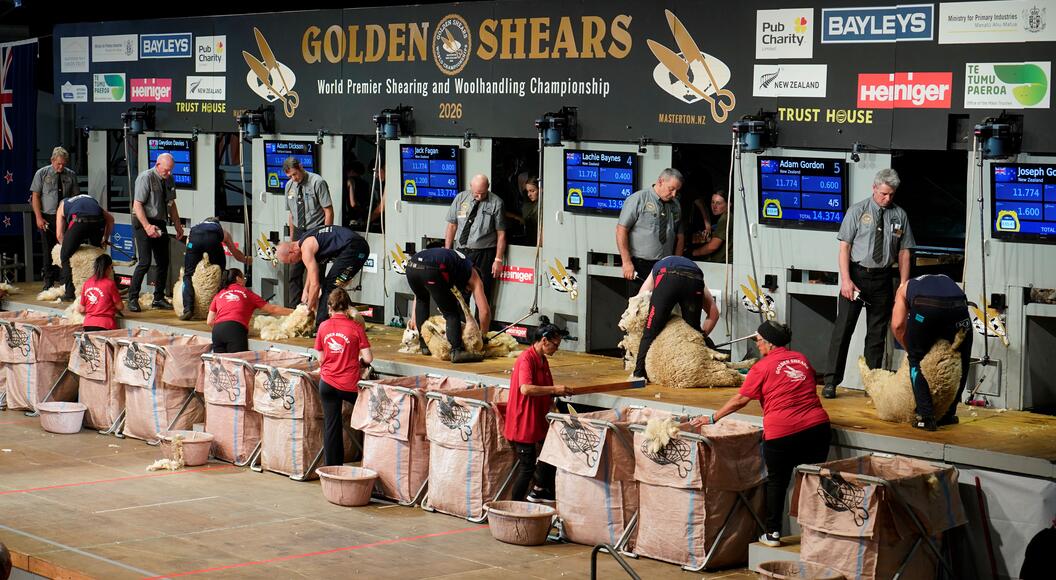
The road to Golden Shears starts again
A new season of the PGG Wrightson / Vetmed National Shearing Circuit gets underway in October, setting some of New Zealand’s best shearers on a five-round journey that will test their skill across the country and across five different wool types. The first points of the 2026/27 PGG Wrightson /...
Video or image
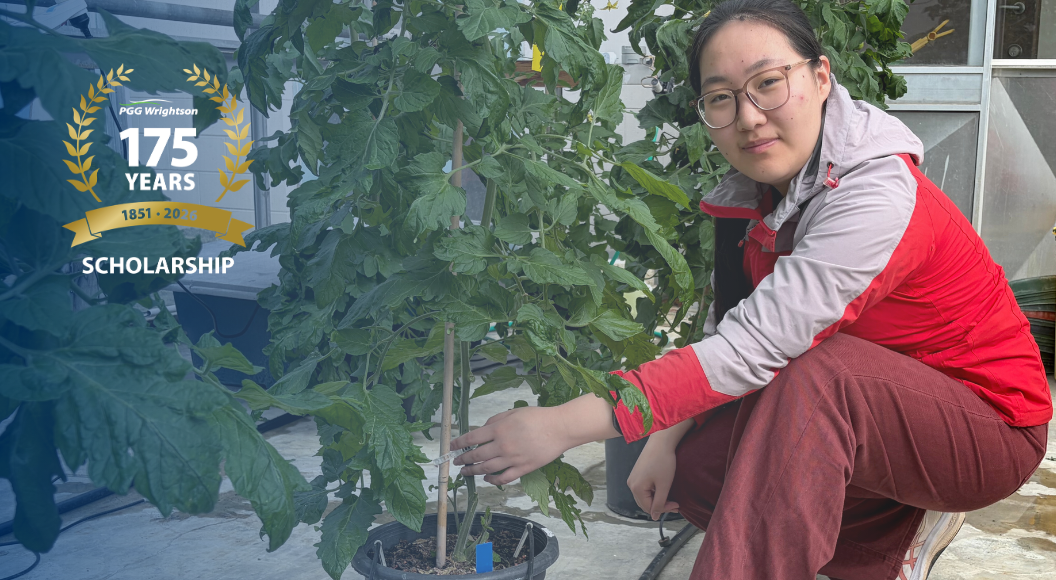
How to turn quality into wider and more sustainable export growth, with 175 Year Scholarship Winner, Xinyu Wu
As part of our 175 Year Scholarship, two final-year tertiary students were awarded $2,000 each to help fund their studies. Applicants were asked to respond to the following question in 1,000 words or less: "For 175 years, PGG Wrightson has helped New Zealand farmers and growers adapt to change...
Video or image
Future Leaders Recognised Through PGW's 175 Year Scholarship
As part of our 175-year celebrations, we're pleased to announce Xinyu Wu from Massey University and Hamish Shaw from Lincoln University as the recipients of the PGW 175 Year Scholarship. The scholarship was established to support the next generation of rural professionals and invited final-year...
Video or image
The road to Golden Shears starts again
A new season of the PGG Wrightson / Vetmed National Shearing Circuit gets underway in October, setting some of New Zealand’s best shearers on a five-round journey that will test their skill across the country and across five different wool types. The first points of the 2026/27 PGG Wrightson /...
Video or image
How to turn quality into wider and more sustainable export growth, with 175 Year Scholarship Winner, Xinyu Wu
As part of our 175 Year Scholarship, two final-year tertiary students were awarded $2,000 each to help fund their studies. Applicants were asked to respond to the following question in 1,000 words or less: "For 175 years, PGG Wrightson has helped New Zealand farmers and growers adapt to change...
Video or image
Future Leaders Recognised Through PGW's 175 Year Scholarship
As part of our 175-year celebrations, we're pleased to announce Xinyu Wu from Massey University and Hamish Shaw from Lincoln University as the recipients of the PGW 175 Year Scholarship. The scholarship was established to support the next generation of rural professionals and invited final-year...