
Video or image
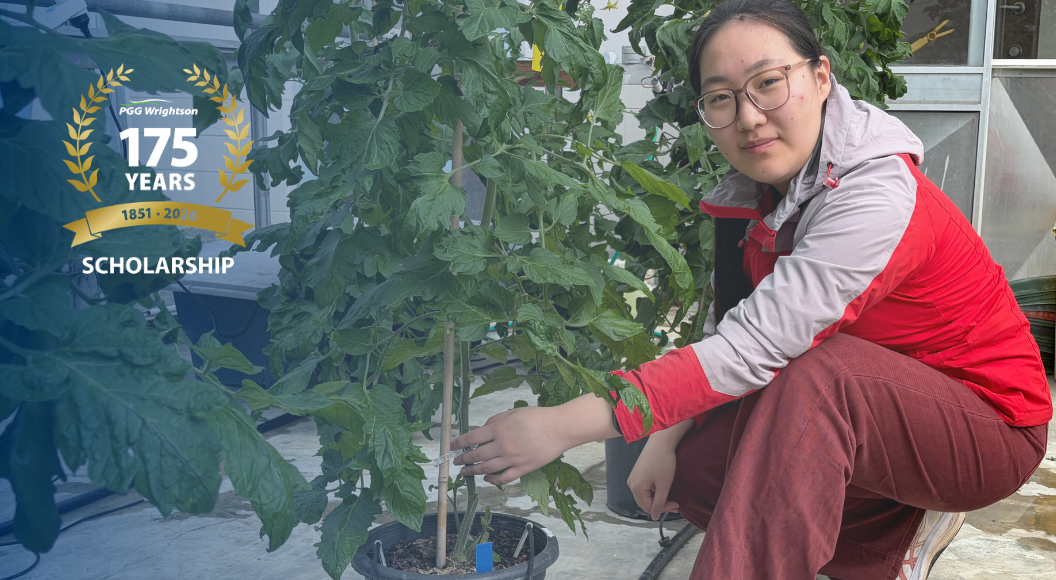
How to turn quality into wider and more sustainable export growth, with 175 Year Scholarship Winner, Xinyu Wu
As part of our 175 Year Scholarship, two final-year tertiary students were awarded $2,000 each to help fund their studies. Applicants were asked to respond to the following question in 1,000 words or less:
"For 175 years, PGG Wrightson has helped New Zealand farmers and growers adapt to change. Looking ahead to the next 25 years, what do you believe will be the biggest challenge or opportunity facing New Zealand's agricultural and horticultural industries, and how would you build on the legacy of those who came before us to address it?"
Xinyu Wu, who is studying for a Bachelor of Science majoring in Plant Science at Massey University, was one of the two scholarship recipients. Read Xinyu's winning submission below.
Xinyu's Winning Submission
My grandparents are small-scale farmers in China. They have only a small plot of land, and a whole year's income is often just enough to cover basic living costs. They rely on experience and physical labour to deal with weather, pests, diseases, and changing prices. They take great care of their crops, but producing good-quality crops does not guarantee a good price. Without a brand, market information, or bargaining ability, they often have to accept the price offered by others. Their experience taught me that producing something well and selling it successfully are not the same thing. Quality creates potential value, but understanding the market allows that value to reach growers. I therefore see New Zealand's greatest opportunity over the next 25 years as expanding exports by gaining a deeper understanding of overseas markets and using that knowledge to guide both marketing and breeding.
From my experience of growing up in China, New Zealand food is associated with a natural environment, food safety, and reliable quality. However, this image alone does not tell exporters who will buy their products, how much they are willing to pay, or what motivates them. A country is not one single market. Consumers differ by income, age, family situation, location, and reasons for purchasing. Exporters need to understand these differences rather than relying only on a premium image.
China provides a clear example. Imported New Zealand fruit is most visible among middle and higher income consumers. It is easy to assume that lower income households do not represent a strong market, but purchasing rate is also shaped by priorities. In my experience, many Chinese parents who limit their everyday spending may still be willing to spend more on products they trust for their children. This represents a large potential market, but it requires a different approach from selling a premium gift product.
Reaching these families does not require lowering the price per kilogram or reducing grower returns. It could mean offering smaller packages, selling through channels commonly used by families, and providing verified information about nutrition, origin, residue testing, and traceability. Marketing should identify the right consumer, purchasing occasion, message, package, and price. Parents may value dependable quality and nutrition, while gift buyers may care more about appearance, presentation, and origin. The same product may require a different strategy for each group.
New Zealand exporters should work with consumer researchers, retailers, and marketing teams based in each destination country. Local partners can identify where families shop, which package sizes they prefer, how they assess a product claim, and whether they are likely to buy the product again. Sales volume alone is not enough. Research should examine repeat purchases, product waste, the price achieved, and grower returns.
Market knowledge should also influence what New Zealand produces, rather than being collected only after harvest for advertising. If consumers consistently prefer certain flavours, textures, sizes, colours, or nutritional characteristics, that information should be incorporated into breeding programmes early. Breeders can combine these preferences with grower and export requirements, including disease resistance, stable yields, manageable labour costs, firmness, and shelf life.
Blueberries are only one example. China's developing blueberry market shows strong consumer interest in noticeable traits such as large fruit, sweetness, firm texture, and floral aromas. These preferences could help New Zealand breeders identify selections with market potential, provided that those selections also perform locally and survive long-distance transport. The same principle could apply to fruit, vegetables, seeds, and other agricultural products, with different traits identified for each market.
PGG Wrightson could build on its legacy by strengthening the two-way connection between growers and overseas markets. Rather than replacing exporters or advertising agencies, it could bring together producers, breeders, researchers, post-harvest specialists, exporters, and in-market teams. Overseas market information could be translated into practical breeding and production priorities, while growers could explain costs and risks that overseas partners may not see.
This approach requires long-term research investment because developing a new variety can take many years. On-farm and postharvest testing would determine whether it can meet the needs of growers, exporters, and consumers at the same time. Growers who take on the costs and risks of trials should participate in decisions and share in the value created through new varieties and stronger brands.
Zespri has shown that New Zealand can combine variety development, consistent quality, and localised marketing to build a global identity. The next opportunity is to understand more groups within each overseas market and make that knowledge available to other industries. The aim is not to weaken New Zealand's premium reputation, but to give more consumers ways to access and value its products.
As a Plant Science student minoring in Molecular Cell Biology, I hope to contribute by helping translate overseas consumer preferences into practical breeding objectives and testing new varieties under real growing conditions. My experience with soil sampling, root processing, and data collection in the Whenua Haumanu programme has shown me that successful innovation must connect scientific research with the realities growers face.
For 175 years, PGG Wrightson has helped farmers and growers adapt to change. The next challenge is not only how to produce more, but also how to make New Zealand products meaningful to consumers in different markets. By understanding its customers, breeding for genuine demand, and ensuring that growers share in the value created, New Zealand can turn quality into wider and more sustainable export growth.
Keep an eye out for an upcoming episode of Blue Shed Diary, where Xinyu will join us to discuss their winning submission and share more about their passion for plant science and the future of New Zealand agriculture.
Related News
Video or image
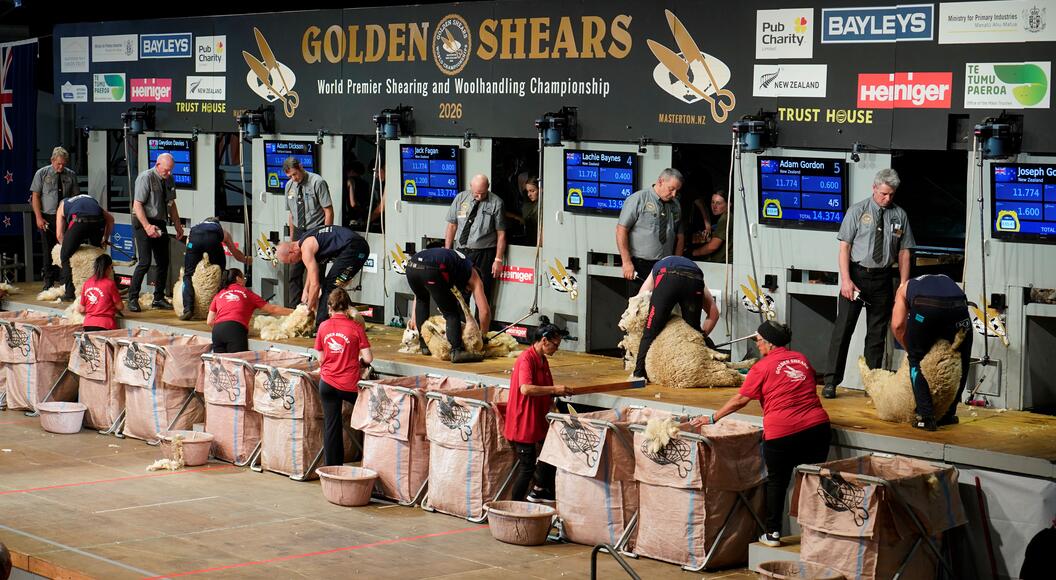
The road to Golden Shears starts again
A new season of the PGG Wrightson / Vetmed National Shearing Circuit gets underway in October, setting some of New Zealand’s best shearers on a five-round journey that will test their skill across the country and across five different wool types. The first points of the 2026/27 PGG Wrightson /...
Video or image

175 Year Scholarship Winning Entry: Hamish Shaw
As part of our 175 Year Scholarship, two final-year tertiary students were awarded $2,000 each to help fund their studies. Applicants were asked to respond to the following question in 1,000 words or less: "For 175 years, PGG Wrightson has helped New Zealand farmers and growers adapt to change...
Video or image

Future Leaders Recognised Through PGW's 175 Year Scholarship
As part of our 175-year celebrations, we're pleased to announce Xinyu Wu from Massey University and Hamish Shaw from Lincoln University as the recipients of the PGW 175 Year Scholarship. The scholarship was established to support the next generation of rural professionals and invited final-year...
Video or image
The road to Golden Shears starts again
A new season of the PGG Wrightson / Vetmed National Shearing Circuit gets underway in October, setting some of New Zealand’s best shearers on a five-round journey that will test their skill across the country and across five different wool types. The first points of the 2026/27 PGG Wrightson /...
Video or image
175 Year Scholarship Winning Entry: Hamish Shaw
As part of our 175 Year Scholarship, two final-year tertiary students were awarded $2,000 each to help fund their studies. Applicants were asked to respond to the following question in 1,000 words or less: "For 175 years, PGG Wrightson has helped New Zealand farmers and growers adapt to change...
Video or image
Future Leaders Recognised Through PGW's 175 Year Scholarship
As part of our 175-year celebrations, we're pleased to announce Xinyu Wu from Massey University and Hamish Shaw from Lincoln University as the recipients of the PGW 175 Year Scholarship. The scholarship was established to support the next generation of rural professionals and invited final-year...