
Video or image
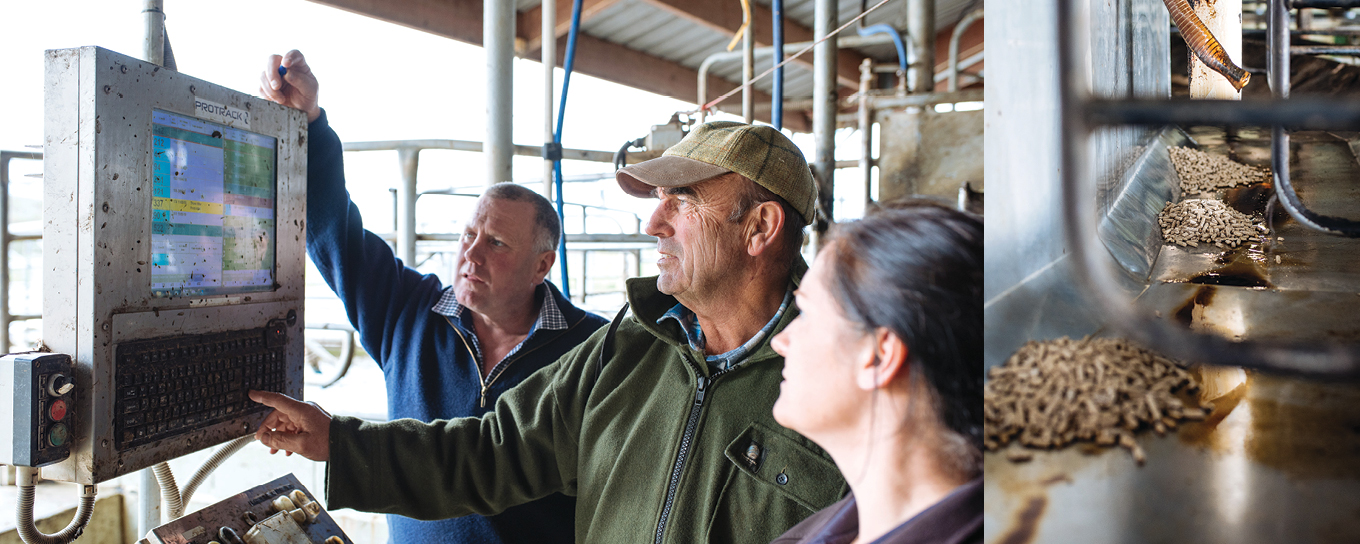
The Power of the Pellet
For the past three years Dairy Farmer, Stephen Pope has used SealesWinslow dairy pellets to meet the nutritional needs of his herd year-round, achieving 480 kgMS per cow. There has been a definite increase in production, a decrease in empty rates and 500 kgMS is in sight.
Stephen farms in Central Southland where the climate is a constant challenge to meeting the nutritional needs of a dairy herd.
“We don’t see the same pattern in grass growth year after year. Our seasons are completely unpredictable, so to get an even feeding plan we must supplement” Stephen explains.
“Feeding the right supplement is not a simple matter and that’s where the SealesWinslow dairy pellets work well. We get feed that’s tailor-made to our situation on farm at any time of the year.” SealesWinslow Technical Sales Representative, Louise Robson keeps a close eye on pasture and herd performance, while PGG Wrightson Technical Field Representative, David Wheeley advises Stephen on maximising crop yields and ensuring he has the right products when required.
"The team at PGG Wrightson Winton has been part of our business for the last 40 years. We find the people great to deal with, prices are competitive, and supply is reliable."
“Louise and David have been a huge help to us in maximising profitability” confirms Stephen.
“On the nutrition front, Louise monitors our production with Fonterra and she helps us to strategically use pellets to fully feed our cows.”
Understanding the limiting factors for your herd is the starting point to selecting the right ingredients to increase health and performance throughout the year.
“Taking a feed test gives us a view of protein, sugar and starch levels in the grass. We can also see any deficit in minerals, and balance that by feeding the cows a combination of ingredients to balance the pasture composition.
“The SealesWinslow pellet manufacturing process improves digestibility and utilisation of these ingredients. Also, every individual pellet in a particular blend contains all ingredients, so farmers are assured that every mouthful delivers the formulated composition to every cow” Louise notes.
For Stephen the pellets maximise feeding efficiency. “Feeding pellets instead of grain is so much easier. With the pellets, there is no dust and a lot less wastage. The cows eat them well and they go through the system easily, from the auger into the shed, any time of the year.”
Dust and fine particles can detract from animal intakes. Consistent high-density pellets remove the irritation of dust particles for stock and staff. There is also no need to recalibrate in-shed feeding systems for a change in diet composition.
Importantly, the consistent use of dairy pellets has seen a big improvement in cow performance. “The herd has gone from 425 kgMS per cow to 480 kgMS per cow” confirms Stephen.
“We’ve also noticed a change in empty rates. Where we were traditionally at 12 percent, this year it was only eight percent.
“Of course, there are lots of factors involved in these positive outcomes, but we know that better nutrition is the biggest factor in maximising production.”
Related News
Video or image
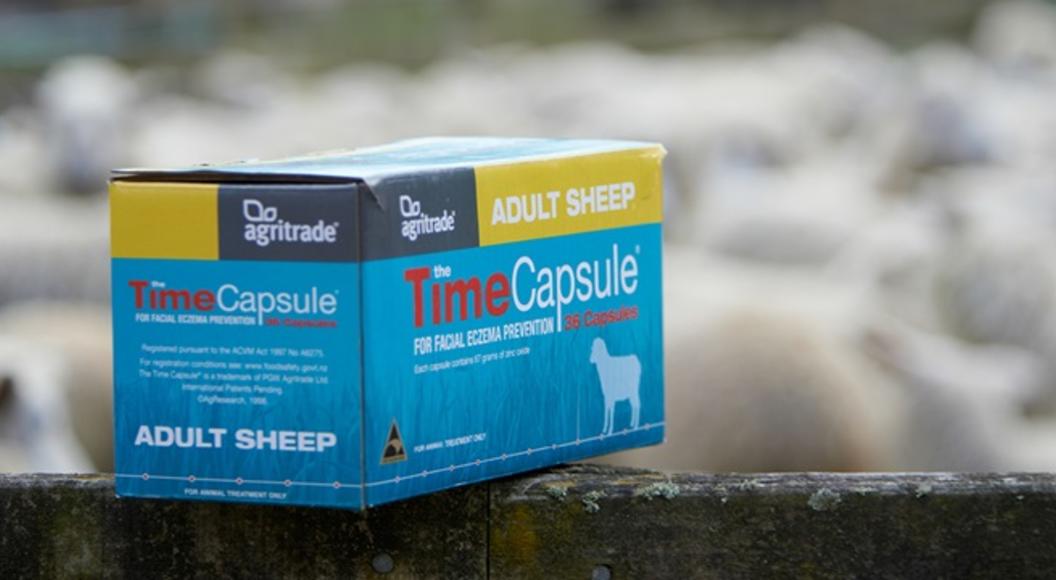
Think zinc to protect against facial eczema
Managing Facial Eczema (FE) requires a multipronged approach that involves reducing spore intake and providing zinc as a prophylaxis and therapy. FE is caused by a mycotoxin produced by the fungus Pithomyces chartarum growing in pasture dead matter. This fungus multiplies rapidly when overnight...
Video or image
Talking GO-STOCK with Rob Holt and Steph Macfarlane
Rob and Steph are based in Albury, farming 1100 hectares. Together they run 9000 stock units of breeding, finishing and store stock. Their agent introduced them to GO-BEEF and GO-LAMB which they run all their lambs and cattle through. Using the two contracts helps manage their cash flow in the most...
Video or image
Talking GO-STOCK with Luke Jamieson
Managing a 1600 hectare property with 9300 stock units, Luke started using GO-STOCK through their agent, running Jersey bulls and trading lambs. The lambs put through GO-STOCK are solely for trading and putting them them through the GO-STOCK system has made it easier to free up capital. Hear more...
Video or image
Think zinc to protect against facial eczema
Managing Facial Eczema (FE) requires a multipronged approach that involves reducing spore intake and providing zinc as a prophylaxis and therapy. FE is caused by a mycotoxin produced by the fungus Pithomyces chartarum growing in pasture dead matter. This fungus multiplies rapidly when overnight...
Video or image
Talking GO-STOCK with Rob Holt and Steph Macfarlane
Rob and Steph are based in Albury, farming 1100 hectares. Together they run 9000 stock units of breeding, finishing and store stock. Their agent introduced them to GO-BEEF and GO-LAMB which they run all their lambs and cattle through. Using the two contracts helps manage their cash flow in the most...
Video or image
Talking GO-STOCK with Luke Jamieson
Managing a 1600 hectare property with 9300 stock units, Luke started using GO-STOCK through their agent, running Jersey bulls and trading lambs. The lambs put through GO-STOCK are solely for trading and putting them them through the GO-STOCK system has made it easier to free up capital. Hear more...